






Decorative Room Partition
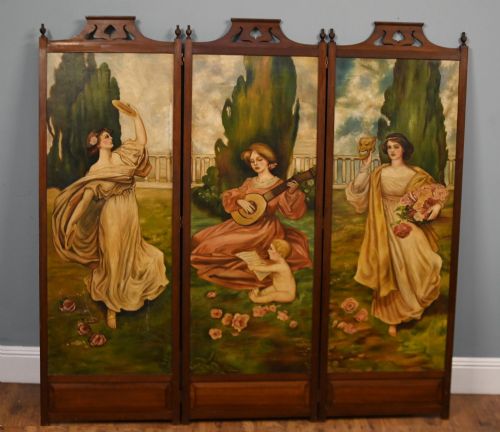
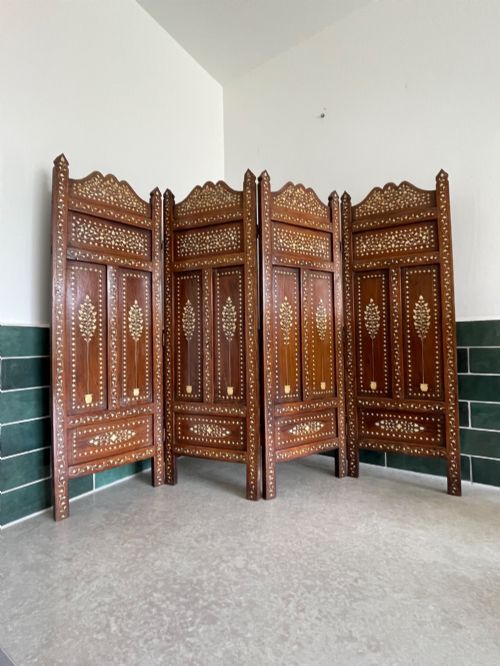
A decorative room partition defines a space without building a wall, offering versatile folding screens and table screens in varied periods.
Decorative Room Partition
A decorative room partition comprises folding screens, table screens, and room dividers designed to segment living spaces. These pieces emerge in styles ranging from Continental Baroque and French Rococo Revival to Chinoiserie and Anglo-Indian designs.
Buyers regularly encounter multi-panel wooden and leather configurations spanning the eighteenth and nineteenth centuries, alongside mid-twentieth-century examples. The selection includes domestic dressing screens, photographic props, and portable table screens.
Origin and craftsmanship dictate the character of each partition, moving from intricate Anglo-Indian woodwork to hand-painted Continental canvases. Pieces incorporate diverse cultural motifs such as Persian Revival aesthetics and Japanese textiles.
Materials and construction
Makers utilised solid wood frames, including mahogany and oak, to support folding panels hinged together for domestic use. Leather serves as a primary canvas for hand-painted and gilt-embossed surface decoration.
Artisans applied oil paint, lacquer, and giltwood finishes directly onto canvas, leather, and wood substrates. Specific examples integrate textile elements such as William Morris velvet fabric and silk cotton alongside brass hardware.
Decorative Room Partition Retail Price Guide 2026
Typical asking prices for decorative room partition among the pieces listed under this phrase on Sellingantiques today, from the lower quarter to the upper quarter. They describe what is for sale here now, not the wider market.
Listings feature wood, brass, oil paint, leather, lacquer, giltwood, mahogany, and canvas across multiple centuries.
Assessing quality
Excellence in a decorative room partition rests upon the execution of surface art, where hand-painted leather and intricate lacquerwork command attention. Finer examples display meticulous detailing in gilt embossing and painterly depth across each panel.
Structural integrity of the wooden frames and the quality of the hinges determine longevity and daily functionality. The refinement of stylistic expression, from Pre-Raphaelite motifs to French Rococo carvings, distinguishes exceptional workshops from standard production.
Paul Sormani·William Morris
The Decorative Room Partition Glossary
- Folding screen
- A piece of furniture consisting of two or more panels that are hinged together, used to partition a room or provide privacy.
- Table screen
- A smaller version designed to sit on a desk, table, or surface rather than standing directly on the floor.
- Cordoban leather
- Leather originating from Córdoba, Spain, traditionally treated, embossed, and gilded for use in luxurious wall hangings and screens.
- Giltwood
- Wood that has been treated with gold leaf or gold paint to give a decorative metallic finish.
- Aubusson
- A style of tapestry woven in the French town of Aubusson, frequently incorporated into nineteenth-century decorative screens.
Decorative Room Partition: Frequently Asked Questions
What is a decorative room partition used for?
These pieces function primarily to divide large rooms into smaller zones, create private dressing areas, or act as decorative focal points within an interior.
Historically, they also served to block drafts from doors and windows in large houses before central heating became common.
How do I care for a leather screen?
Leather panels require stable indoor humidity and protection from direct sunlight to prevent the painted and gilt surfaces from cracking or fading.
Dusting gently with a dry, soft cloth is sufficient for routine maintenance, avoiding harsh chemical cleaners entirely.
Are these partitions stable on modern floors?
Most multi-panel folding screens stand securely when the panels are arranged in a zig-zag or angled configuration rather than stretched flat.
Heavier wooden and leather models provide greater stability on carpeted or hard flooring alike.
How do I identify the period of a screen?
Dating relies on examining the construction of the wooden frames, the style of the hinges, and the artistic techniques used on the panels.
Stylistic markers such as Pre-Raphaelite details, Victorian Rococo Revival carving, or mid-century lacquer finishes help narrow the era of production.