

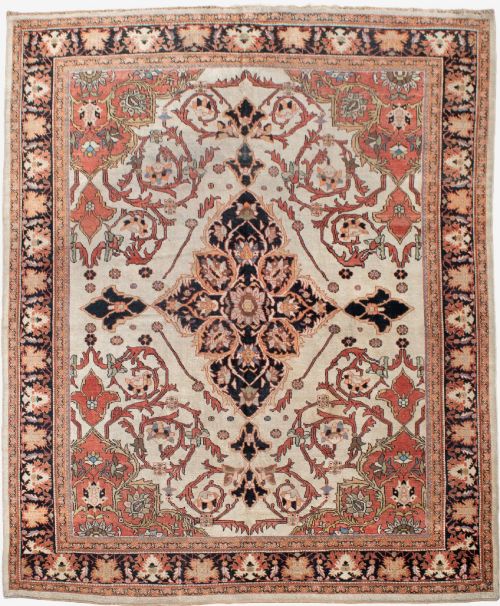
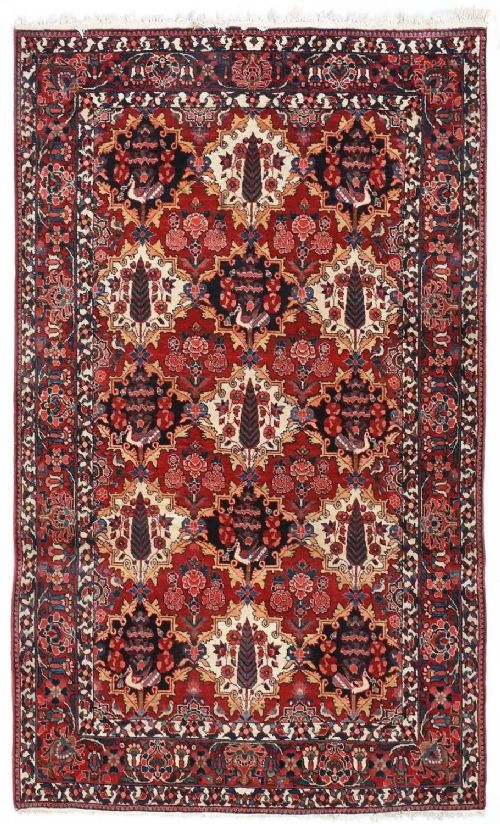


Decorative Persian Rug
A decorative persian rug brings warmth and deep pattern to a room, offering centuries of woven artistry for modern floors.
Decorative Persian Rug
A decorative persian rug represents centuries of traditional weaving skill, originating from distinct cities, villages, and nomadic tribes across the region. When searching for a decorative persian rug, buyers encounter diverse room-size carpets, area formats, and smaller tribal textiles dating from the nineteenth and early twentieth centuries.
The selections on this page span prominent regional types including Heriz, Mahal, Bakhtiari, and Sultanabad carpets, alongside finer workshop productions from Tabriz, Kashan, and Isfahan. Village pieces and nomadic items such as salt bags and bread sofreh also appear, reflecting the vast scope of Persian weaving traditions.
How they were made
These textiles rely principally on wool and cotton foundations, with hand-spun wool frequently utilised for the pile to achieve rich texture and depth. Goat hair occasionally appears in tribal structures for added durability along the selvages.
Natural dyes provide the enduring palette for these woven works, yielding complex tones that soften gracefully over generations of use. Skilled hands knotted the pile tightly onto warp and weft threads, creating resilient floor coverings designed to endure heavy daily wear.
Decorative Persian Rug Retail Price Guide 2026
Typical asking prices for decorative persian rug among the pieces listed under this phrase on Sellingantiques today, from the lower quarter to the upper quarter. They describe what is for sale here now, not the wider market.
The listings span multiple decades of Persian weaving, incorporating both nineteenth-century village formats and early twentieth-century workshop carpets.
What varies in quality
Quality rests upon the fineness of the knotting, the balance of the composition, and the integrity of the original materials. Superior workshop examples display precise drafting and intricate floral schemes, while successful tribal pieces achieve distinction through bold geometry and saturated natural colour.
The handling of the wool and the depth of the dye saturation dictate how the surface ages under light and foot traffic. Finer density allows intricate curves to render cleanly, whereas coarser tribal weaves rely on stylised abstraction for visual impact.
The Decorative Persian Rug Glossary
- Knot density
- The number of knots per square unit of rug, which dictates the sharpness of the design and the intricacy of the rendered motifs. Higher density generally signifies greater workshop time and skill.
- Selvage
- The reinforced outer edge of a rug running parallel to the warp, bound tightly to prevent the sides from fraying. Original or well-maintained selvages help preserve structural integrity.
- Warp
- The vertical threads stretched tightly on the loom through which the horizontal weft is passed and the pile is knotted. These foundation threads are typically cotton or wool.
- Weft
- The horizontal threads running across the width of the rug, interlaced with the warp to hold the knots in place after each row is completed. They contribute to the handle and flexibility of the textile.
- Medallion
- A central ornamental design motif placed in the middle of the field, frequently seen in classical workshop carpets from centres like Heriz, Kashan, and Tabriz.
Decorative Persian Rug: Frequently Asked Questions
How do I choose the right size rug?
Measure the floor space carefully, ensuring furniture legs sit comfortably either fully on the piece or entirely off it. Room dimensions dictate whether an oversize carpet or a smaller area format suits the proportions.
Consider the traffic patterns in the space and leave adequate bare floor visible around the perimeter to frame the textile properly.
How should I care for antique wool rugs?
Vacuum gently with the suction attachment, avoiding aggressive beater bars that can pull at aged pile and foundation threads. Professional cleaning by specialists in antique textiles is essential every few years.
Keep these pieces out of direct, harsh sunlight to prevent natural dyes from fading unevenly over long periods.
What is the difference between village and workshop rugs?
Village and tribal rugs are woven on portable or fixed looms by nomadic groups or local artisans, featuring geometric memory patterns and bold coloration. They prioritize robust utility and tribal symbolism.
Workshop carpets are produced in established urban centres under master designers, utilising sophisticated floral curves and refined city aesthetics.
How can I tell the age of a Persian rug?
Examine the materials, dye types, and structural wear patterns across the pile and foundations. Hand-spun wool and early natural dye palettes often indicate nineteenth or early twentieth-century production.
Stylistic shifts and regional weaving characteristics also provide reliable clues for dating individual pieces accurately.