




Decorative Partition
A decorative partition divides a room with presence, offering painted leather panels and carved wood screens that shape domestic space.
Decorative Partition
When you search for a decorative partition, you encounter folding screens, room dividers, and table screens that organise interior spaces. The pieces range from Victorian three-panel room dividers to smaller 1880 table screens and mid-century examples.
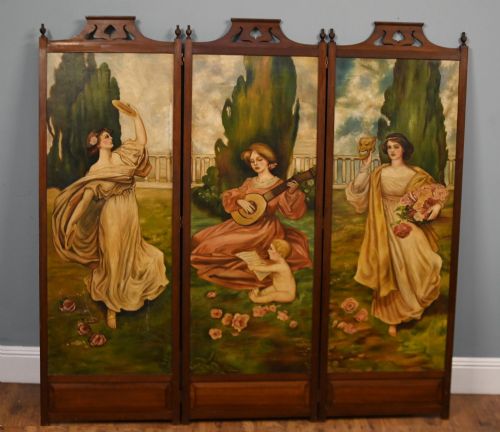
You are most likely to meet multi-panel folding screens constructed from wood and leather, often featuring painted surfaces, lacquer, or fabric inserts. These objects span periods from the 18th century through the Victorian era to the mid-20th century.
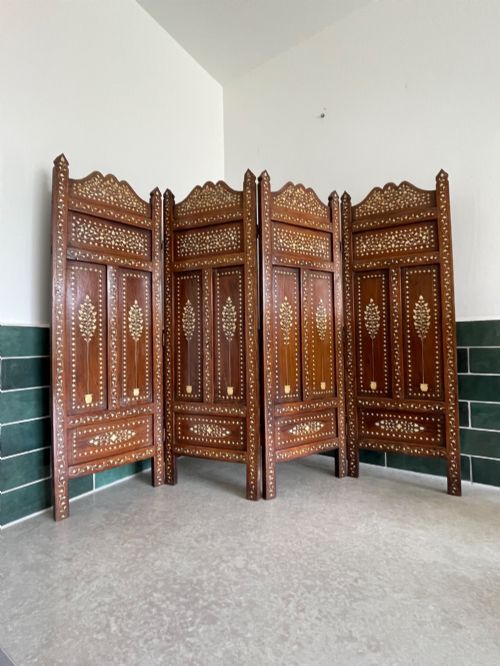
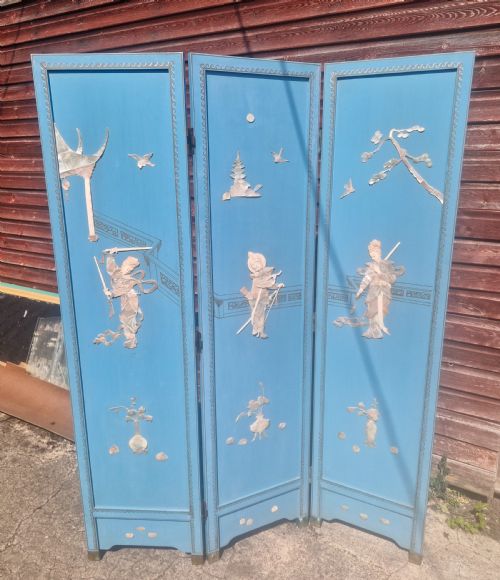
The styles recorded across these objects include Continental Baroque, French Rococo Revival, Chinoiserie, Pre-Raphaelite, and Anglo-Indian designs. Each style brings distinct decorative motifs, from embossed leather to hand-painted botanical scenes.
How they were made
Makers constructed the primary frames of these pieces using solid timbers such as mahogany and oak, often reinforced with brass hinges to allow folding movement across multiple panels. These wooden structures support diverse infill materials ranging from stretched canvas and silk cotton to heavy leather.
Surfaces frequently display skilled craftsmanship through oil paint, lacquer, and giltwood embellishments. Techniques like hand-painting on leather and embossing provide the rich surface texture seen on 18th-century Cordoban panels and later Victorian works.
Decorative Partition Retail Price Guide 2026
Typical asking prices for decorative partition among the pieces listed under this phrase on Sellingantiques today, from the lower quarter to the upper quarter. They describe what is for sale here now, not the wider market.
Some screens served as photographic props, capturing domestic Victorian life before disappearing behind studio backdrops.
What varies in quality
The standard of artistic execution on the painted or lacquered panels dictates the visual merit of the piece. Fine hand-painted details on leather, silk cotton, or canvas distinguish superior works from simpler production.
The integrity of the woodwork and the quality of the supporting brass hardware determine the physical resilience of the screen. Substantial frames built from mahogany or oak with durable hinges maintain structural stability during folding.
Paul Sormani
The Decorative Partition Glossary
- Cordoban leather
- Leather originating from Córdoba in Spain, historically worked with hand-painted designs and gilt embossing for rich wall hangings and screens.
- Table screen
- A small decorative screen designed to sit upon a desk or table rather than stand on the floor.
- Aubusson
- A style of tapestry weave originating from the French town of Aubusson, frequently incorporated into furniture and screen panels.
- Chinoiserie
- European artistic style reflecting Chinese artistic traditions, popular in the decoration of screens, lacquerwork, and furniture.
Decorative Partition: Frequently Asked Questions
What is a decorative partition?
A decorative partition is a movable screen or divider used to separate areas within a room.
These pieces use folding panels made from wood, leather, or fabric to alter the layout and appearance of an interior.
How were folding screens used?
Historically, folding screens provided privacy for dressing or blocked draughts in large rooms.
They also served as decorative backdrops within parlours and reception spaces, displaying painted artwork or rich textiles.
What materials are used in room dividers?
Makers constructed room dividers using wooden frames of oak or mahogany filled with leather, canvas, silk cotton, or lacquer.
Brass fittings linked the panels together, while oil paint and giltwood provided surface ornamentation.
How do I identify different styles?
Styles range from the ornate curves of French Rococo Revival to the painted motifs of Chinoiserie and Pre-Raphaelite designs.
Examining the specific painting techniques, motifs, and wood types helps distinguish between periods like the Victorian era and the 18th century.