




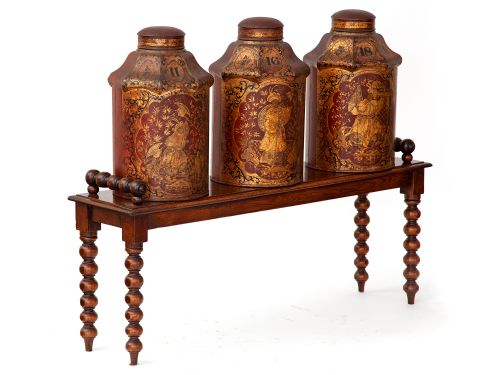
Decorative Painted Tea Caddies
These decorative painted tea caddies bring vibrant colour and intricate motifs into a room, offering both period charm and practical storage.
Decorative Painted Tea Caddies
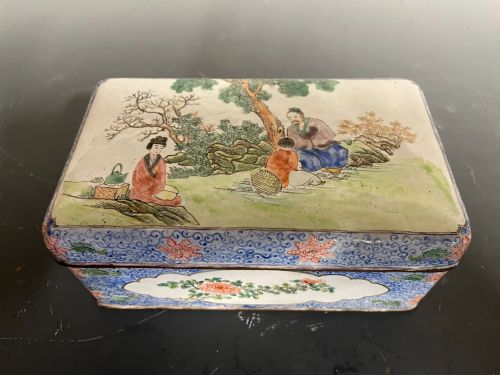
When you search for decorative painted tea caddies, you encounter an array of lidded vessels and boxes designed to store precious tea leaves during the Georgian, Regency, and Victorian eras. These containers often take the form of lidded canisters, boxes, or ginger jars created to sit upon a table or sideboard.
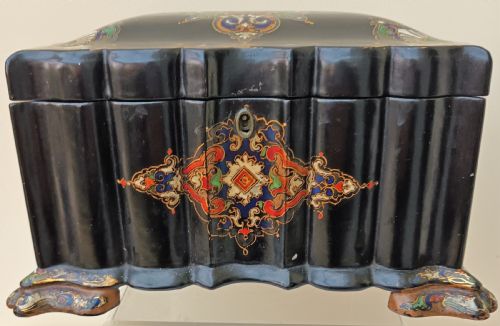
The versions most commonly met on this page span the nineteenth century, including Georgian and Victorian examples decorated with lacquer, penwork, or painted finishes. Alongside traditional caddies, you find related forms adapted over time, such as table lamps and decorative boxes.
Makers utilised distinct regional styles, ranging from English Chinoiserie and Scottish work to Japanese Meiji period pieces and European porcelain like Herend. Each object reflects the taste of its period, whether through bright lacquer or delicate handpainted details.
How they were made
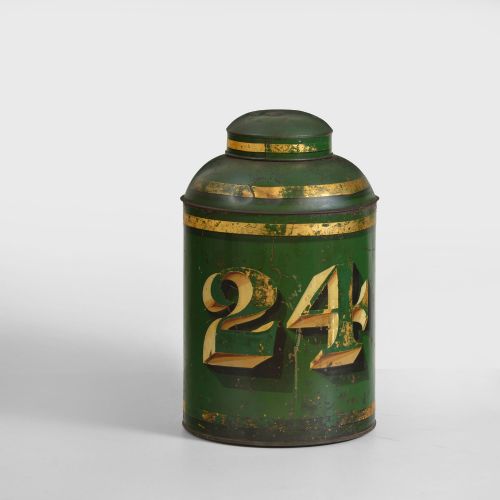
Artisans built these pieces using wood, papier-mâché, tinplate, and toleware as foundational materials, applying smooth surfaces ready for decoration. Lacquer and paint provided the base layers for complex ornamentation.
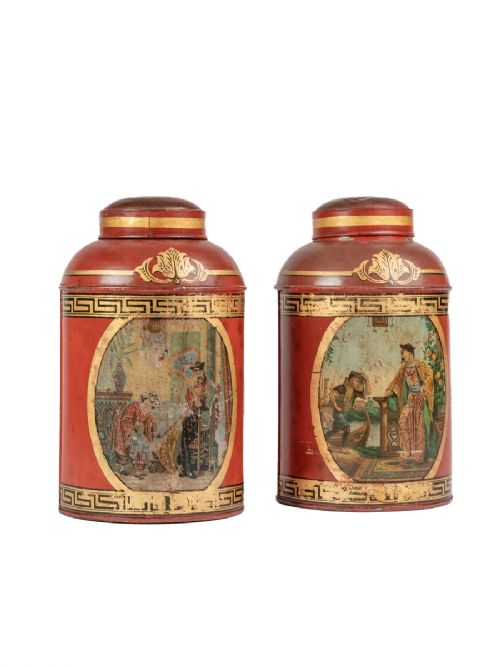
Craftsmen enriched the exteriors using gold leaf, fine brushwork, and penwork techniques to render elaborate scenes and patterns. Chinoiserie motifs and pagoda styles required precise handpainting to achieve their characteristic depth and detail.
Decorative Painted Tea Caddies Retail Price Guide 2026
Typical asking prices for decorative painted tea caddies among the pieces listed under this phrase on Sellingantiques today, from the lower quarter to the upper quarter. They describe what is for sale here now, not the wider market.
Several canisters feature pagoda motifs, bringing miniature oriental architecture directly onto the tea table.
What varies in quality
The standard of a piece rests upon the crispness and skill of the handpainted decoration, where fluid brushwork separates superior examples from simpler ones. Finer items display meticulous attention to detail in their motifs and gold leaf application.
The choice of base material also defines the tier of the object, with substantial woods, quality papier-mâché, and heavy toleware commanding greater regard than lighter tinplate equivalents. Original surfaces and well-preserved lacquer finishes retain more character than heavily restored examples.
The Decorative Painted Tea Caddies Glossary
- Toleware
- Painted or lacquered tinplate items made in a variety of household forms. This material served as a sturdy base for colourful decorative schemes.
- Penwork
- Surface decoration created using fine ink lines on wood or paper, often finished with a clear protective coat. Regency boxes frequently utilised this technique to render detailed imagery.
- Papier-mâché
- Composite material made from paper pulp or layers of paper mixed with glue, then moulded and dried. It formed a smooth ground for lacquer and paint in nineteenth-century caddies.
- Ginger jar
- Lidded ceramic or metal container originally used for storing spices, later adopted as a decorative display piece. Some examples appear decorated in matching sets.
Decorative Painted Tea Caddies: Frequently Asked Questions
What were tea caddies used for originally?
Tea caddies served to store expensive loose-leaf tea safely in locked containers to protect the contents from moisture and pilfering. Servants or homeowners measured out the leaves for each pot using small spoons.
Over time, as tea became more accessible, the boxes evolved into ornamental furnishings for the drawing room, reflecting the owner's status.
How do I date a painted tea caddy?
Dating relies on examining the core materials, construction methods, and decorative styles visible across the piece. Georgian and Regency pieces often feature distinct lacquer work or penwork, while Victorian items frequently utilise papier-mâché or heavier tinplate.
Matching the painted motifs, such as Chinoiserie landscapes or pagoda patterns, to documented period aesthetics helps narrow down the decade of manufacture.
How do I care for a painted lacquer surface?
Lacquer and painted surfaces require gentle treatment, keeping them away from direct sunlight and damp conditions to prevent fading or cracking. Dusting with a soft, dry cloth is sufficient for routine maintenance.
Avoid using chemical cleaners or abrasive polishes, which can permanently damage the delicate handpainted details and gold leaf.