


Decorative Oil Lamp
A decorative oil lamp brings rich texture and period character to a room, drawing the eye with contrasting brass, porcelain, and glass.
Decorative Oil Lamp
When you search for a decorative oil lamp, you enter a field defined by Victorian, Edwardian, and Art Nouveau lighting, spanning from the mid-nineteenth century into the early twentieth century. These domestic table lights served functional illumination before widespread electrification, utilising burning oil drawn through a wick.
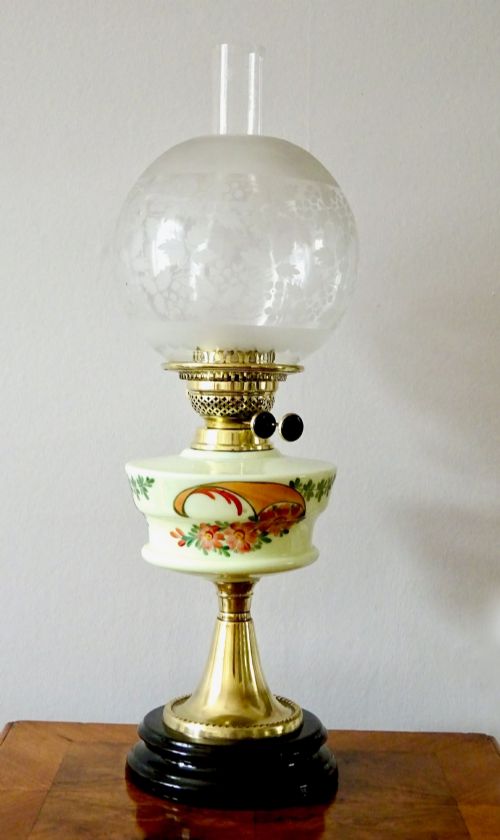
The most common examples you meet on this page date from the Victorian era and the years around nineteen hundred, taking the form of upright table lamps. They combine functional metal burners with decorative fonts and columns, often paired with matching patterned glass shades.
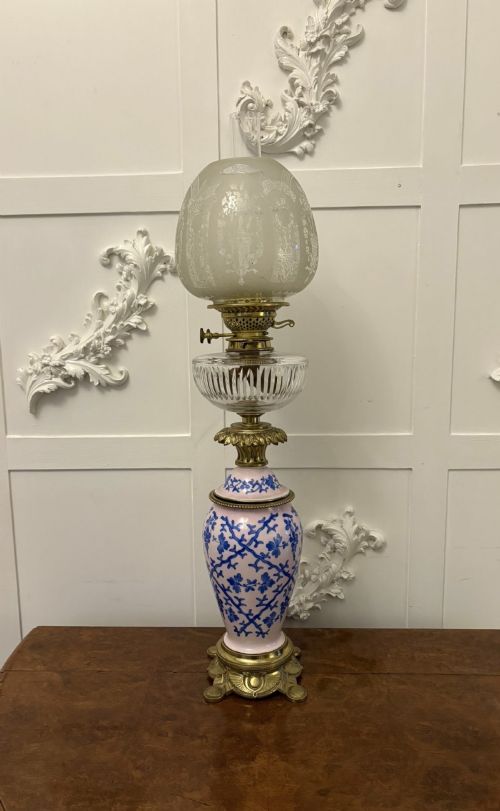
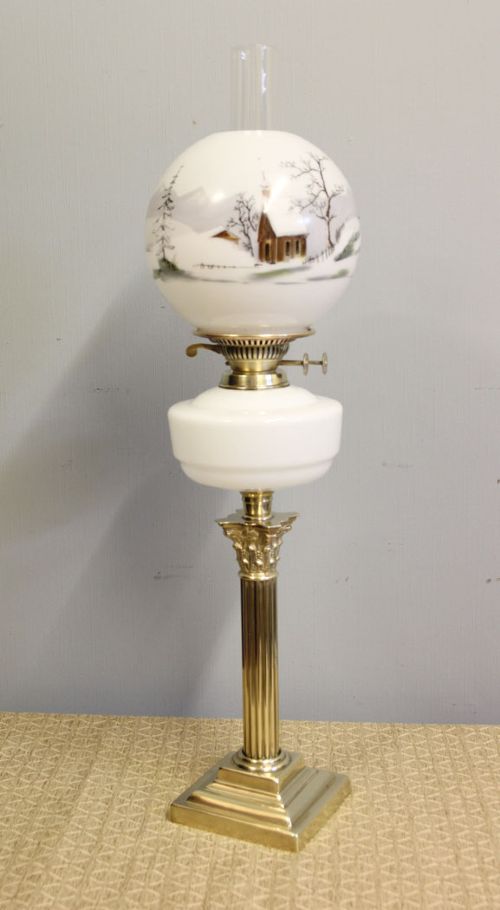
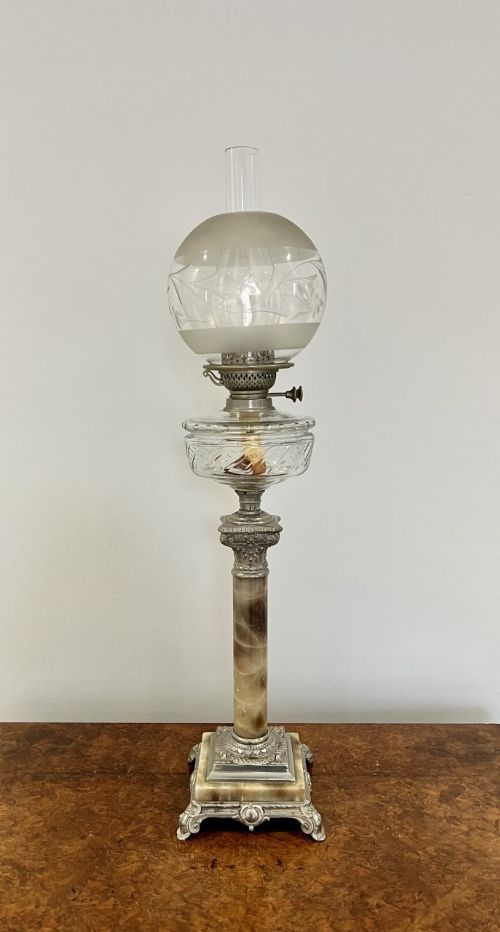
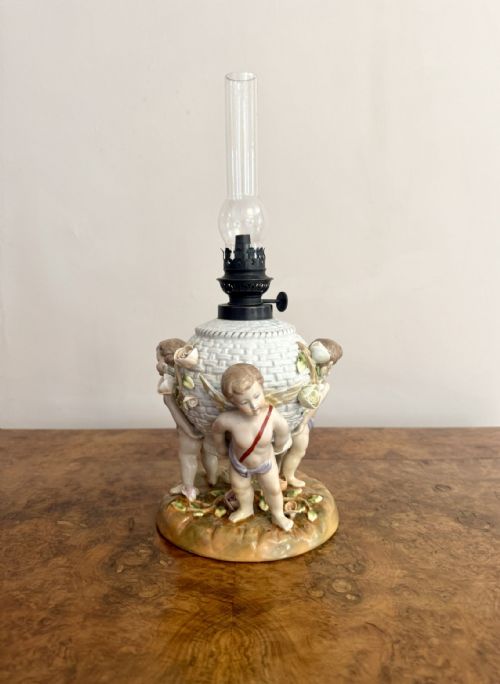
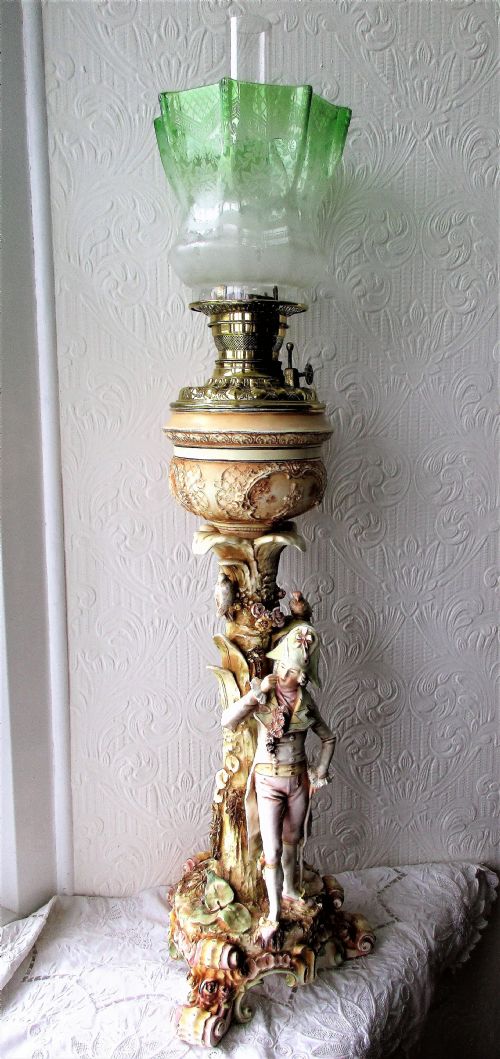
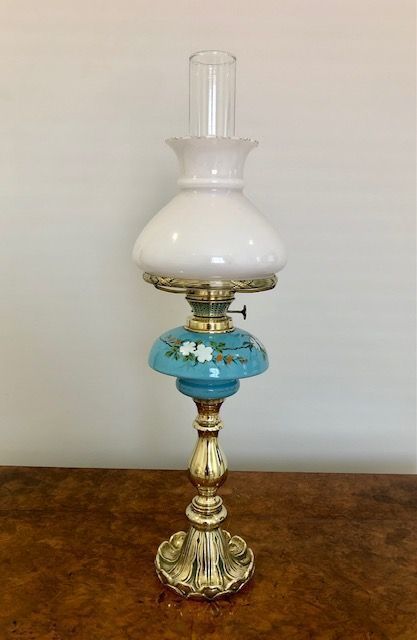
Makers utilised a diverse palette of materials, ranging from porcelain and ceramic to solid brass, bronze, and onyx. Figures, columns, and painted bowls appear frequently across the selection, showing how makers transformed a utilitarian object into an ornamental centrepiece for the home.
What varies in quality
Quality rests primarily in the ambition of the materials and the crispness of the manufacturing. Heavy solid brass castings, substantial onyx bases, and finely potted porcelain fonts sit at the upper end of the scale, outperforming simpler pressed metal or plain ceramic bodies.
Artistic execution dictates the visual success of the piece, particularly in painted porcelain bowls and cold-painted bronze figures. Hand-painted detail with rich gilding and enamel work reveals the hand of a skilled decorator, whereas mechanical printing shows less individual care.
The relationship between the shade and the base determines the overall integrity of the lamp. Matching period shades with compatible etched or painted motifs demonstrate that the object retains its original design harmony rather than being assembled from mismatched parts.
Listings feature pieces spanning from the Victorian period through the Edwardian era into the early twentieth century, utilising materials such as onyx, bronze, and opaline glass.
Sitzendorf·Hinks
The Decorative Oil Lamp Glossary
- Faience
- Tin-glazed earthenware popular in Art Nouveau and nineteenth-century decorative pieces. It provides an opaque, absorbent surface ideal for rich hand-painted enamel decoration.
- Opaline Glass
- A pale, translucent milk glass that diffuses light softly. It appears commonly in Victorian and Edwardian lamp bodies and shades.
Decorative Oil Lamp: Frequently Asked Questions
How do I tell Victorian from Edwardian lamps?
Victorian examples often favour ornate porcelain bodies, heavy brass castings, and richly coloured or painted glass fonts. They lean toward dramatic historical revival styles.
Edwardian pieces tend to introduce sleeker brass forms, onyx columns, and simpler, lighter glass shades that reflect the approaching twentieth century.
Are the shades original?
Glass shades suffered heavy breakage over the decades, meaning many surviving lamps carry replacement shades from a similar period.
Matching the collar size, glass tone, and etching style helps determine whether a shade belongs harmoniously to the base.
How should I clean a brass lamp?
Gentle dusting with a soft cloth preserves the historic surface patination that develops over more than a century.
Harsh metal polishes strip away the aged character and should be avoided to keep the original finish intact.