




Decorative Mother of Pearl
Decorative mother of pearl brings together nacre-shell inlay and brass upon rosewood, walnut, and lacquer, offering a refined finish for nineteenth-century boxes and furnishings.
Decorative Mother of Pearl
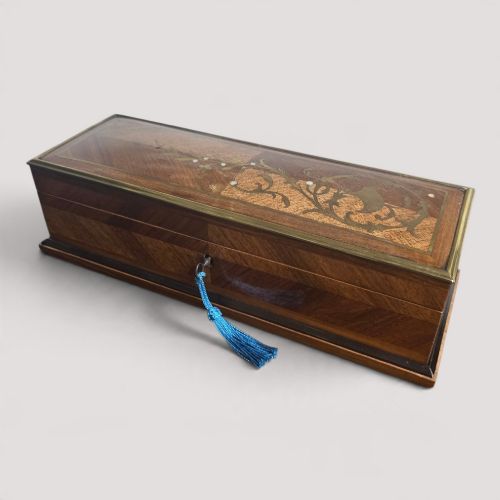
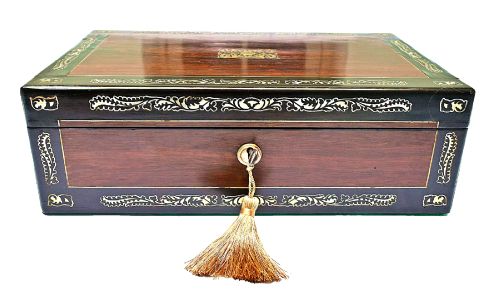
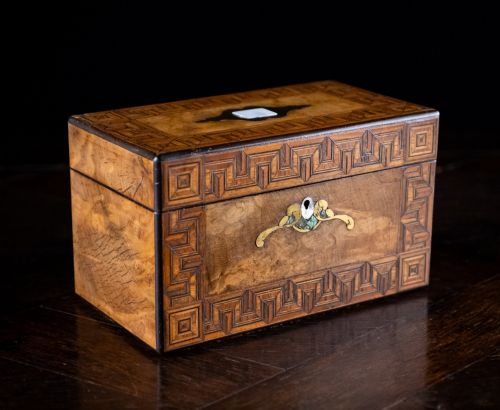
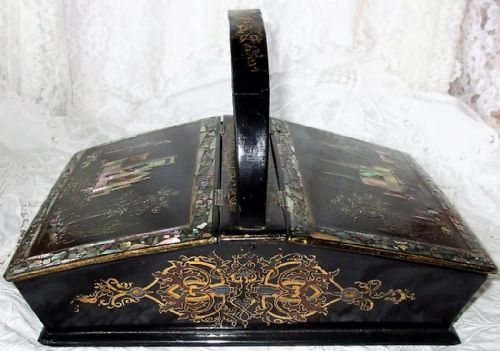
Decorative mother of pearl appears across nineteenth-century English, French, and Victorian writing slopes, glove boxes, and sewing caskets, utilising rich rosewood and papier-mâché foundations. Pieces span from Regency tea caddies to Edwardian objects, incorporating distinct regional styles.
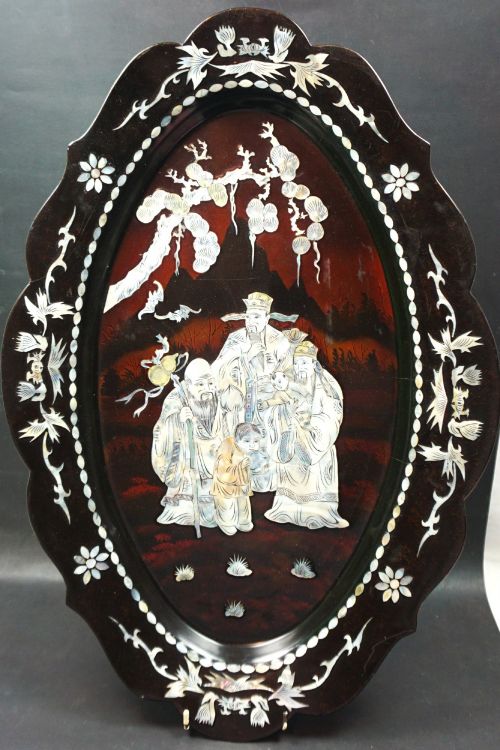
Asian and Middle Eastern workshops also produce items bearing this nacre-shell work, including Japanese Meiji period cabinets, Chinese lacquered platters, and Syrian walnut mirrors. These diverse origins demonstrate broad international traditions of shell inlay.
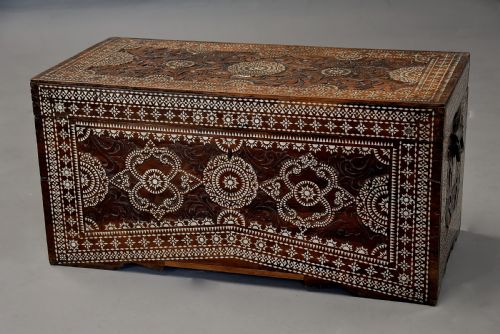
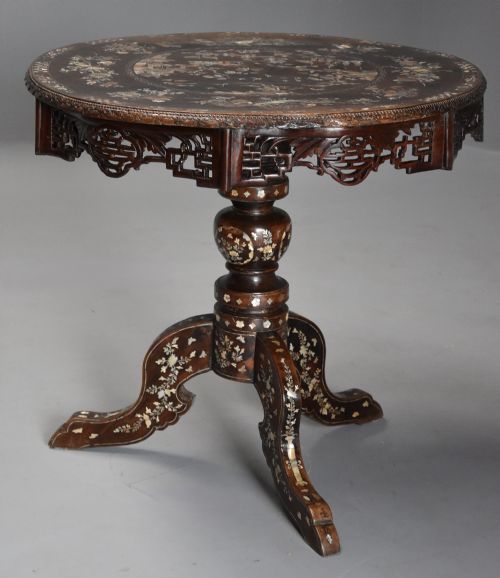
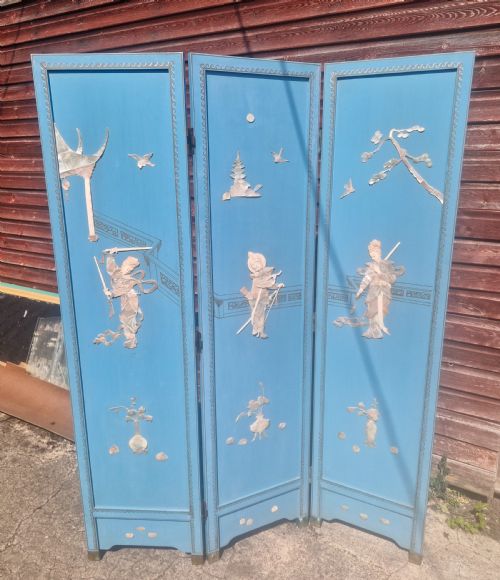
The selection ranges from small card baskets and folding hand fans to large centre tables and trunks. Buyers encounter numerous functional receptacles alongside decorative wall mirrors and screens.
Materials and Technique
Artisans cut thin plates of iridescent nacre-shell and set them meticulously into wooden carcases made of rosewood, walnut, hardwood, or lacquered surfaces. Brass wire and parquetry borders frequently accompany the shell sections to partition the geometric designs.
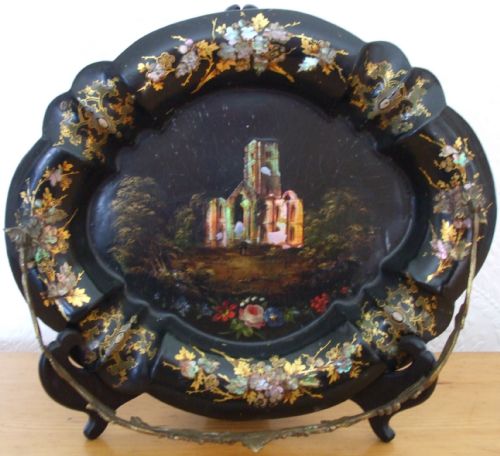
Papier-mâché serves as a principal body for Victorian trays, caskets, and needlework boxes, providing a smooth dark base that contrasts with the luminous white and tinted shell inlay. Lacquer techniques in Chinese and Japanese items apply the nacre directly onto treated wood.
Decorative Mother of Pearl Retail Price Guide 2026
Typical asking prices for decorative mother of pearl among the pieces listed under this phrase on Sellingantiques today, from the lower quarter to the upper quarter. They describe what is for sale here now, not the wider market.
A tiny carved carp leaps across a Meiji period okimono while Victorian dogs drive carts nearby.
Quality and Execution
The choice of foundation timber and secondary materials also determines standard, with solid rosewood, coromandel, and quality brass mounts indicating superior workshop production. Sound construction of internal fittings, such as velvet-lined trays and original glass inkwells, preserves the integrity of boxes and slopes.
Haruyama Shunzan·Seller of Reading·Daisy Makeig-Jones
The Decorative Mother of Pearl Glossary
- Mother-of-pearl
- The iridescent internal layer of mollusc shells, utilised for decorative inlay across boxes, furniture, and opera glasses. Its natural shimmer reflects shifting tones of pink, green, and silver.
- Papier-mâché
- A composite material made of paper pulp or sheets of paper mixed with glue and pressed, then lacquered. It provides a durable, smooth dark body for Victorian trays and caskets.
- Writing slope
- A portable desk with an angled hinged lid for correspondence, fitted internally with compartments for inkwells, pens, and stationery. They frequently feature extensive exterior pearl inlay.
- Tea caddy
- A box designed for storing dry tea leaves, often partitioned inside and fitted with a lock and key. Examples from the nineteenth century utilise rosewood and brass alongside nacre decoration.
- Shibayama
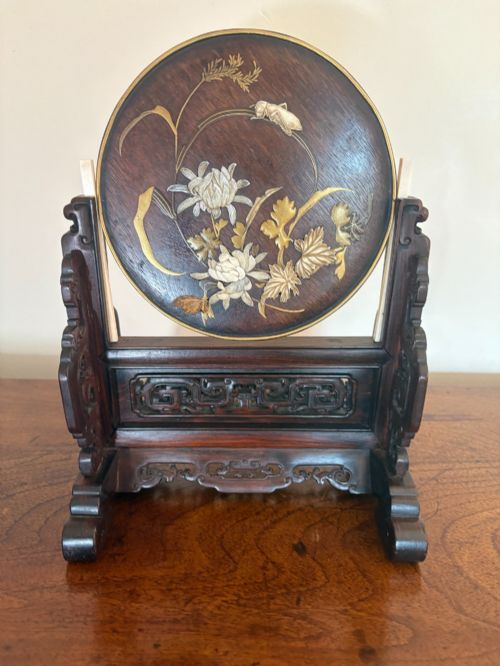
- A Japanese craft style incorporating delicate inlay of ivory, shell, and coral into wood or lacquer grounds. It appears on screens and decorative panels from the Meiji period.
- Nacre
- The organic-inorganic composite material secreted by pearl oysters and other molluscs, forming the lustrous substance used in Middle Eastern and Asian inlay work.
Decorative Mother of Pearl: Frequently Asked Questions
How do I clean decorative mother of pearl?
Wipe the surface gently with a soft, dry lint-free cloth to remove dust without disturbing the delicate inlay.
Avoid harsh chemical cleaners and excessive moisture, which can loosen the glue holding the shell plates to the wood or papier-mâché.
Can I use an antique writing slope daily?
These boxes accommodate modern correspondence and keepsakes, though care should be taken with original interior silk linings and paper components.
Treat the aged hinges and locking mechanisms gently to preserve the structure of the rosewood or walnut carcase.
What is the difference between Victorian and Regency pieces?
Regency items from the early nineteenth century favour clean architectural lines in rosewood and mahogany with restrained brass and pearl stringing.
Victorian pieces often display denser floral inlay, varied papier-mâché forms, and more ornate decorative carving across boxes and trays.
How do Japanese Meiji pieces differ from European work?
Meiji period items employ lacquer grounds and shibayama techniques, integrating shell with ivory and metal on cabinets, screens, and okimono.
European examples concentrate the nacre upon geometric or floral scrollwork set into Western furniture carcases and desktop accessories.