
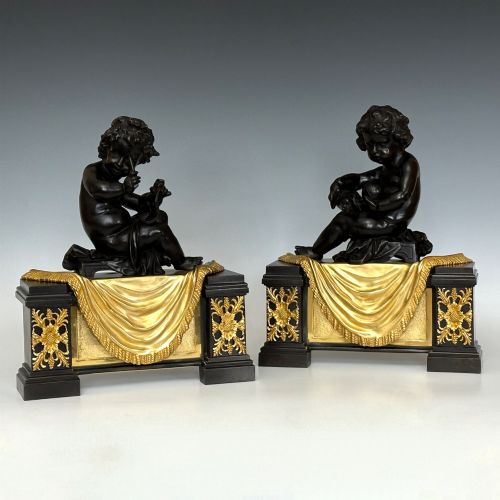
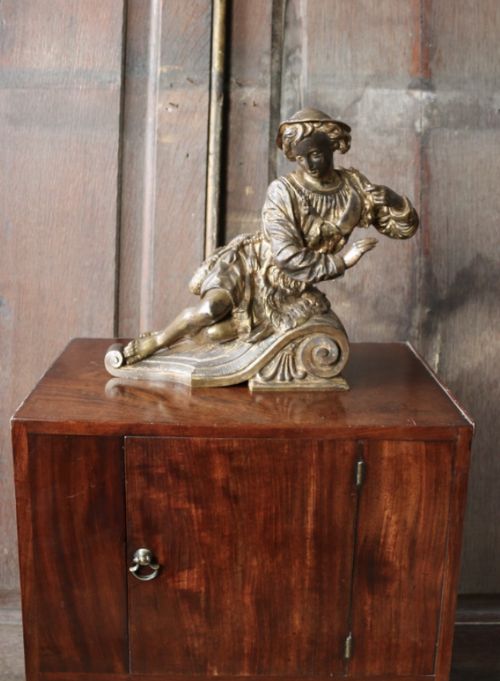


Decorative Hearth Firedogs
These decorative hearth firedogs are substantial metal supports for logs, bringing period weight and character to any open fireplace.
Decorative Hearth Firedogs
Decorative hearth firedogs, also known as andirons or chenets, sit inside the fireplace hearth to hold firewood above the floor of the grate so air can circulate beneath the flames. When you search for decorative hearth firedogs, you encounter pairs forged or cast in heavy metals, designed to be seen even when the hearth is unlit.
The examples available here lean heavily towards 19th Century Victorian and Georgian periods, alongside earlier 18th Century forms. You will frequently find brass, bronze, and wrought iron constructions, often styled with French Rococo, Baroque, or Neoclassical revivals that bring sculptural presence to a room.
How they were made
Foundry workers cast these pieces using brass, bronze, gilt bronze, and ormolu, shaping intricate figural statuettes, scrolls, and mounts through traditional moulding techniques. Iron and steel components provided the heavy structural bars needed to bear the weight of burning logs within the hearth.
Many pairs combine cast brass or bronze decorative fronts with durable wrought iron or steel horizontal billets. Surface finishes range from polished brass to gilt highlights on dark bronze and textured iron.
Some pairs feature sturdy iron billets built to grapple with hefty oak logs while wearing impossibly delicate French bronze statuettes on their toes.
What varies in quality
Quality rests in the crispness of the casting and the weight of the metal used in the figures and billets. Finer pairs display sharply chased details in the bronze or ormolu mounts, whereas simpler versions rely on heavier utility iron with basic brass ornamentation.
The articulation of the design also dictates the standard, distinguishing mass-produced commercial castings from finely sculpted statuettes with integrated architectural bases.
The Decorative Hearth Firedogs Glossary
- Chenet
- The French term for an andiron or firedog. These decorative metal supports often feature ornate cast brass or gilt bronze fronts.
- Andiron
- A horizontal metal support raised on legs used to hold logs in an open fireplace. They typically occur in matched pairs.
- Ormolu
- Finely ground high-carat gold applied to a bronze base using a mercury amalgamation process. This technique creates a rich, durable golden finish found on finer period pieces.
- Billett
- The horizontal bar or leg extending backward from the front standard of the firedog to support the firewood. It bears the direct heat of the fire.
- Revival
- A later artistic style that borrows motifs from earlier historical periods. Examples include 17th Century Revival and Baroque Revival designs executed in the 19th century.
Decorative Hearth Firedogs: Frequently Asked Questions
What is the difference between firedogs and andirons?
Firedogs and andirons are essentially the same object, serving as metal supports for logs inside an open hearth. The terms are often used interchangeably by makers and dealers.
Regional preferences and historical periods tend to favour one term over the other, but both describe paired metal furnishings designed for the fireplace.
Can these firedogs be used in a working fireplace?
Most pairs combine robust materials like wrought iron, steel, and cast brass that were built to handle the weight of burning wood. You should check the internal billet length and structural integrity before exposing antique metal to direct flame.
Many buyers use them strictly for decorative effect in non-working hearths or with gas log inserts.
How do I identify the period of a pair?
Dating relies on stylistic clues such as Neoclassical urns, Rococo scrolls, or Victorian crests, combined with the manufacturing techniques visible on the metal. Cast bronze and ormolu often point to 18th or 19th-century French workshops, while heavier iron and brass combinations suggest English domestic use.
Comparing the casting sharpness and fastener types helps narrow down the decade of manufacture.
How do I clean antique brass and bronze firedogs?
Dust them regularly with a soft, dry cloth to prevent soot and ash buildup from pitting the metal surface. Avoid harsh chemical polishes that strip away the aged patina built up over centuries.
Gentle cleaning preserves the original finish and highlights the chased details on the cast mounts.