


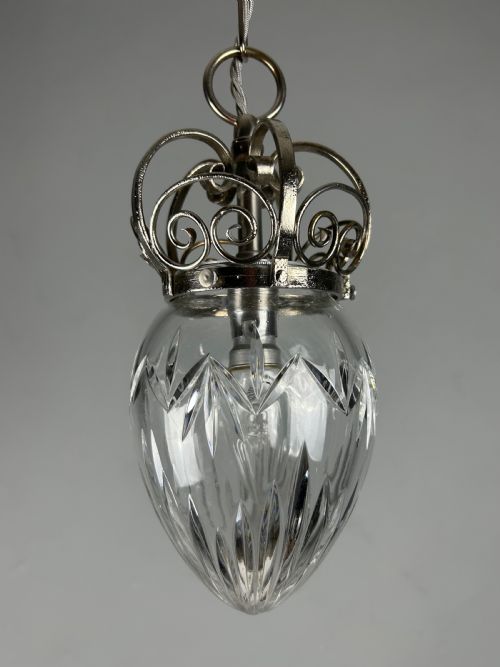


Decorative Glass Ceiling Fixture
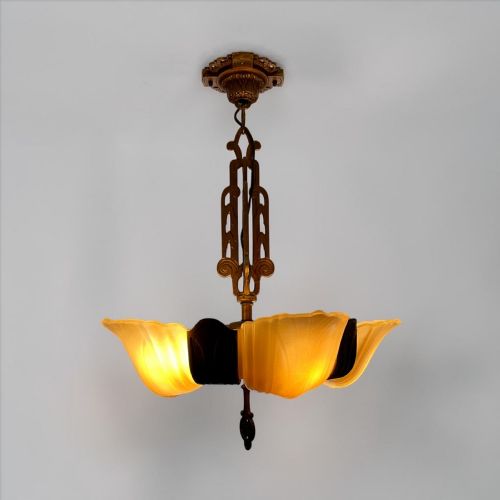
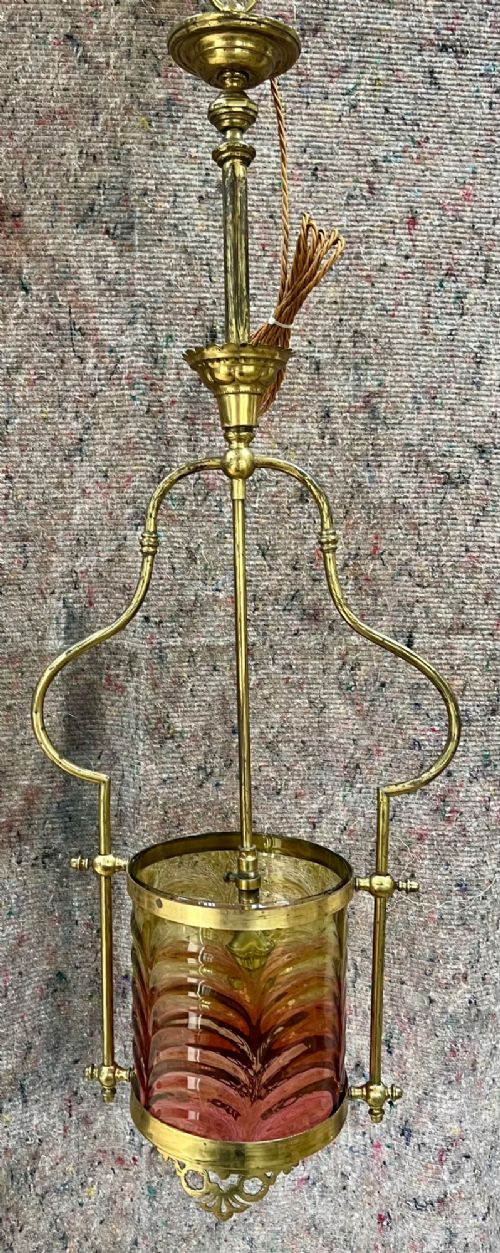
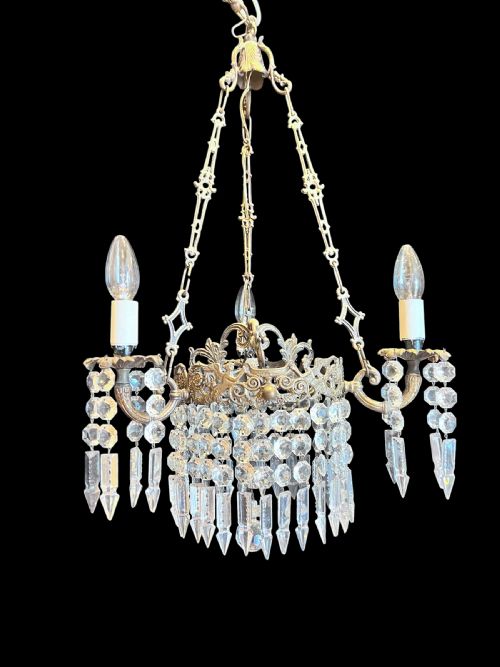
These decorative glass ceiling fixture examples bring together cut crystal, brass and bronze across periods from the nineteenth century to the art deco era.
Decorative Glass Ceiling Fixture
A decorative glass ceiling fixture brings period illumination to a room, spanning forms from chandeliers and pendant lights to hall lanterns and porch lights. You will frequently meet Edwardian and Art Deco examples alongside nineteenth-century brass and bronze pieces.
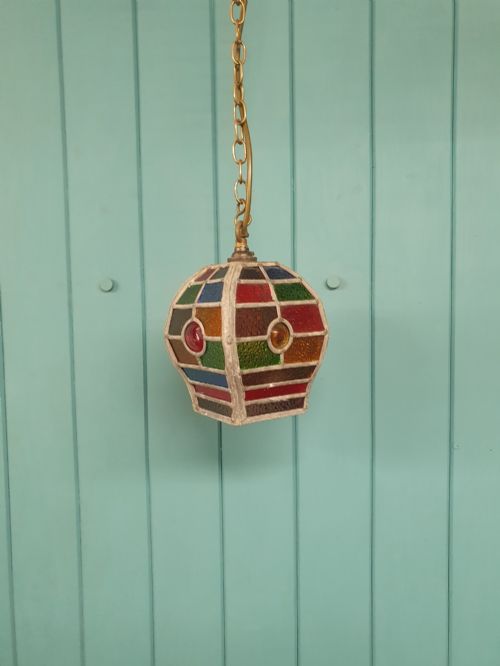
The selection ranges from multi-branch chandeliers hung with crystal drops and coloured fruit motifs to single-light bell jars and leaded stained glass lanterns. Makers worked in styles as varied as French Art Nouveau, Gothic Revival, Arts and Crafts, and Victorian.
Most pieces combine glass with structural metal frames in brass, copper, cast iron, or wrought iron. They serve as central overhead lighting in hallways, reception rooms, and porches.
How they were made
Makers shaped glass through hand-blowing, cutting, and moulding to create bell jars, slip shades, and faceted drops. Lead came held together stained glass panels in porch lanterns.
Metalwork frames utilised cast bronze, spun or sheet brass, and blacksmith-made iron. Components were joined with screws, fixings, and chain suspensions to support the weight of the glass.
The listings combine nineteenth-century Victorian and Edwardian pieces with 1920s and 1930s Art Deco designs.
What varies in quality
The refinement of the glass cutting and the clarity of the crystal create differences across pieces, alongside the crispness of casting in the brass, bronze, or iron frames. Hand-blown elements and detailed metalwork indicate careful workshop production.
The complexity of the design, such as multi-branch configurations, integrated coloured crystal fruit, or elaborate open-cage bronze frames, separates standard utility lighting from more decorative commissions.
The Decorative Glass Ceiling Fixture Glossary
- Bell jar lantern
- A hanging light enclosed by a bell-shaped glass shade. These pieces often hang in hallways and porches.
- Slip shade
- A moulded glass shade that slots into a metal frame. This form is particularly common in Art Deco lighting.
- Cut crystal
- Glass with facets ground and polished into the surface. This technique increases light refraction.
- Open-cage chandelier
- A metal framework holding glass panels or drops without a central solid column. The construction exposes the internal light sources.
Decorative Glass Ceiling Fixture: Frequently Asked Questions
How do I hang a heavy antique chandelier?
Heavy fixtures require direct fixing into ceiling joists or structural noggins using appropriate fixings to bear the combined weight of metal and glass.
Professional installation by an electrician ensures the electrical safety and structural security of the suspension.
Can these lights be rewired for modern use?
Most antique fixtures accept modern wiring standards and standard lamp holders while retaining their original frames and glass components.
Rewiring allows older metal and glass fittings to operate safely on contemporary electrical circuits.
How do I clean cut glass drops?
Crystal drops and glass shades benefit from careful washing in warm soapy water using a soft cloth or sponge.
Removing the drops from the frame prevents breakage during cleaning and allows thorough drying before reassembly.
What is the difference between a pendant and a chandelier?
Chandeliers feature multiple branching arms designed to hold several light bulbs, whereas pendants typically hang a single light source from a chain or cord.
Pendants suit smaller spaces like porches or hallways, while multi-branch chandeliers illuminate larger rooms.