





Decorative Glass Ceiling Fitting
A decorative glass ceiling fitting brings weight and genuine period presence to a room, catching the light in a way modern mass-produced fixtures simply cannot manage.
Decorative Glass Ceiling Fitting
A decorative glass ceiling fitting encompasses chandeliers, pendant lights, hanging lanterns, and multi-branch ceiling lights designed to illuminate and adorn a room from above. These fixtures draw upon Victorian, Edwardian, Art Nouveau, and mid-twentieth-century design traditions, bringing historical character directly into the domestic interior.
The versions most commonly met on this page span the nineteenth century through to the nineteen-thirties, reflecting periods of confident decorative metalwork and glass manipulation. Buyers encounter French provincial styles alongside formal Edwardian crystal drops and simpler brass and glass configurations.
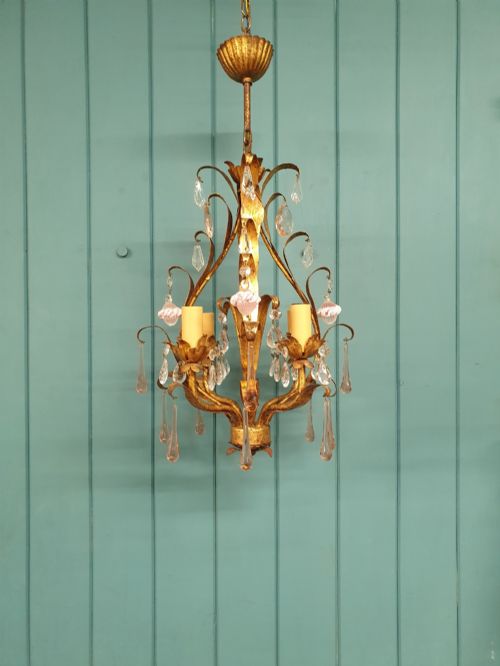
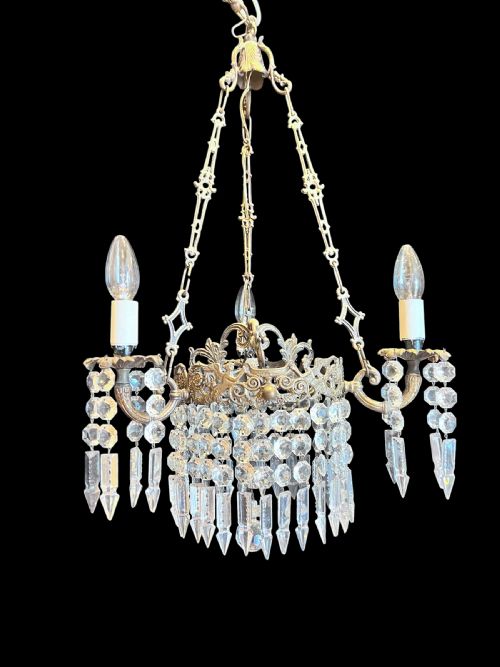
From single pendant lights to substantial multi-branch chandeliers hung with fruit-shaped crystals, these pieces serve as both functional illumination and focal architectural elements. Each object carries the specific material choices and structural hallmarks of its respective decade of origin.
How they were made
Makers constructed these frames predominantly from cast and spun brass, bronze, wrought iron, and chrome, providing a robust structural skeleton for the glass elements. Metal components were often gilt, polished, or left with a natural patination suited to the prevailing style of the period.
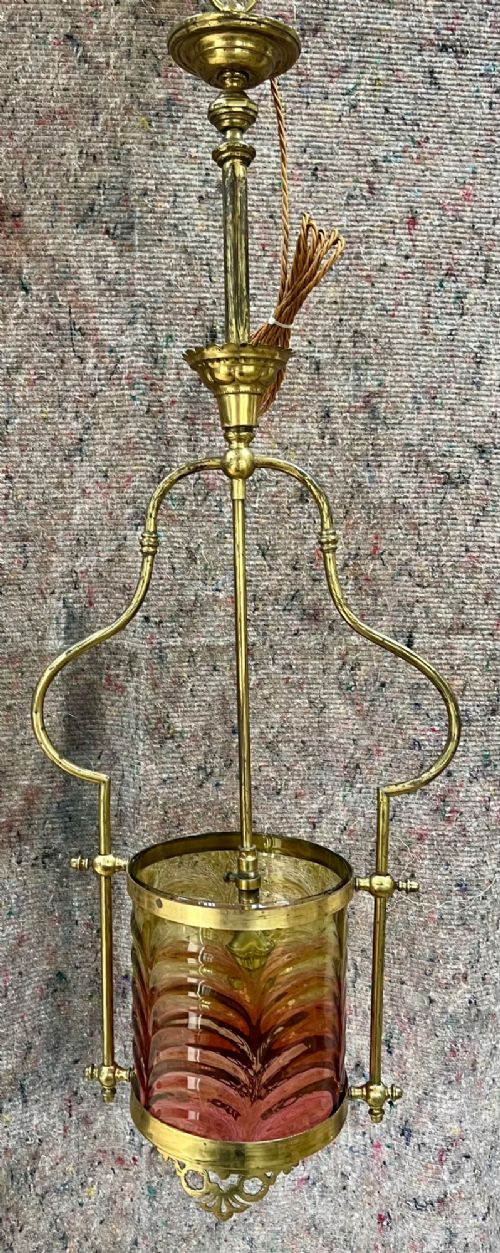
Glass elements range from mould-blown cranberry shades and cut crystal drops to heavy pressed glass bodies and decorative swags. These glass components were suspended from the metal frames using wire loops, pinned brass pins, or integrated metal collars, allowing the material to move and refract ambient light.
Decorative Glass Ceiling Fitting Retail Price Guide 2026
Typical asking prices for decorative glass ceiling fitting among the pieces listed under this phrase on Sellingantiques today, from the lower quarter to the upper quarter. They describe what is for sale here now, not the wider market.
A nineteenth-century iron chandelier on record comes unusually decorated with hanging crystal fruits including grapes, apples, and pears.
What varies in quality
Quality reveals itself in the weight of the metal casting and the crispness of the cut within the glass components. Finer pieces demonstrate hand-finished detail in the brass work and genuine hand-cutting on crystal drops, whereas simpler examples rely on standard press-moulded glass and lighter gauge frames.
The integration between the metal armature and the glass suspension dictates the overall stability and visual harmony of the fitting. Superior pieces maintain balanced proportions across multiple branches and use substantial hanging loops that secure the heavy glass elements firmly without crowding.
The Decorative Glass Ceiling Fitting Glossary
- Chandelier
- A branched ceiling-mounted lighting fixture designed to hold multiple light sources and distribute illumination widely. These assemblies often incorporate hanging crystal drops to amplify the reflective quality of the piece.
- Pendant light
- A single light fixture suspended from the ceiling by a cord, chain, or rigid rod. They concentrate light downwards while displaying decorative shades made from cut or coloured glass.
- Cranberry glass
- A rich red-pink glass created by adding gold chloride to the molten batch during manufacturing. It appears frequently in late nineteenth and early twentieth-century decorative lighting.
- Cut glass
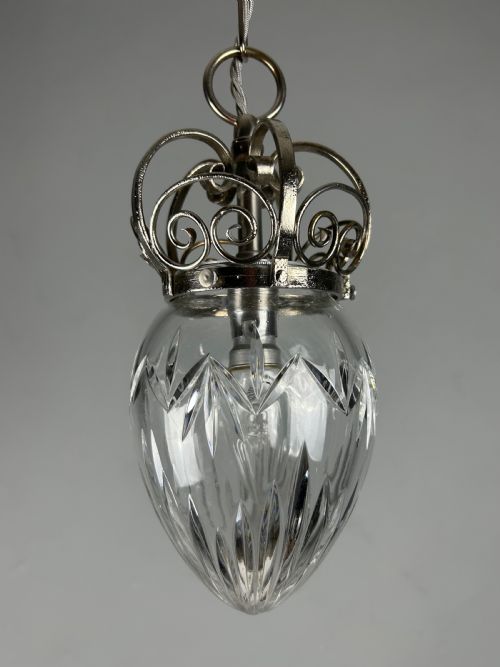
- Glass decorated by grinding facets or patterns into the surface using a rotating wheel. This technique sharpens the refractive properties of the material.
Decorative Glass Ceiling Fitting: Frequently Asked Questions
Can these old light fittings use modern bulbs?
Many surviving fixtures have already been rewired for contemporary electrical standards, allowing them to accept standard modern lamp holders and LED bulbs.
When dealing with unrewired or vintage examples, an electrician can safely update the internal wiring while preserving the exterior metal and glass components.
How do I clean delicate glass drops without damaging the fixture?
Crystal drops and glass shades benefit from careful removal and washing in lukewarm water with a mild detergent, followed by thorough drying with a soft cloth.
Leaving the glass on the frame while cleaning risks splashing the surrounding antique metalwork, which may have sensitive gilt or patinated surfaces.
How do I tell Victorian fittings from later Art Nouveau pieces?
Victorian examples tend to feature formal symmetry, heavy cast brass, and structured cut glass or multi-tiered crystal drops that reflect traditional academic design.
Art Nouveau pieces introduce asymmetrical organic lines, whiplash curves, and often incorporate coloured glass elements like cranberry shades or stylised floral motifs.