

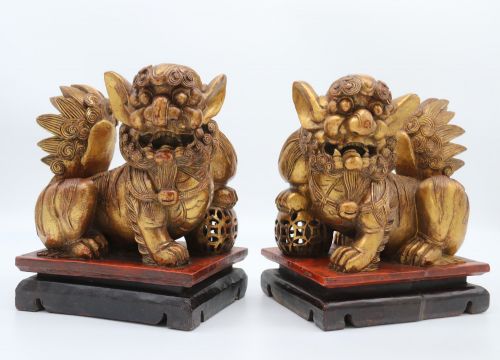


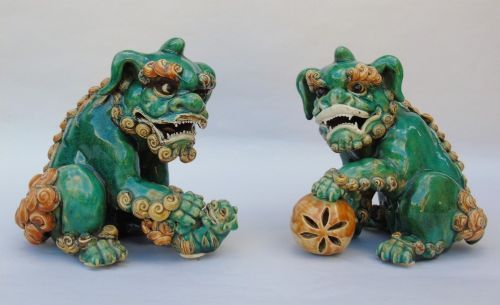


Decorative Foo Dogs
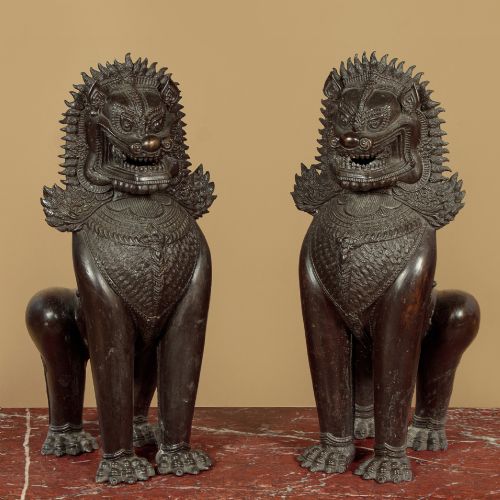
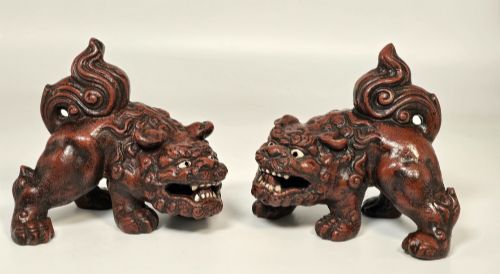
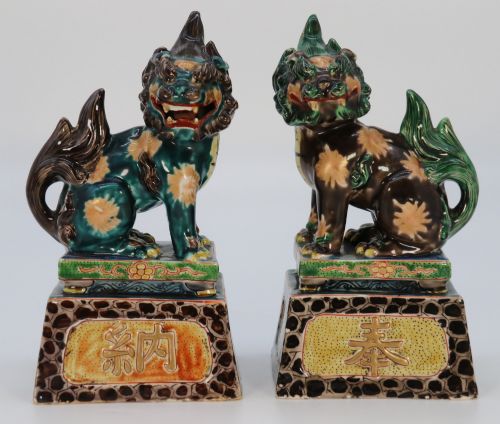
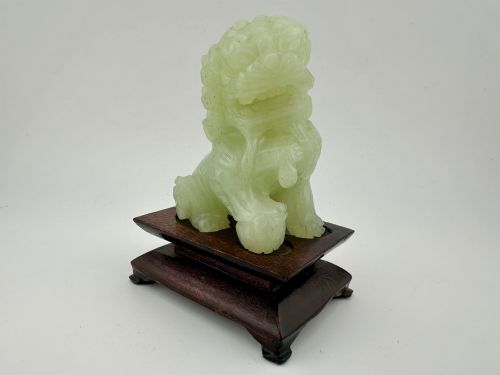
These decorative foo dogs are guardian figures of power and protection, ranging from eighteenth-century carved wood to nineteenth-century glazed pottery.
Decorative Foo Dogs
When you search for decorative foo dogs, you encounter guardian figures rooted in traditional Chinese and Asian art. These mythical protectors appear as sculptures, statues, decorative figures, and figurines designed to guard spaces.
The selections available here span several distinct periods, most notably the nineteenth century, alongside items from the eighteenth century and the nineteen-hundreds. You will encounter pairs fashioned as Buddhist lions, door hardware, and lidded jars.
Makers drew upon diverse cultural interpretations, producing French Chinoiserie and Chinese Republic Period examples alongside Japanese Imari wares. These objects function equally as sculptural statements and functional items like table lamps.
How they were made
Carvers shaped wood, jade, and hardstone into intricate guardian lions, often applying gilt and lacquer for rich surface texture. Cast iron offered a heavier, more industrial medium utilised in European interpretations such as French Chinoiserie.
Potters and ceramicists utilised porcelain, pottery, and bronze, finishing works with Sancai glazes, enamel, and paint. These varied materials allowed craftsmen to render the muscular forms and curling manes characteristic of the subject.
Decorative Foo Dogs Retail Price Guide 2026
Typical asking prices for decorative foo dogs among the pieces listed under this phrase on Sellingantiques today, from the lower quarter to the upper quarter. They describe what is for sale here now, not the wider market.
Period representations on this page include the eighteenth century, nineteenth century, and the nineteen-hundreds.
What varies in quality
The distinction between ordinary and exceptional examples rests in the depth of the carving and the fidelity of the casting. Skilled artisans captured dynamic movement and expressive detail in wood and metal rather than relying on flat surface decoration.
Glaze application and enamel work further separate standard productions from finer pieces, particularly in nineteenth-century Sancai ceramics and Japanese Imari wares. Colour saturation and precision in traditional motifs dictate the visual standing of each sculpture.
The Decorative Foo Dogs Glossary
- Foo dog
- A traditional guardian figure, properly known as a Buddhist lion or dog of fo, placed to ward off negative energy.
- Sancai
- A traditional three-colour glaze technique utilised on Chinese pottery, predominantly featuring amber, green, and creamy white tones.
- Imari
- A style of Japanese export porcelain decorated in underglaze blue and overglaze iron red, gold, and other colours.
- Chinoiserie
- A European artistic style reflecting Chinese motifs and techniques, popular in furniture, hardware, and decorative objects.
- Republic Period
- A twentieth-century era in China noted for notable revivals and refinements in porcelain and hardstone carving.
Decorative Foo Dogs: Frequently Asked Questions
What are decorative foo dogs?
These pieces are sculptural guardian lions originating from Asian and European traditions, used traditionally to protect doorways and domestic spaces.
They appear in materials ranging from carved wood and jade to cast iron, pottery, and bronze.
How do I date an antique foo dog?
Dating relies upon material analysis, stylistic markers of periods such as the Qing Dynasty or Republic era, and manufacturing techniques.
Wood and bronze examples show distinct tool marks and patina evolution, while ceramics display period-specific glazes and potting methods.
Were foo dogs made as pairs?
Many examples were created as matched pairs representing male and female guardians, traditionally positioned on either side of an entrance.
Single figures also appear, functioning as table lamps, door plates, or standalone mantel sculptures.
How do I care for wooden and ceramic foo dogs?
Wooden figures require stable humidity and gentle dusting to protect carved details, gilt surfaces, and applied lacquer.
Ceramic and bronze pieces need minimal maintenance beyond careful handling and occasional soft cleaning to preserve their glazes and patinas.