

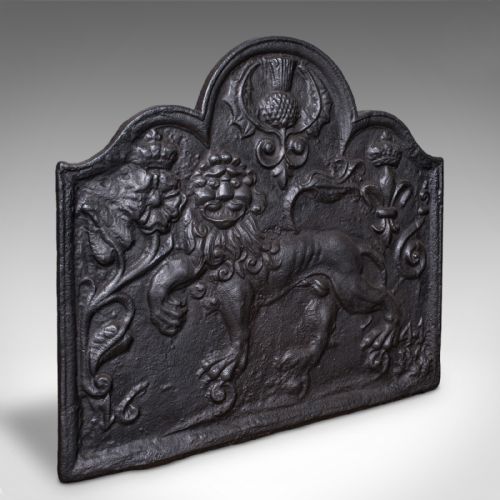


Decorative Fireback
These heavy cast iron decorative fireback pieces protect masonry and radiate warmth into a room.
Decorative Fireback
A decorative fireback stands against the rear wall of a hearth to deflect heat forward and shield the brickwork from intense flames. Buyers encounter various forms here, including church refectory designs, register grates, and heavy cast iron reflectors.
The pieces on this page span the 17th century, the Georgian era, and the Victorian period, including late Victorian examples. English cast iron serves as the primary medium across these fireplace accessories and inserts.
Formats range from simple panels to complete assemblies featuring grates and fenders. Each object reflects the utilitarian and aesthetic demands of historical domestic heating.
How they were made
These items rely entirely on cast iron, poured into moulds to create heavy, durable plates designed to withstand intense hearth temperatures. The technique allows for robust construction combined with decorative relief work.
Moulders worked molten metal to produce raised patterns, ranging from ecclesiastical motifs in church refectories to Georgian and Victorian designs. The resulting slabs are exceptionally solid and functional.
Decorative Fireback Retail Price Guide 2026
Typical asking prices for decorative fireback among the pieces listed under this phrase on Sellingantiques today, from the lower quarter to the upper quarter. They describe what is for sale here now, not the wider market.
Church refectory firebacks bring monastic heat management straight into the Victorian parlour.
What varies in quality
Depth and crispness of the cast relief define the visual distinction between standard panels and superior examples. Heavier castings and intricate historical styling indicate more ambitious workshop production.
The presence of integrated grates, fenders, or reflector wings alters the complexity of an object. Integration of these surrounding elements changes the character and utility of the hearth setup.
The Decorative Fireback Glossary
- Fireback
- A heavy metal plate placed at the back of a fireplace. It protects the wall and radiates heat back into the room.
- Cast iron
- An iron-carbon alloy poured into a mould to form solid objects. This material defines the construction of every piece listed.
- Register grate
- A fireplace insert featuring an adjustable plate to control draught and smoke. These units combine functional ventilation control with decorative ironwork.
- Fender
- A low metal guard placed in front of a fireplace to contain sparks and ash. They frequently accompany grates and firebacks in period hearths.
- Reflector
- An alternative term for a fireback designed to bounce light and warmth outward. English examples often bear this designation.
Decorative Fireback: Frequently Asked Questions
What is a decorative fireback used for?
A decorative fireback sits upright against the rear brickwork of an open hearth. It serves the dual purpose of protecting the masonry from direct heat degradation and reflecting warmth back into the living space.
Historically, these heavy iron slabs also displayed heraldic devices, coats of arms, or religious scenes to adorn the fireplace even when unlit.
How do I date a cast iron fireback?
Dating relies on stylistic clues, ranging from 17th-century vernacular designs to ornate Victorian or Georgian relief work. The specific motifs and lettering styles cast into the iron point toward the era of manufacture.
Heavier panels and church refectory pieces often carry distinct stylistic markers associated with specific centuries of English ironfounding.
Are all firebacks made of cast iron?
The listings here consist exclusively of cast iron. This material provided the necessary thermal mass and durability to endure centuries of solid fuel fires without melting or warping.
Foundries poured the molten metal into sand or open moulds to achieve the characteristic heavy plate thickness seen in these fireplace accessories.
Can firebacks be used in modern fireplaces?
Many heavy iron pieces function effectively in working hearths to improve heat retention and protect original brickwork. Their solid construction handles high temperatures reliably.
Buyers should measure hearth dimensions carefully, as these antique plates and register grates vary significantly in weight, width, and thickness.