

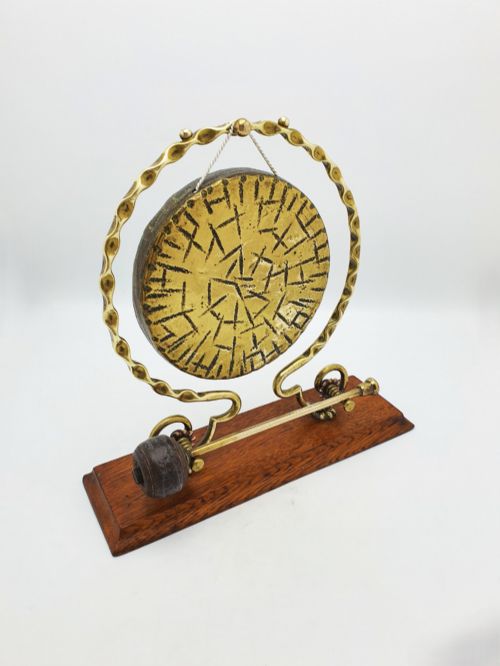


Decorative Dinner Gong
A decorative dinner gong brings historic theatre to the dining table, using resonant brass and carved timber frames to summon guests.
Decorative Dinner Gong
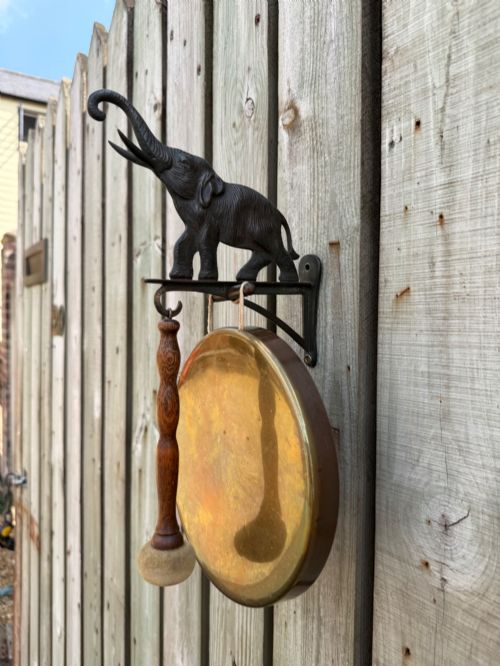
A decorative dinner gong combines a metal disc or bell with a supporting frame, designed primarily to call households to meals through deep acoustic resonance. These items appear in various formats across this selection, from compact table gongs to wall-mounted chimes.
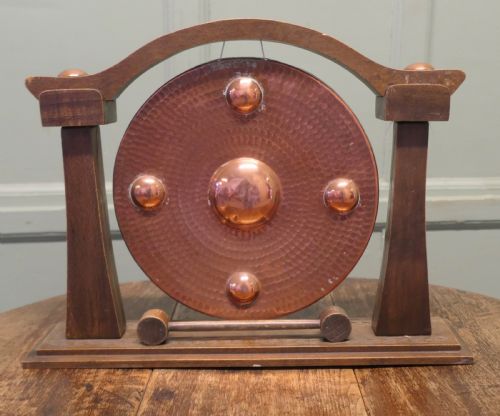
The pieces on this page span the nineteenth century and the early twentieth century, showing influences from Victorian, Edwardian, and Arts and Crafts design movements. Buyers will frequently encounter brass discs suspended within carved wooden or metal frameworks, often accompanied by a handheld striker.
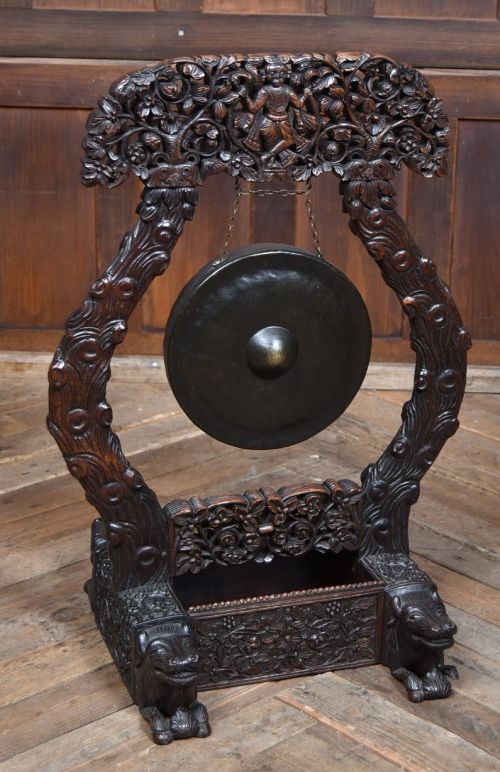
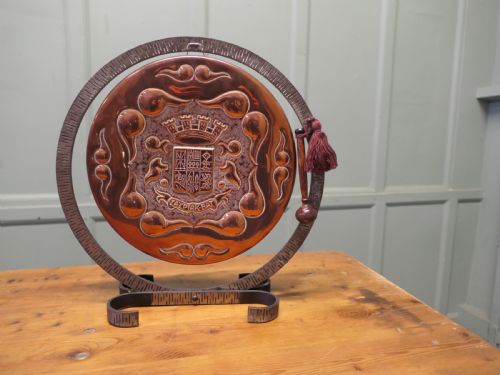
Regional styles broaden the selection significantly, including Chinese export carvings, Anglo-Indian woodwork, Basque folk art metalwork, and French Arts and Crafts interpretations. This variety means every surviving gong reflects the specific interior tastes and manufacturing capabilities of its era.
How they were made
Makers fashioned the striking discs and bells predominantly from hand-hammered brass, copper, and silver plate to achieve a clear, sustaining tone. Iron and cast components also appear in structural elements, bringing weight and stability to the hanging apparatus.
Support frames rely heavily on seasoned oak, mango wood, and carved hardwoods, frequently shaped with intricate dragon motifs or geometric foliate patterns. Cords and textiles are utilised to suspend the metal gongs cleanly within their frames, allowing maximum vibration upon impact.
Decorative Dinner Gong Retail Price Guide 2026
Typical asking prices for decorative dinner gong among the pieces listed under this phrase on Sellingantiques today, from the lower quarter to the upper quarter. They describe what is for sale here now, not the wider market.
Listings feature items dated across the nineteenth and twentieth centuries, utilising oak, brass, copper, and carved hardwood.
What varies in quality
Quality separates through the purity of the metal casting and the depth of the acoustic resonance when struck. Superior examples produce a rich, sustained hum rather than a flat metallic clank, showing careful alloy selection and even wall thickness across the gong.
Hand-carved frames demonstrate the artisan's skill through crisp undercutting in the woodwork and balanced proportions between the hanging apparatus and the base. Lesser pieces rely on cast repetition or softer timber details that lack the sharpness seen in finer Victorian and Arts and Crafts workshops.
The Decorative Dinner Gong Glossary
- Arts and Crafts
- A design movement prioritising handcraftsmanship and simple forms over mass production. Pieces from this tradition show honest construction and visible material textures.
- Gothic Revival
- An architectural and decorative style drawing on medieval ecclesiastical forms. Items in this taste often incorporate pointed arches and heavy timber framing.
- Silver Plate
- A thin layer of silver fused to a base metal like copper or brass. This finish provided the lustre of solid silver at a lower production cost.
Decorative Dinner Gong: Frequently Asked Questions
How do I clean a brass gong?
Dust the brass gently with a dry microfibre cloth to remove surface grime without disturbing any historic patina. Avoid abrasive metal polishes unless necessary, as they can strip away original finishes accumulated over decades.
Keep moisture entirely away from the wooden frames when tending to the metal components. A soft brush works well for clearing dust out of deep carvings.
Where were dinner gongs placed?
These gongs sat principally on sideboards in dining rooms or hung near hallway entrances to project sound effectively across large rooms. Their placement allowed the host to signal meal times audibly to residents upstairs or in adjoining spaces.
Table models required sturdy wooden surfaces to absorb vibrations, while wall-mounted chimes needed secure fixings to bear the swinging weight.
How do I date a decorative gong?
Examine the materials, joinery techniques, and stylistic motifs visible in the frame and hanging mechanism. Victorian and Edwardian examples often feature specific aesthetic markers like stylized floral brasswork or dense hardwood carvings.
Look for stamped maker marks or registration numbers on the metal components if present. These details help narrow down the manufacturing decade alongside the era's prevailing decorative trends.
Can I still strike antique gongs?
Most surviving gongs retain their structural integrity and produce a clear tone when struck gently with a proper mallet. Ensure the suspension cord is secure before testing the sound to prevent the metal disc from dropping.
Strike the centre of the gong lightly using the original striker or a soft-headed mallet. Heavy impacts can stress old metal or snap aged suspension cords.