




Decorative Desk Stand
A decorative desk stand brings order and substance to a writing table, combining utility with fine period craftsmanship.
Decorative Desk Stand
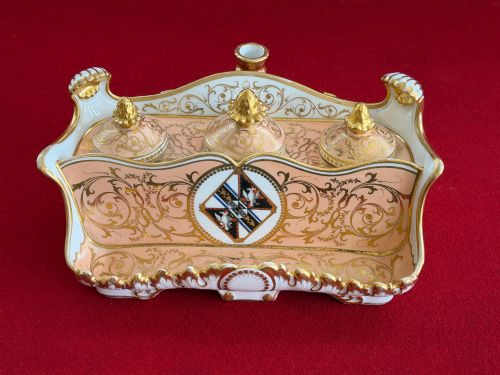
A decorative desk stand encompasses various writing accessories and desk furniture originating from the nineteenth and early twentieth centuries. These pieces range from walnut inkstands fitted with glass bottles to brass calendar frames and ceramic inkwells.
The Victorian era and the turn of the twentieth century produced the majority of these items, reflecting an age when correspondence required dedicated desk furnishings. Walnut, brass, and porcelain appear frequently among the pieces designed for daily desk use.
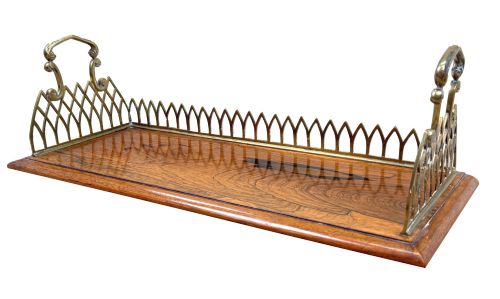
While some examples serve purely functional purposes, others incorporate artistic styles such as Art Nouveau or Egyptian Revival. Collectors encounter diverse forms including book slides, table screens, and cabinets on stands alongside traditional inkstands.
Materials and construction
Metals such as brass and gilded bronze form the structural base of many stands, often shaped with cast ornamentation or champlevé enamel detailing. Wood components utilise walnut and coromandel-wood, selected for rich grain and durability.
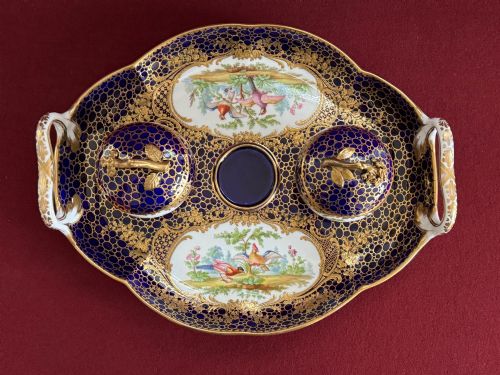
Ceramic elements feature porcelain and glazed pottery, sometimes decorated with hand-painted floral motifs or cobalt blue and gold finishes. Glass appears principally in the original ink bottles housed within metal or wooden frames.
Decorative Desk Stand Retail Price Guide 2026
Typical asking prices for decorative desk stand among the pieces listed under this phrase on Sellingantiques today, from the lower quarter to the upper quarter. They describe what is for sale here now, not the wider market.
Object forms range from traditional inkstands and book slides to terrestrial world globes and ceramic table lamps.
Assessing quality and craftsmanship
Quality rests upon the crispness of the casting in metal mounts and the selection of timber veneers. Superior examples retain their original glass inkwells, stoppers, and fitted components rather than later replacements.
The integration of artistic styles, such as detailed Art Nouveau flowing lines or precise champlevé enamel work, distinguishes standard utilitarian items from finer decorative pieces. Maker attribution and the survival of secondary materials like silk or tortoiseshell also elevate an object's standing.
Albert Marionnet·Barwise London·Minton
The Decorative Desk Stand Glossary
- Inkstand
- A fitted tray or stand designed to hold inkwells, pen holders, and sometimes a sander or wafer box. These desk accessories formed the centrepiece of Victorian writing equipment.
- Champlevé enamel
- A technique where troughs or cells are hollowed out in the surface of a metal object and filled with vitreous enamel paste before firing. This decorative method produces vibrant coloured patterns on brass and bronze frames.
- Coromandel-wood
- A dense, heavy timber from Asia featuring dark brown grain with contrasting light yellow stripes. Cabinetmakers valued this exotic wood for luxury nineteenth-century desk accessories.
- Toleware
- Tinplate metal coated with lacquer or painted with decorative designs. Items made from this material often display floral motifs and served practical functions on the desk.
- Book slide
- An adjustable stand designed to hold a row of books upright on a desk or table. These pieces frequently incorporate expanding wooden mechanisms with metal mounts.
Decorative Desk Stand: Frequently Asked Questions
What items belong on a desk stand?
A traditional desk stand typically accommodates glass inkwells, pen trays, and compartments for stamps or sealing wax. Many examples also integrate perpetual calendars or candlesticks to aid writing.
Buyers often find broader desk accessories grouped under this heading, including book slides, picture frames, and small cabinets designed for desktop organisation.
How do I date a decorative desk stand?
Dating relies on identifying stylistic markers, construction methods, and materials characteristic of specific decades. Victorian pieces often display heavy walnut construction and ornate brass casting, whereas 1900s items frequently show sweeping Art Nouveau lines.
Examining the fixings, hinge types, and the composition of the glass ink bottles provides further clues to the exact manufacturing period.
Are original ink bottles important?
Original glass ink bottles greatly enhance the completeness and desirability of a desk stand. Finding a piece that retains its matching stoppers and original glass inserts is a significant advantage for collectors.
Replacements remain common because glass components suffered frequent breakage or staining during daily nineteenth-century use.
How should I care for brass and wood?
Brass components require gentle dusting and occasional cleaning with a non-abrasive cloth to preserve the metal surface without stripping historical patina. Walnut and coromandel-wood benefit from sparing application of appropriate furniture wax to nourish the grain.
Keeping these materials away from direct sunlight and excessive moisture prevents timber warping and protects delicate enamel or gilt finishes.