
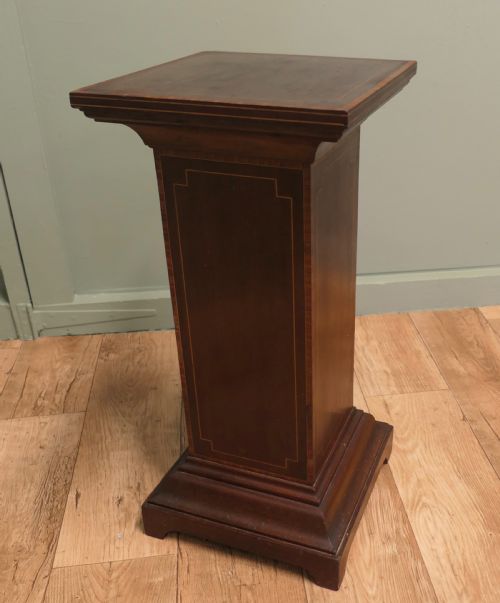


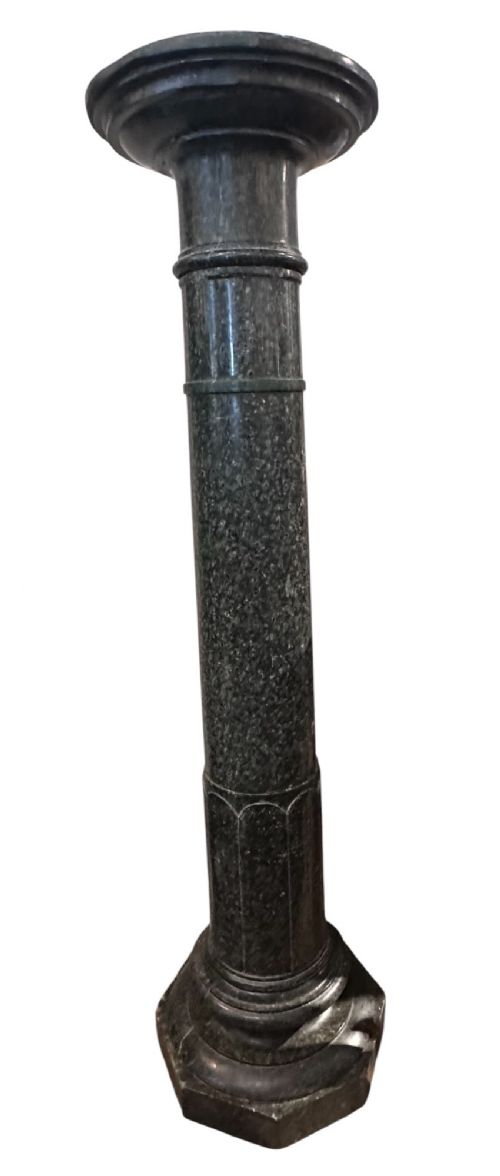


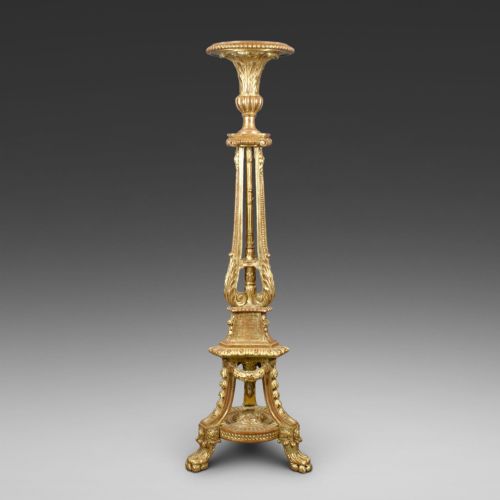


Decorative Classical Display Pedestals
These decorative classical display pedestals elevate sculpture and urns with architectural authority, drawing the eye upwards through enduring ancient proportions.
Decorative Classical Display Pedestals
When you search for decorative classical display pedestals, you encounter architectural columns, torcheres, and plinths designed to showcase art objects in domestic interiors. The examples here span the nineteenth century through the early twentieth century, showing revivalist influences from Regency to Baroque styles.
The objects take the form of vertical stands and columns intended to bear weight while providing visual drama. Pieces range from grand scale painted and parcel gilt pairs to compact Italian marble torcheres and circular faux marble columns.
How they were made
Makers utilised traditional materials including carved wood, stone, marble, and plaster, often finished with paint, gesso, and gold leaf. Craftspeople also employed specialised techniques such as faux marble finishes to imitate costlier stones like Verde Antico and Carrara.
Surface ornamentation involved intricate carving in wood and plaster, alongside parcel gilding to highlight architectural details. Silver plating appears on related metal tazzas, combining sculptural bronze work with reflective metallic finishes.
Listings feature materials spanning carved marble, natural stone, wood, painted timber, plaster, gesso, and gold leaf across the nineteenth and early twentieth centuries.
What varies in quality
Quality rests upon the ambition of the architectural design and the authenticity of the materials, whether genuine carved marble or skilful faux finishes. The crispness of the carving in wood, plaster, or stone dictates the visual success of the classical vocabulary.
Proportion and scale separate standard supports from exceptional display pieces, particularly in matched pairs and grand scale columns. The depth and execution of gilding, paintwork, and marbling further distinguish the finish.
The Decorative Classical Display Pedestals Glossary
- Torchere
- A tall ornamental stand intended to carry a light or a decorative object. These slender supports lift display items to eye level.
- Plinth
- The heavy base supporting a column or pedestal. It provides structural stability and grounds the vertical composition.
- Verde Antico
- A dark green serpentine marble prized in classical design. Italian makers utilised this stone for rich tonal variation.
- Gesso
- A plaster mixture applied to wood surfaces as a base for gilding and paint. It allows for sharp decorative moulding before finishing.
- Tazza
- A shallow saucer-shaped vessel on a stem and foot, frequently mounted on stands. These pieces function as elevated display dishes.
Decorative Classical Display Pedestals: Frequently Asked Questions
What holds up a heavy marble pedestal?
Solid stone columns and substantial wood shafts distribute weight evenly across a wide base plinth. Their internal engineering relies on the sheer density and mass of natural materials.
Larger nineteenth century examples use internal bracing or solid masonry construction to support heavy bronze sculptures or marble urns safely.
How do I place a column in a room?
Columns work effectively in corners or empty alcoves where vertical lines draw the eye upward. They create focal points without consuming excessive floor space.
Pairing matching columns on either side of a doorway or fireplace creates a balanced, architectural symmetry derived from classical interiors.
Are faux marble surfaces modern?
No, artisans have practiced decorative marbling for centuries to simulate expensive stones like Carrara and Verde Antico. Painted timber and plaster columns from the Victorian and Regency periods frequently used these techniques.
This approach allowed makers to achieve grand decorative effects using lighter or more accessible base materials.
How do I clean a giltwood torchere?
Dust giltwood and painted surfaces gently with a dry, soft brush to protect fragile gold leaf and gesso layers. Moisture and modern cleaning chemicals damage historic finishes instantly.
Professional conservation advice is recommended if deeper cleaning becomes necessary on nineteenth century gilded surfaces.