




Decorative Ceramic Basin
These decorative ceramic basin examples bring together centuries of global pottery traditions, offering striking painted surfaces and functional forms for the modern interior.
Decorative Ceramic Basin
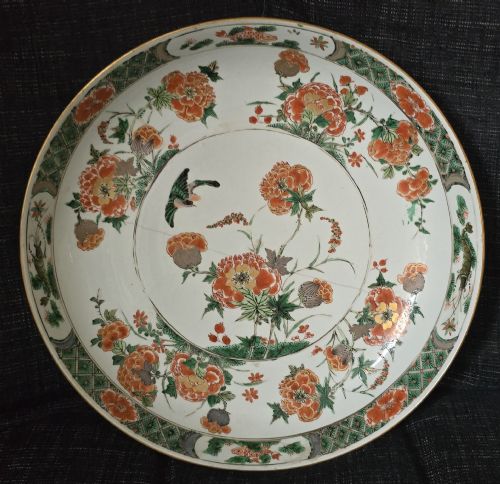
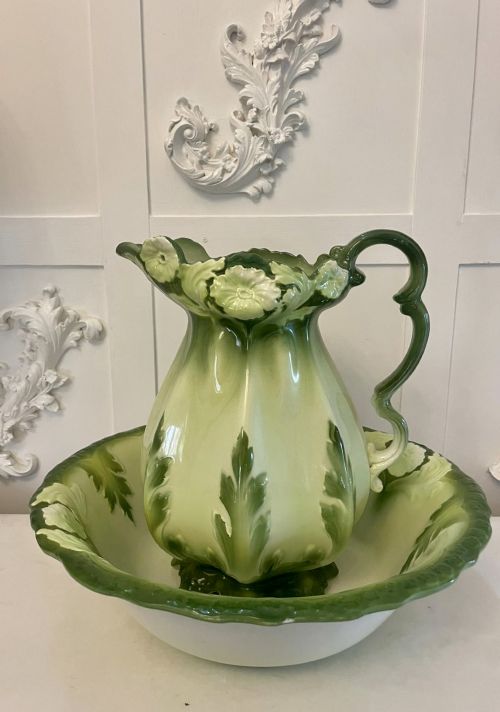
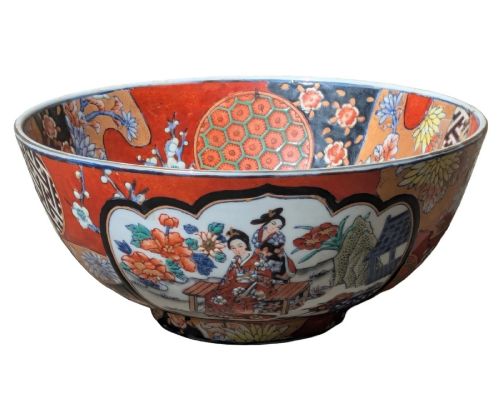
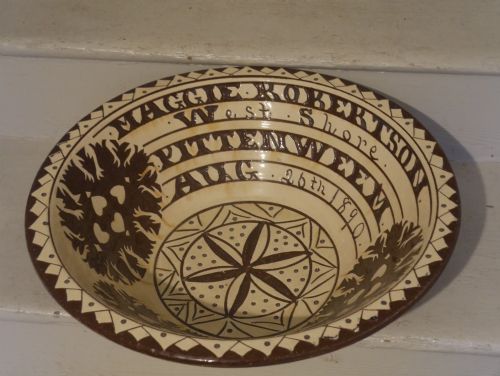
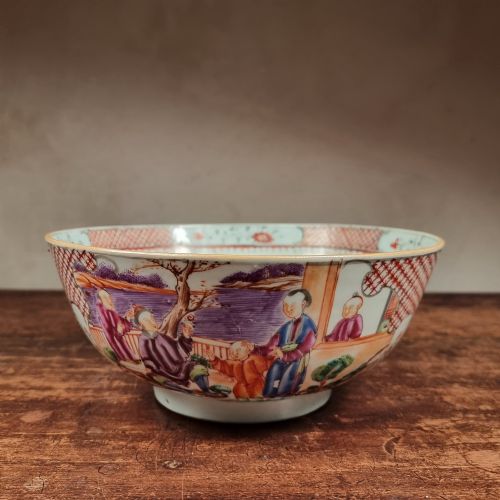
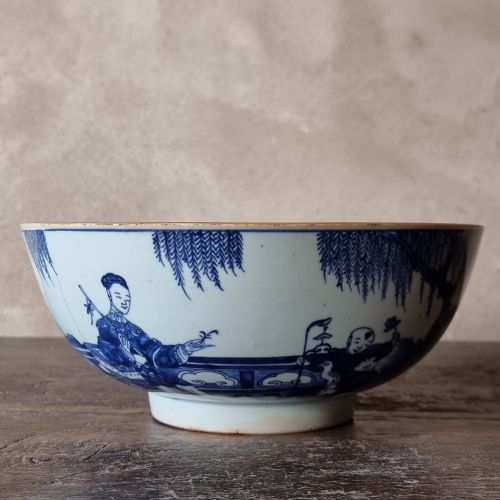
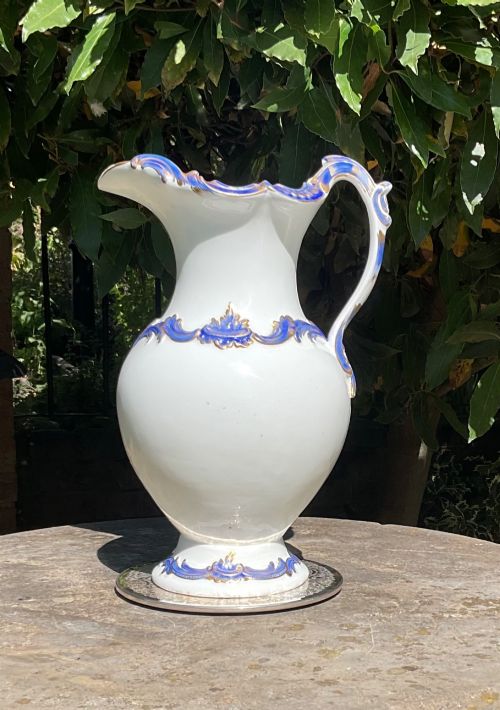
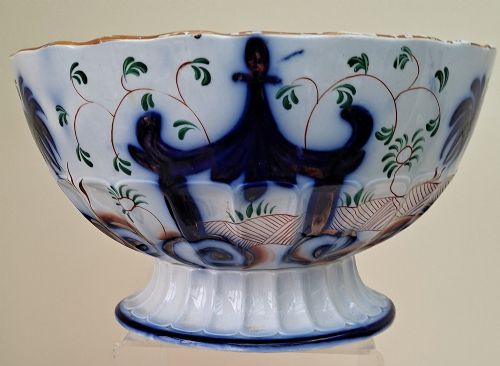
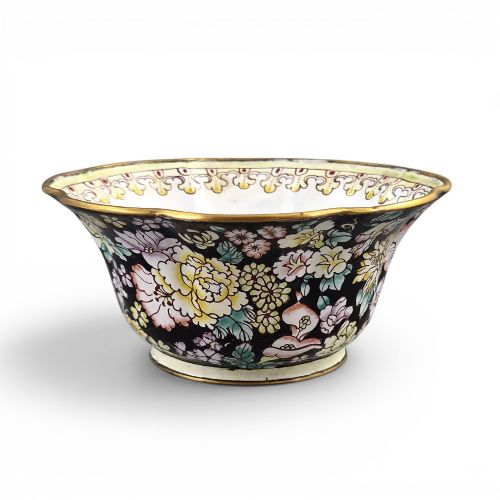
A decorative ceramic basin encompasses a wide variety of historical vessels, ranging from large punch bowls and footbaths to elaborate washstand sets and jardinières. Buyers searching for a decorative ceramic basin encounter forms spanning the seventeenth through the early twentieth centuries, crossing Chinese export porcelain, Japanese Imari, and British earthenware traditions.
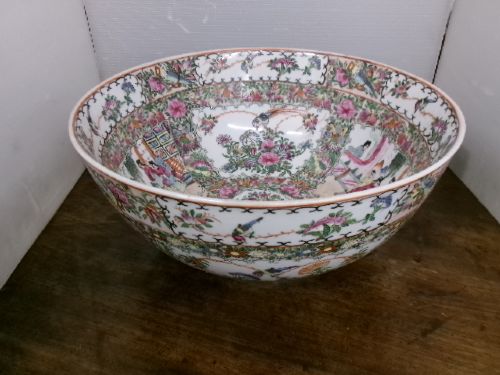
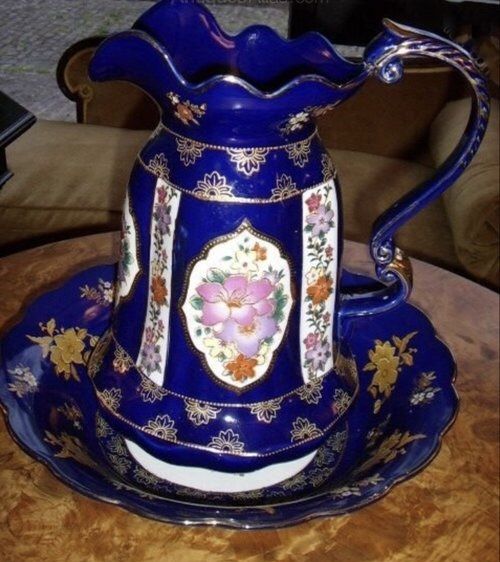
The selections on this page lean heavily towards large presentation bowls and complete wash jug and bowl sets originating from Victorian British potteries and East Asian export kilns. These items function as decorative centrepieces, floral containers, or table-top displays rather than utilitarian washware.
Examples stretch from early eighteenth-century blue and white dishes to vibrant Art Nouveau pottery and Satsuma wares from the Meiji period. Each piece reflects the specific domestic or export tastes of its period of manufacture, utilising traditional glazing and hand-painted motifs.
Materials and methods
Potters shaped these vessels using earthenware, porcelain, and stoneware bodies, often finishing the surfaces with opaque white tin glazes or transparent glossy coatings. Cobalt blue pigment serves as a primary underglaze colour across multiple centuries, supplemented by enamels, gilt, and gold leaf applied over the glaze.
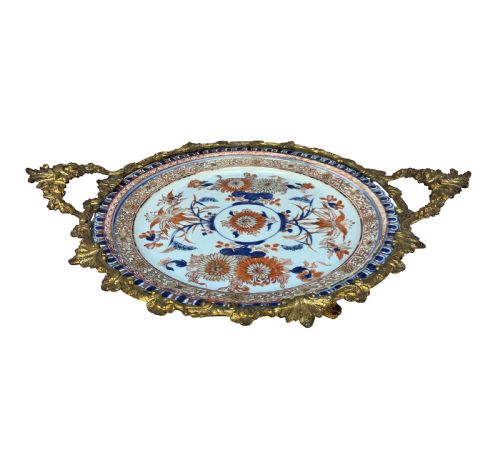
Decoration relies heavily on hand-painted brushwork, demonstrated in Cantonese famille rose palettes, Japanese Imari iron-red and blue designs, and British transfer-printed spongeware. Certain specialised items incorporate metallic ormolu mounts to secure porcelain sections or elevate footed bowls.
Decorative Ceramic Basin Retail Price Guide 2026
Typical asking prices for decorative ceramic basin among the pieces listed under this phrase on Sellingantiques today, from the lower quarter to the upper quarter. They describe what is for sale here now, not the wider market.
Dragon motifs curl around lustrous basins while butterflies flutter across Wedgwood bowls, proving that historical potters loved a touch of theatre.
Evaluating the work
Quality rests upon the crispness of the hand-painted brushwork, the depth and stability of the glaze, and the precision of the initial ceramic throwing or moulding. Pieces featuring finely detailed famille rose motifs or intricate Satsuma gilding demonstrate superior artisan skill compared to simpler mass-produced wares.
The preservation of original surface details, including delicate gold leaf and overglaze enamel colours, distinguishes well-kept specimens from those worn by heavy historical usage. Maker attribution and signed artist crests further elevate the standing of individual examples within the broader ceramic canon.
Doulton Burslem·Royal Worcester·Wedgwood·Ryuzan·Nikko
The Decorative Ceramic Basin Glossary
- Famille rose
- A major palette of Chinese ceramic glazes introduced in the eighteenth century, distinguished by an opaque pink or purple enamel derived from colloidal gold. This colour scheme often dominates floral and figurative scenes.
- Imari
- A style of Japanese export porcelain produced in Arita, traditionally characterised by a palette of underglaze blue, iron-red, and gilt highlights. These pieces frequently display intricate panel designs.
- Jardiniere
- A large ornamental pot or container designed to hold a live plant or floral arrangement, usually manufactured from ceramic or pottery. They often feature matching pedestals or footed bases.
- Punch bowl
- A large, wide-rimmed vessel historically utilised for mixing and serving communal drinks at social gatherings. Their generous interior space invited elaborate painted decoration.
- Satsuma
- A type of Japanese earthenware featuring a pale, ivory-coloured cracked glaze decorated with detailed polychrome enamels and gilt. Production flourished during the Meiji period.
Decorative Ceramic Basin: Frequently Asked Questions
What is a decorative ceramic basin used for?
These vessels historically served domestic functions such as personal washing, dining hospitality, or horticultural display within grand houses. Today, collectors utilise them as striking interior centrepieces, table displays, or standalone sculptural objects.
Larger forms accommodate floral arrangements or sit upon sideboards as decorative art, bridging the gap between historical utility and visual display.
How do I care for antique ceramics?
Maintenance requires gentle handling and dusting with a soft, dry cloth to protect fragile overglaze enamels and applied gilding. Water and harsh cleaning agents should remain away from unglazed or porous areas.
Display surfaces ought to be stable and free from direct sunlight to prevent fading in delicate pigments and gold leaf details over time.
How do I identify Japanese Imari ware?
Japanese Imari porcelain displays a distinct palette featuring deep underglaze cobalt blue combined with vibrant iron-red and supplementary gold leaf. The patterns frequently incorporate stylized floral motifs, panels, and symmetrical borders.
Production centres around Arita, with items ranging from seventeenth-century plates to later nineteenth-century export bowls created for Western markets.
What distinguishes Satsuma pottery?
Satsuma wares are defined by their characteristic soft, ivory-coloured earthenware body covered in a fine network of crackle glaze. Artisans applied dense polychrome enamels and intricate gold leaf directly over this surface.
Pieces from the Meiji period often bear artist signatures or specific clan crests on the underside, marking the workshop origin.