




Decorative Carved Oak Table
A decorative carved oak table brings substantial timber and intricate handwork into a room, offering both surface utility and period character.
Decorative Carved Oak Table
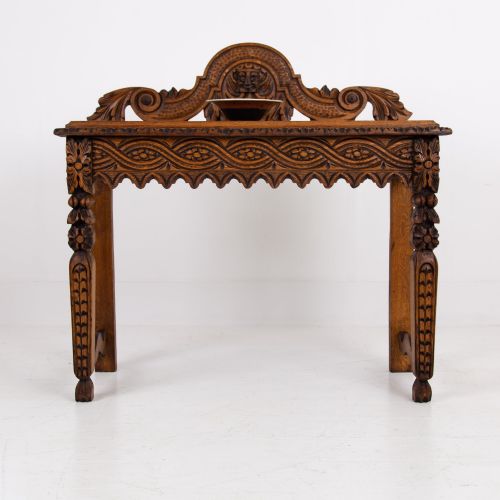
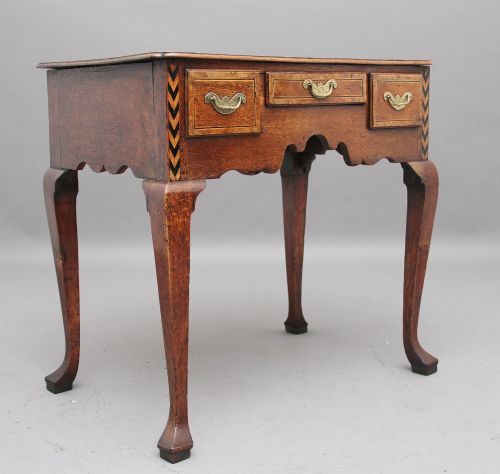
A decorative carved oak table combines sturdy British and continental timber with detailed surface carving, taking forms such as side tables, consoles, lowboys, and small apprentice pieces. These pieces span the eighteenth century, the Victorian era, and the early twentieth century, showing influences from Jacobean revival to Arts and Crafts design.
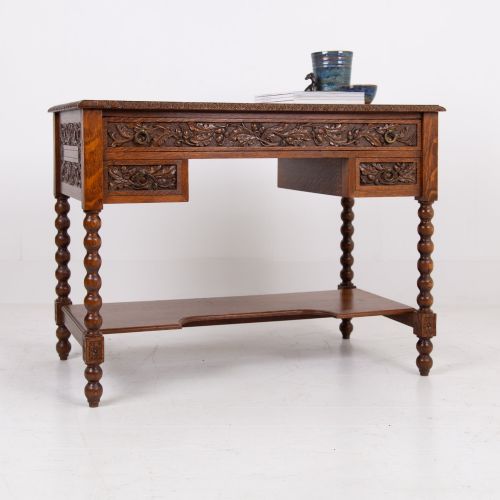
Buyers searching for a decorative carved oak table will frequently encounter items produced around nineteen hundred alongside earlier nineteenth-century examples and eighteenth-century lowboys. The construction often pairs solid oak with carved foliate motifs, drawer compartments, or barley twist supports suited to traditional and eclectic interiors.
Materials and construction methods
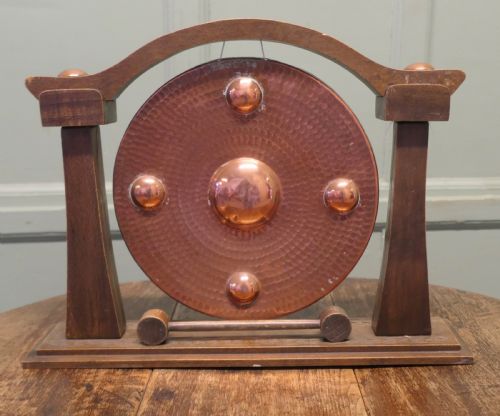
Makers utilised solid oak alongside supporting elements of brass and copper, particularly for hardware, handles, and hanging gongs associated with the furniture. The timber was selected for its pronounced grain and durability, then shaped by hand using traditional joinery techniques.
Surface enrichment relied on hand carving to render fruiting vines, geometric panels, and relief patterns directly into the oak. Structural stability was achieved through pegged joints and sturdy framing, ensuring the tables could withstand daily domestic use while displaying artistic craftsmanship.
Several miniature apprentice pieces appear among the larger tables, proving that tiny furniture required just as much sweat as the big ones.
Distinguishing quality in carved oak furniture
Quality rests primarily in the crispness and depth of the hand carving, where cleanly defined relief work separates superior examples from softer, more mechanically finished pieces. The choice of oak timber itself matters, with closely grained boards and harmonious patination indicating higher workshop standards.
Proportion and structural integrity also dictate the standing of a piece, as balanced dimensions and original hardware reveal the care taken during initial production. Subtle details, such as well-fitted drawers or carefully turned legs, distinguish standard utility items from finer decorative works.
Liberty and Co·Galle
The Decorative Carved Oak Table Glossary
- Lowboy
- A small side table or dressing table featuring one or more rows of drawers, commonly originating from the eighteenth century.
- Barley twist
- A turning technique resembling a spiralling rope, frequently utilised on table legs and plant stands during the nineteenth and twentieth centuries.
- Arts and Crafts
- A design movement spanning the late nineteenth and early twentieth centuries that emphasised handcrafting, local materials, and simple utility.
- Console table
- A table designed to stand flat against a wall, often supported by ornate legs or brackets in period interiors.
Decorative Carved Oak Table: Frequently Asked Questions
How do I date a carved oak table?
Dating relies on examining the construction methods, tool marks left on the timber, and the specific decorative style of the carving. Eighteenth-century pieces typically show hand-sawn boards and pegged joinery, while items from nineteen hundred reflect revival styles or Arts and Crafts influences.
Hardware such as brass handles and hinges also offers clues to the period of manufacture. Comparing the patination and wear patterns helps confirm whether a piece dates to the Victorian era or later.
Where should I place a side table in my home?
These tables suit hallways, living rooms, and studies where surface space is needed alongside distinct period character. Their compact proportions allow them to sit neatly against walls or beside seating without dominating the room.
The carved details and sturdy oak construction mean they pair well with both traditional interiors and more modern, eclectic spaces that benefit from contrasting textures.
What is an apprentice piece?
An apprentice piece is a smaller-scale model created by a woodworker to prove technical skill to master craftsmen. These miniature tables replicate full-sized furniture in every detail, including working drawers and precise carving.
Because they were built as test pieces rather than everyday furniture, they often display exceptionally fine handwork and attention to proportion.
How do I care for antique oak furniture?
Maintenance involves keeping the timber away from direct heat sources and sudden humidity changes to prevent the oak from splitting. Regular dusting with a soft, dry cloth preserves the finish without requiring heavy polishes.
Applying a traditional beeswax occasionally helps nourish the wood and maintain its natural lustre over time.