


Decorative Caddy Box
A decorative caddy box is a small storage vessel made for dry leaf tea or keepsakes, offering tactile pleasure and period craftsmanship.
Decorative Caddy Box
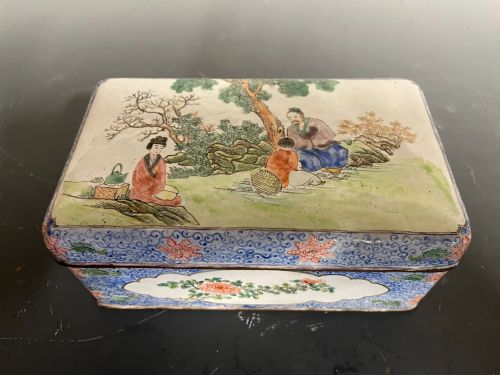
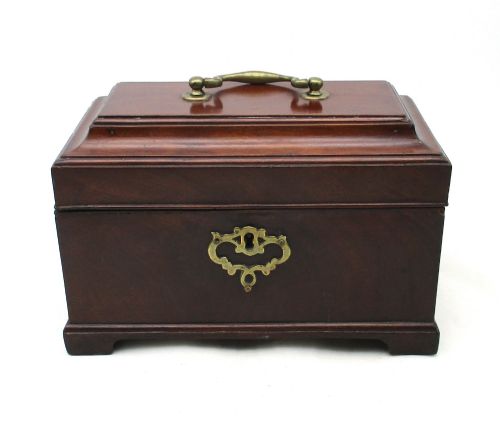
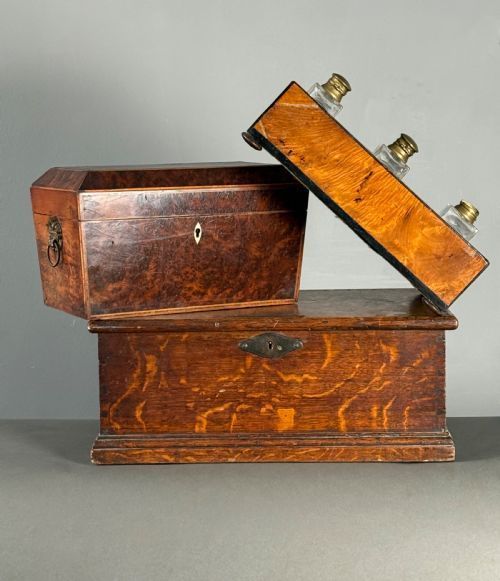
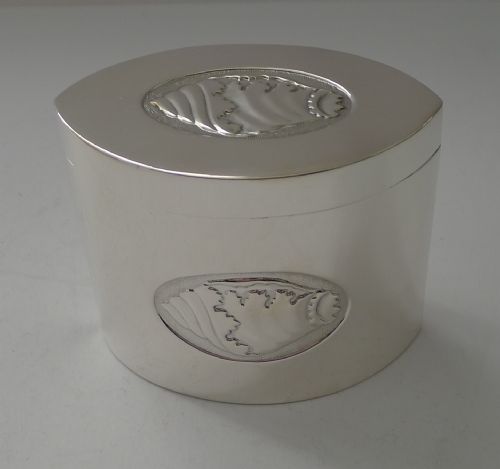
A decorative caddy box serves to store and preserve dry tea leaves or function as a secure receptacle for personal trinkets and keepsakes. These vessels appear in forms ranging from sarcophagus shapes and hexagonal bodies to navette silhouettes and simple rectangular chests.
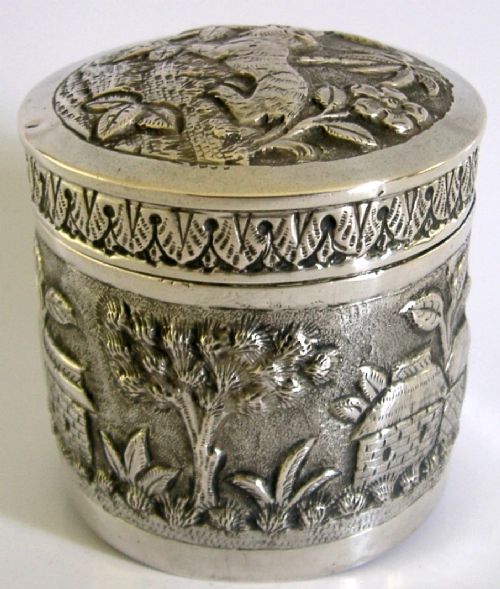
The selections span multiple eras including the Georgian, Regency, and Victorian periods. Buyers encounter specimens fashioned from woods like rosewood, mahogany, and walnut, alongside examples featuring lacquer, tortoiseshell, and solid silver.
Origins stretch across England, France, Italy, and Asia, reflecting diverse domestic habits and decorative preferences of past centuries. Many retain internal compartments, mixing bowls, or fitted storage spaces designed for daily use.
How they were made
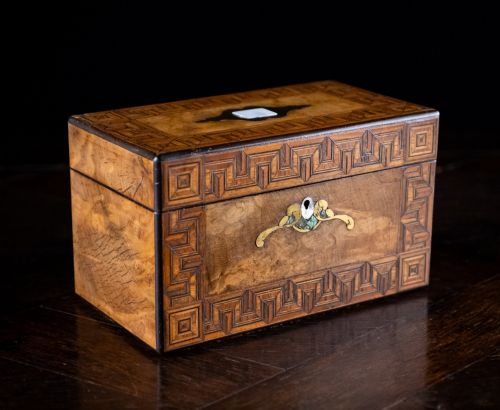
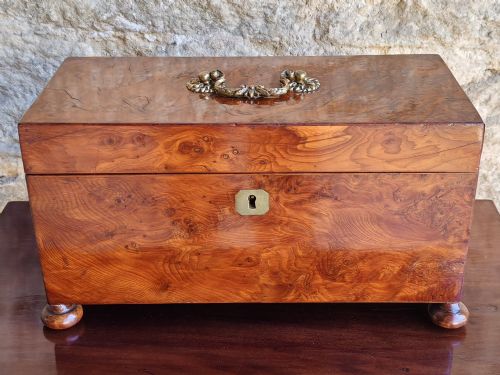
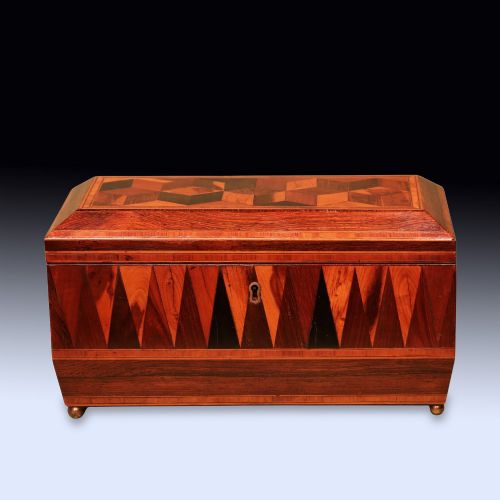
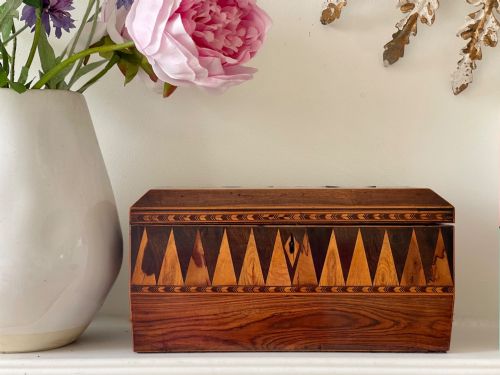
Cabinetmakers utilised dense timbers such as rosewood, mahogany, yew, and walnut, frequently applying fine veneers or parquetry patterns across the exterior surfaces. Marquetry inlay, brass stringing, and tortoiseshell plating enhanced the visual depth of the containers.
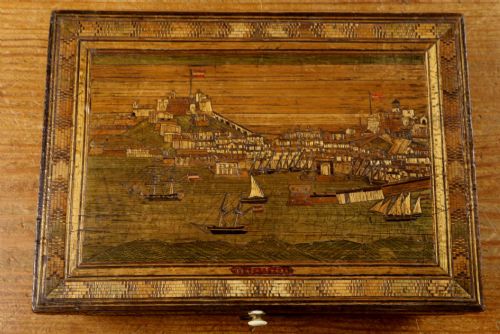
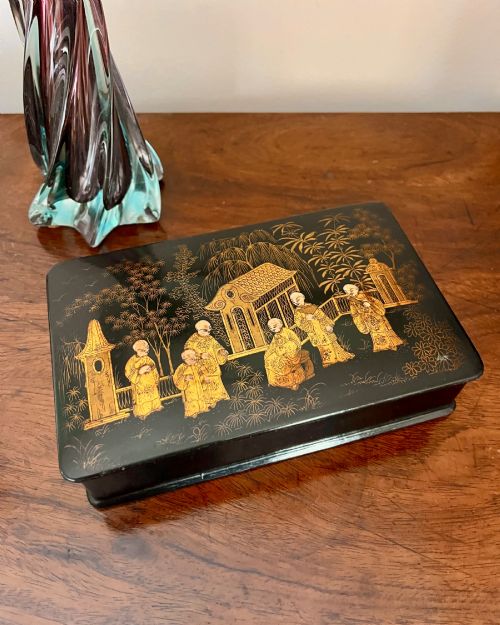
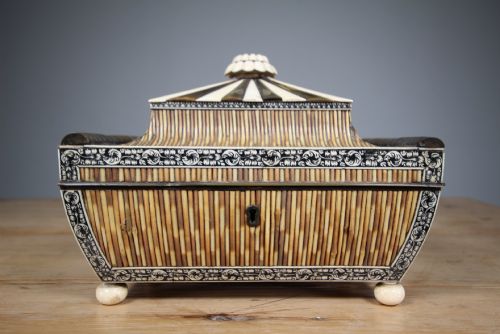
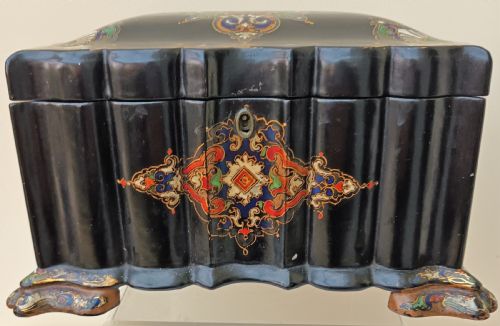
Specialist techniques involved straw work, paper scroll filigree, gesso decoration, and Chinoiserie lacquering to achieve varied surface textures. Internal fittings often incorporated bone, mother of pearl, and velvet linings to protect the contents.
Decorative Caddy Box Retail Price Guide 2026
Typical asking prices for decorative caddy box among the pieces listed under this phrase on Sellingantiques today, from the lower quarter to the upper quarter. They describe what is for sale here now, not the wider market.
The periods represented span from 18th-century Georgian designs through Regency and Victorian eras up to Edwardian silver work.
What varies in quality
The standard of execution depends on the precision of the parquetry, the intricacy of the metal inlay, and the integrity of the underlying woodwork. Finer specimens display harmonious grain matching and neatly fitted internal lids or glass bowls.
Material rarity elevates a piece, distinguished by the use of genuine tortoiseshell, elaborate boullework, or documented craftsmanship from known makers. Preservation of original hinges, keys, and interior compartments distinguishes superior examples from altered survivors.
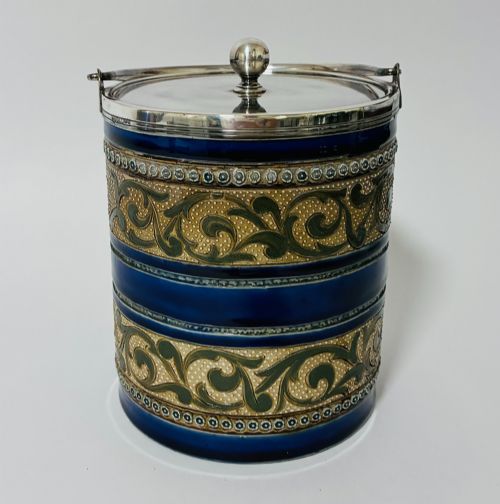
Tahan of Paris·Doulton Lambeth
The Decorative Caddy Box Glossary
- Tea caddy
- A small lidded container built specifically to hold loose tea leaves before the leaf became an everyday commodity. These boxes often feature internal divisions and fitted bowls.
- Parquetry
- A geometric mosaic of wood pieces used for decorative surfaces on box lids and panels. Craftsmen arranged contrasting timbers to create three-dimensional visual effects.
- Sarcophagus shaped
- A box style featuring a stepped, domed lid sloping down to a wider base, mimicking ancient monumental tombs. This form gained popularity during the Regency period.
- Navette
- A pointed, boat-shaped outline utilised for the footprint of specific Georgian and Regency boxes. This symmetrical curved geometry creates an elegant desktop silhouette.
- Tortoiseshell
- The mottled brown and amber shell of certain sea turtles applied as thin veneers to wooden box cores. It received high favour during the 18th and 19th centuries for luxury containers.
Decorative Caddy Box: Frequently Asked Questions
What were decorative caddy boxes used for?
These vessels functioned primarily to store precious dry tea leaves under lock and key when tea held significant domestic value. Wealthy households relied on them in the parlour or dining room.
Over time, many containers transitioned into general keepsake boxes for letters, jewellery, and small valuables. Their internal compartments accommodated mixing bowls and canisters for blending different teas.
How do I identify a Regency caddy box?
Regency examples frequently display architectural forms such as sarcophagus shapes, brass lion paw feet, and geometric brass inlay. Rosewood and burr yew timbers appear frequently in this era.
Cabinetmakers of the Regency favored clean classical lines and contrasting dark veneers. Interiors often retain original crystal mixing bowls and matching internal caddy lids.
What is paper scroll work?
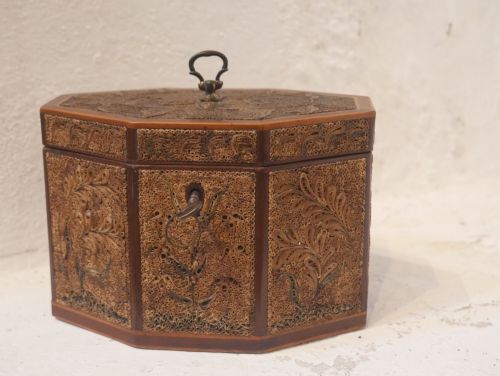
Paper scroll work involves rolling narrow strips of paper and arranging them to form intricate decorative motifs on box surfaces. Artisans often gilded or painted the edges to resemble metal filigree.
This technique required immense patience and appeared on fine boxes during the 18th and early 19th centuries. Surviving examples demonstrate delicate relief patterns beneath protective glass or varnish.
How should I clean a wooden caddy?
Dust wooden surfaces gently with a dry, soft cloth to prevent abrasion of aged polishes and delicate veneers. Avoid modern chemical sprays and excessive moisture that might warp historic timbers.
Preserve the existing patina by applying a minimal amount of appropriate microcrystalline wax if the wood appears dry. Keep boxes away from direct sunlight and radiators to protect mother-of-pearl and bone inlay.