

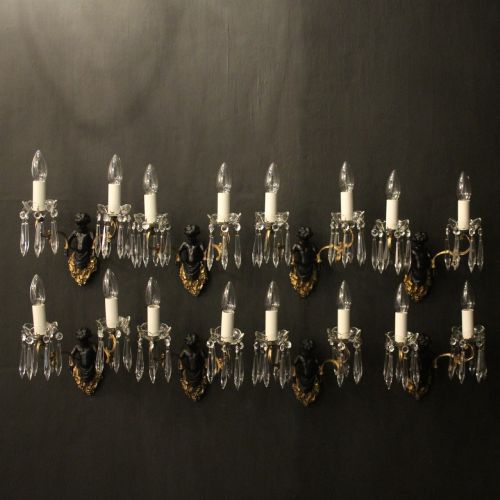
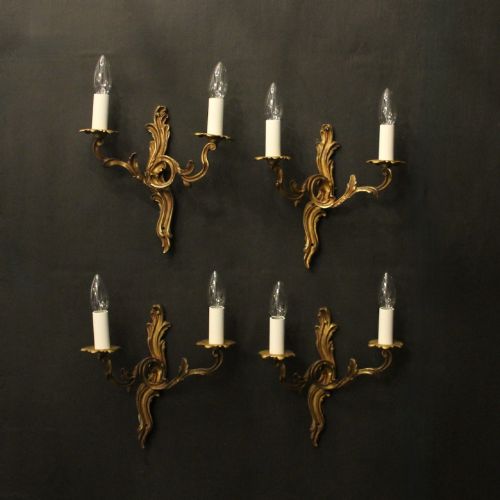
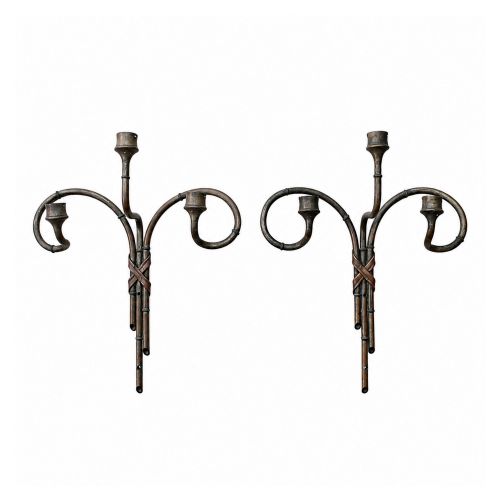
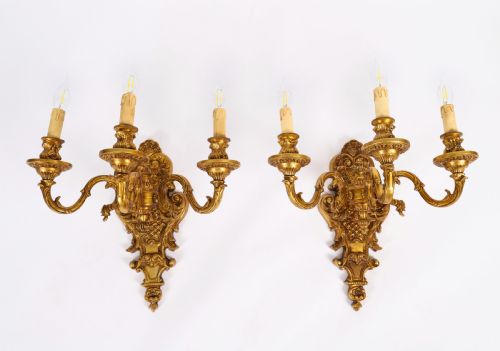



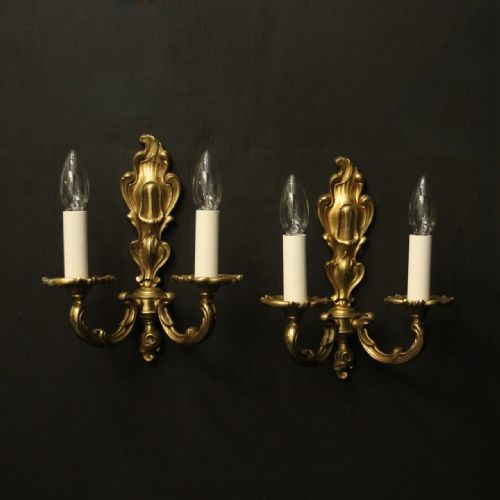

Decorative Bronze Wall Sconces
These decorative bronze wall sconces bring warmth and character to a room, offering genuine period illumination.
Decorative Bronze Wall Sconces
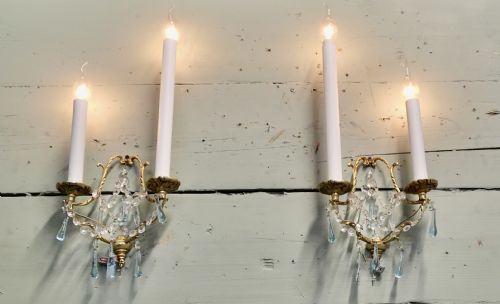
Decorative bronze wall sconces provide functional illumination while serving as sculptural elements on interior walls. When exploring decorative bronze wall sconces, buyers encounter lighting fixtures designed to hold candles or electric bulbs, frequently arranged in pairs, sets, or larger groups.
The selection on this page draws heavily from French design traditions, spanning the nineteenth century through the early twentieth century. Examples range from twin-arm lights to taller configurations featuring multiple branches.
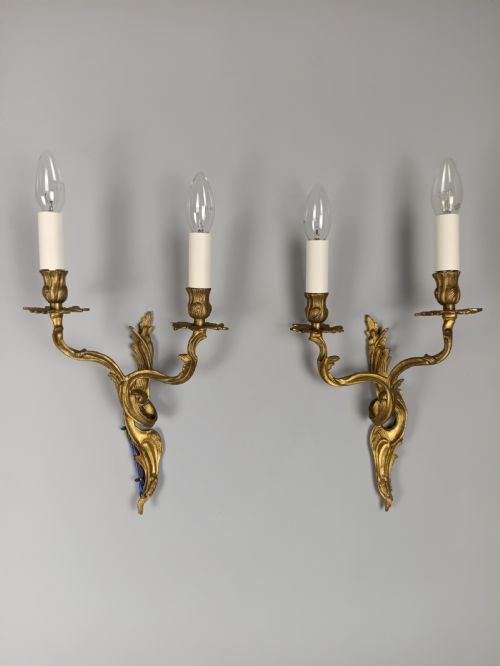
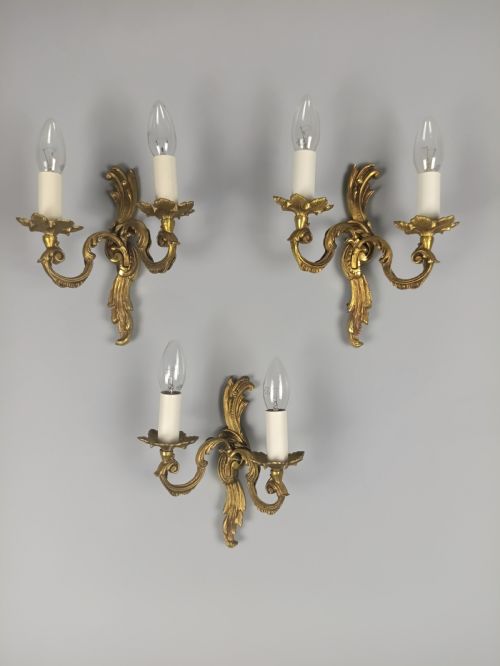
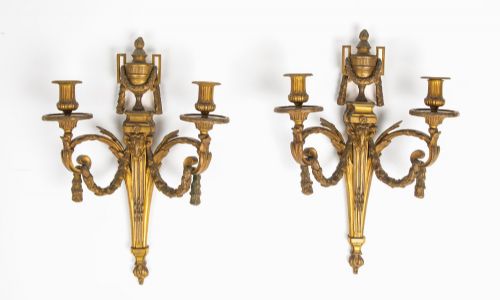
Stylistic influences vary significantly across the inventory, incorporating French Rococo, Louis XVI style, and Art Nouveau aesthetics. Pieces often integrate figural motifs such as cherubs and ram's head masks alongside botanical elements like bamboo.
Materials and construction methods
Maker construction relies primarily on cast metals, specifically bronze, brass, and ormolu. Artisans utilised gilt finishes to enhance the reflective quality and visual richness of the metalwork.
Patinated surfaces appear alongside bright gilding, creating textural contrast across arms, backplates, and decorative mounts. Metal casting techniques allowed for intricate detailing, from classical swags to asymmetrical Rococo scrolls.
Decorative Bronze Wall Sconces Retail Price Guide 2026
Typical asking prices for decorative bronze wall sconces among the pieces listed under this phrase on Sellingantiques today, from the lower quarter to the upper quarter. They describe what is for sale here now, not the wider market.
Listings feature French designs predominantly, spanning the nineteenth century and early twentieth century with materials like gilt bronze, brass, and ormolu.
Distinctions in quality
The finish also dictates distinction, where heavy, durable gilding or well-maintained patination elevates the piece. The articulation of arms and the structural integrity of the backplate separate standard production from exceptional craftsmanship.
The Decorative Bronze Wall Sconces Glossary
- Ormolu
- Gilded bronze, where finely ground high-carat gold is applied to a bronze base using a mercury amalgamation technique. This finish yields a distinctive warm metallic lustre that characterises fine period mounts.
- Applique
- A wall-mounted light fixture or sconce designed to project illumination forward into a space. The term frequently appears in continental European contexts.
- Rococo
- An ornate design style originating in France, characterised by asymmetric scrolls, C-scrolls, and shell motifs. It prioritises fluidity and theatrical movement over strict symmetry.
- Louis XVI Style
- A neoclassical design movement that revived classical antiquity through symmetry, straight lines, and motifs like urns and swags. It offers a restrained counterpart to earlier exuberant styles.
Decorative Bronze Wall Sconces: Frequently Asked Questions
How were these wall sconces originally used?
These fixtures were mounted beside mirrors, fireplaces, or along hallway walls to reflect and amplify candle flame illumination.
In period interiors, they provided ambient light where floor-standing candelabras or central chandeliers could not reach.
Can antique wall sconces be wired for electricity?
Most period wall lights can be adapted for modern electrical wiring by a qualified professional.
Careful installation ensures that historical backplates and arms remain undamaged during the retrofitting process.
How do I identify Louis XVI style sconces?
Louis XVI style pieces typically feature straight lines, classical symmetry, and architectural motifs such as ram's head masks and acanthus leaves.
This aesthetic contrasts sharply with the sweeping, asymmetric curves typical of earlier Rococo designs.
How should I clean gilded bronze fixtures?
Maintenance requires only gentle dusting with a soft, dry cloth to prevent the accumulation of surface debris.
Harsh chemical polishes must be avoided entirely, as they can strip away delicate gilt and ormolu finishes.