
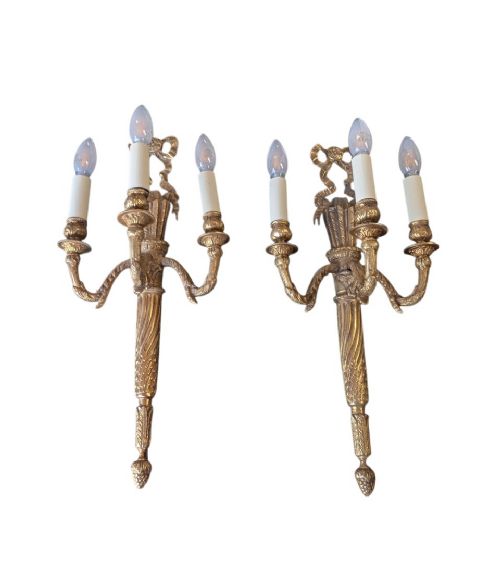
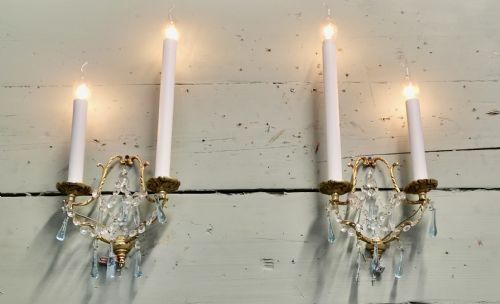
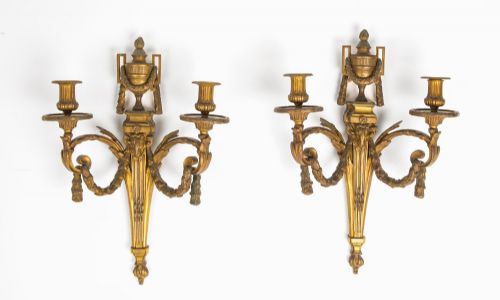


Decorative Brass Sconces
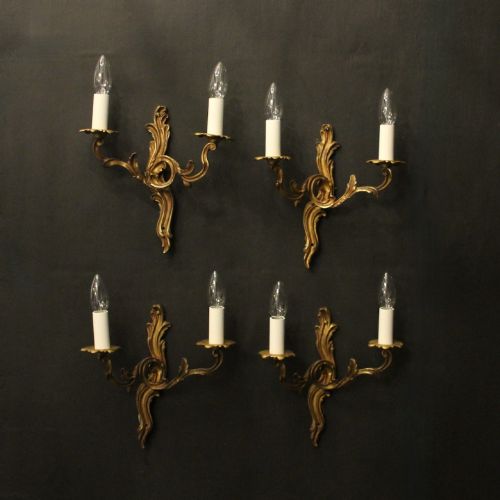
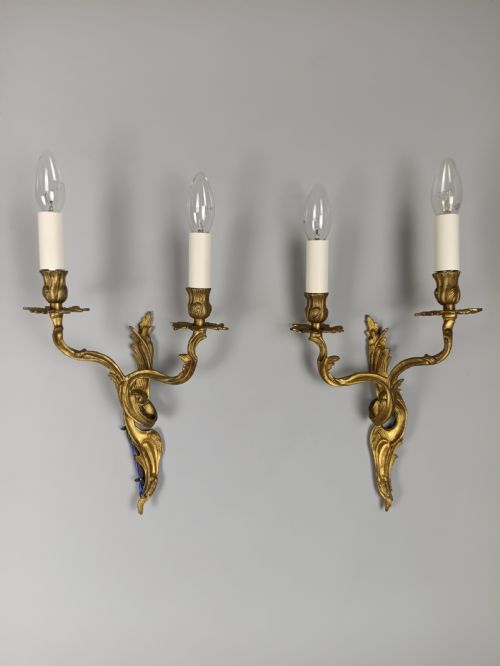
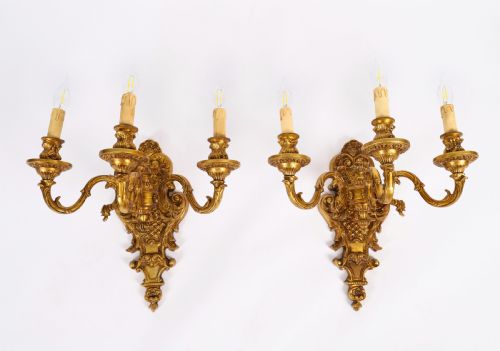
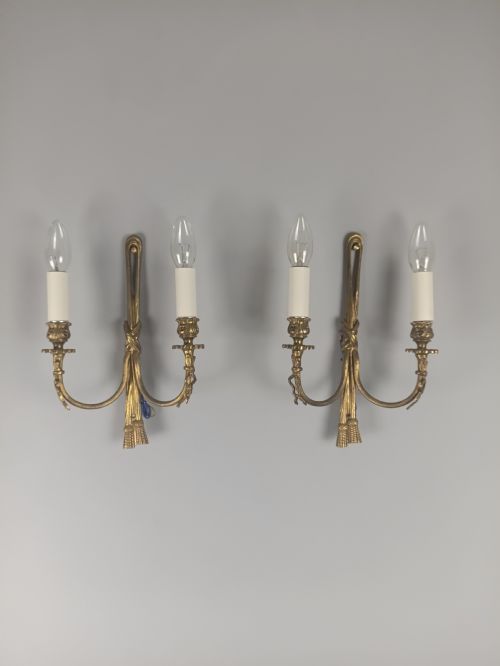
These decorative brass sconces bring period illumination and reflective warmth to a wall, ranging from French gilded twins to simple nineteenth-century pairs.
Decorative Brass Sconces
When you search for decorative brass sconces, you encounter wall-mounted lighting fixtures designed to hold candles or electric bulbs, predominantly cast in brass, gilt bronze, and ormolu. These pieces trace origins from nineteenth-century Victorian workshops through to twentieth-century French production, appearing most frequently as matched pairs.
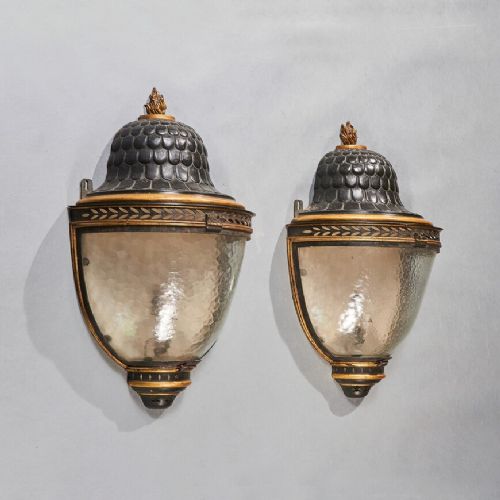
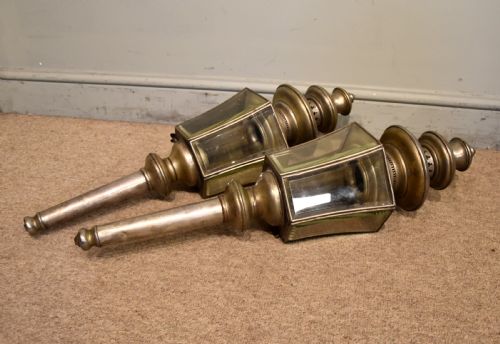
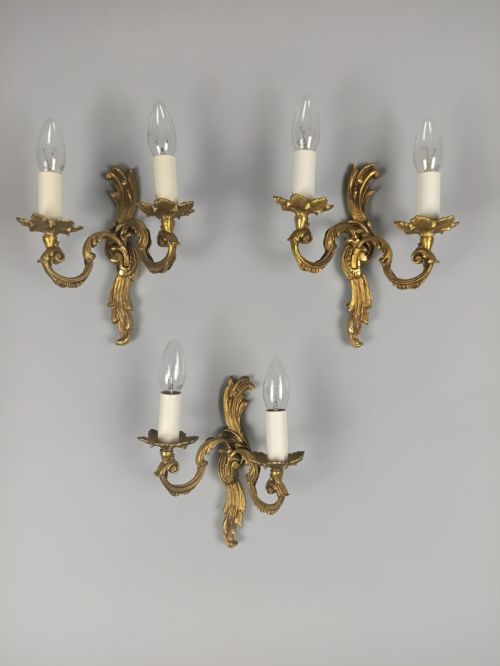
The selection encompasses diverse forms including twin-arm wall lights, girandoles, carriage lamps, and wall lanterns. Stylistic influences lean heavily toward French Rococo, Neoclassical, and Empire designs, alongside specific regional variations such as North Indian mirrored sconces.
Buyers will find that many examples incorporate decorative motifs like ribbon crests, ram's head masks, and putti. Alongside standard wall brackets, the category occasionally spans related brass items including candlesticks, chambersticks, and dressing mirrors.
How they were made
Makers utilised casting techniques in brass, bronze, and gilt metal to achieve intricate relief work, frequently applying fire gilding or ormolu finishes to create a rich surface sheen. Many nineteenth-century and twentieth-century pieces combine cast metal frames with repoussé work, where designs are hammered from the reverse to create raised decorative patterns.
Construction often integrates secondary materials like glass panels in wall lanterns, tole peinte accents, and ceramic inserts. Assembly relied on threaded rods and small screws to secure multiple arms and backplates together into a stable wall-mounted unit.
Listings feature brass, gilt bronze, and ormolu wall lights spanning the Victorian, Edwardian, and Georgian periods alongside 1920s and 1930s designs.
What varies in quality
The refinement of the casting and chiseled detail distinguishes standard production from finer work, particularly visible in the crispness of acanthus leaves, masks, and rococo scrolls. Heavier gauge brass and deeper, more durable ormolu or gilt finishes indicate superior initial manufacture.
Maison Baguès
The Decorative Brass Sconces Glossary
- Ormolu
- A gold-coloured alloy of copper, zinc, and sometimes tin, applied to bronze objects to simulate solid gold. This technique was widely employed in French lighting fixtures during the eighteenth and nineteenth centuries.
- Girandole
- A branched wall-mounted candlestick or light fixture, frequently incorporating a mirror to multiply the reflected candlelight. These pieces often feature elaborate rococo or neoclassical frames.
- Repoussé
- A metalworking technique where the artisan hammers metal from the reverse side to form a raised design in relief. It is commonly found on nineteenth-century brass wall plaques and sconce backs.
- Tole peinte
- Painted sheet metal, typically iron or steel, used for decorative elements on lanterns and light fixtures. The technique allows for colourful floral or landscape motifs.
- Chamberstick
- A portable candlestick featuring a shallow pan to catch dripping wax and a loop handle for carrying from room to room. Victorian examples frequently utilise solid brass construction.
Decorative Brass Sconces: Frequently Asked Questions
How were decorative brass sconces used historically?
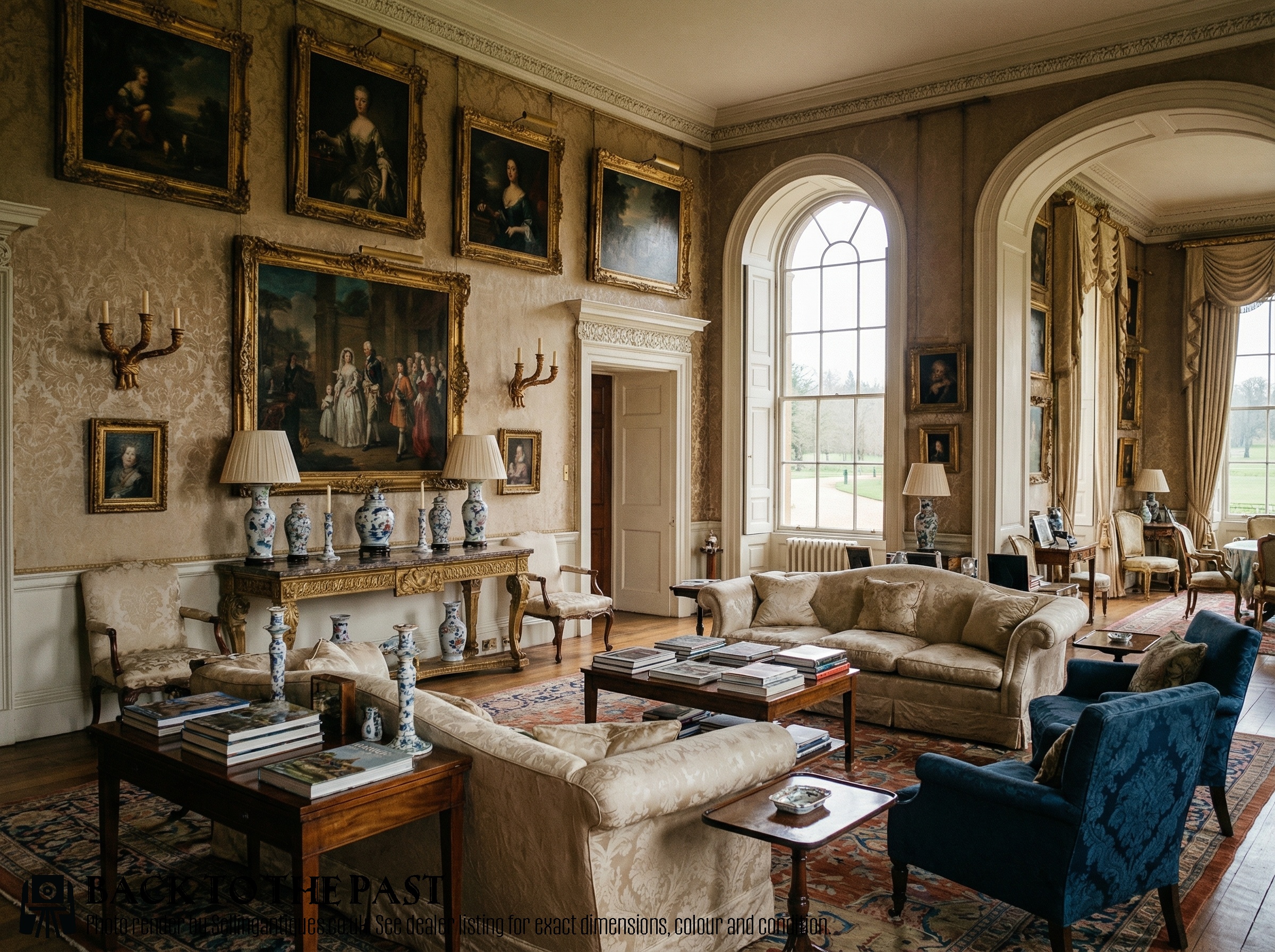
These fixtures provided functional lighting along corridors, staircases, and principal rooms by holding candles that projected light against interior walls.
Mirrored backplates and polished brass surfaces helped to maximise and distribute the limited illumination available before electric lighting became common.
How do I mount antique wall sconces safely?
Installation requires securing the backplate directly to wall studs or utilising appropriate heavy-duty wall anchors designed to support the combined weight of the metal and arms.
Wiring should be assessed by a qualified professional if the sconces have been converted for modern electrical use.
How do I distinguish French Rococo from Empire styles?
French Rococo sconces feature asymmetrical scrollwork, flowing floral motifs, and organic shell shapes that create a sense of movement.
Empire style pieces display strict symmetry, military motifs, classical urns, and formal architectural lines inspired by antiquity.
What periods do these brass sconces cover?
The available selection spans from Georgian and Victorian eras through the late nineteenth century and into the 1920s and 1930s.
Earlier nineteenth-century examples often display hand-chased details, while later twentieth-century pieces reflect streamlined revival styles.
Can I use real candles in antique sconces?
Many sconces retain their original candle sockets and drip pans, making them suitable for traditional wax candles during short periods.
Care should be taken to protect nearby wall surfaces from smoke and dripping wax if utilised without glass shields.