


Empire Brass Wall Lights
Empire brass wall lights bring classical symmetry and warm illumination to interiors, uniting stately metalwork with enduring French design.
Empire Brass Wall Lights
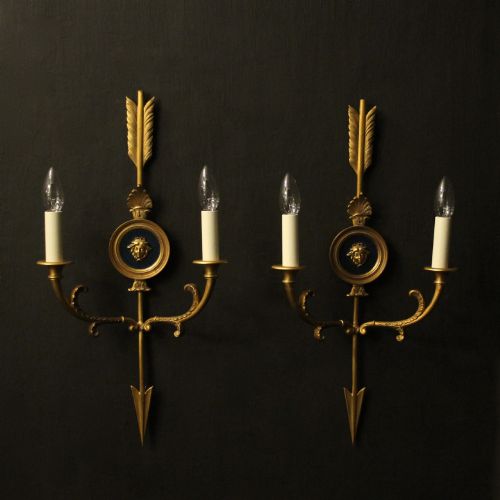
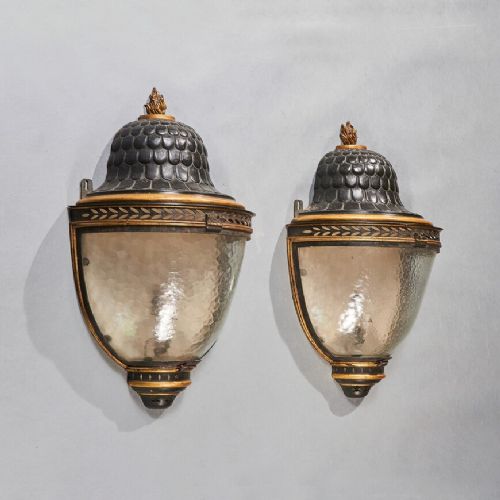
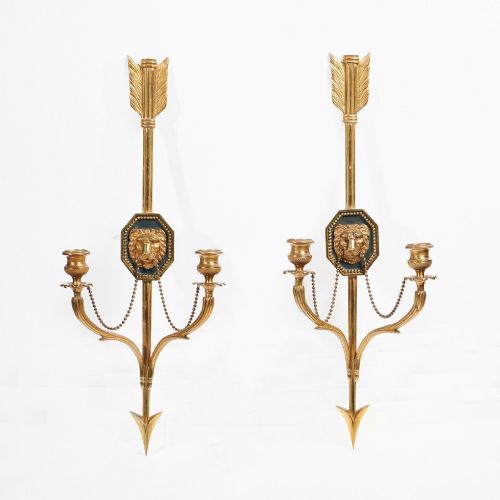
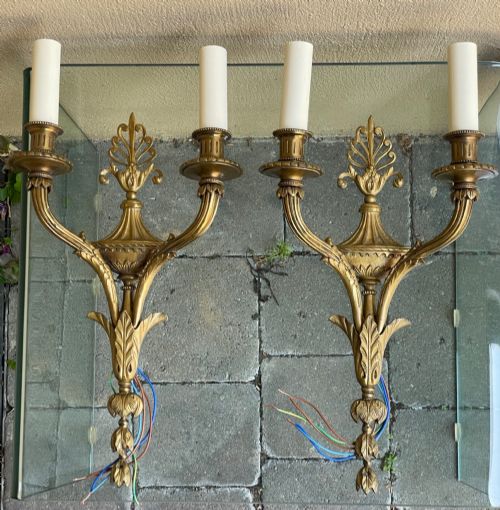
Empire brass wall lights embody the formal grandeur of classical antiquity, frequently taking the form of wall sconces, girandoles, and lanterns designed to flank mirrors or fireplaces. These fixtures appear predominantly in French Neoclassical and Empire styles, drawing inspiration from ancient Greek and Roman motifs.
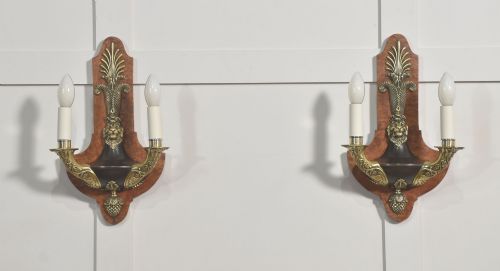
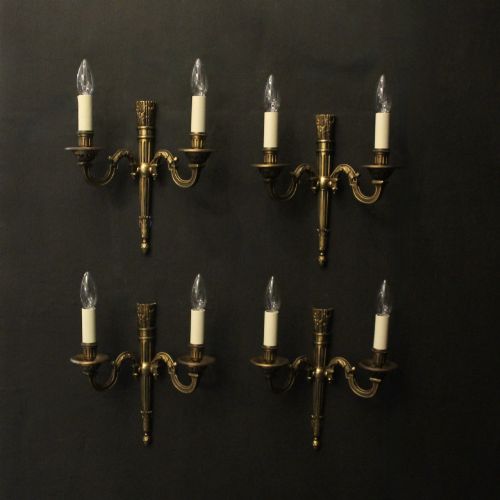
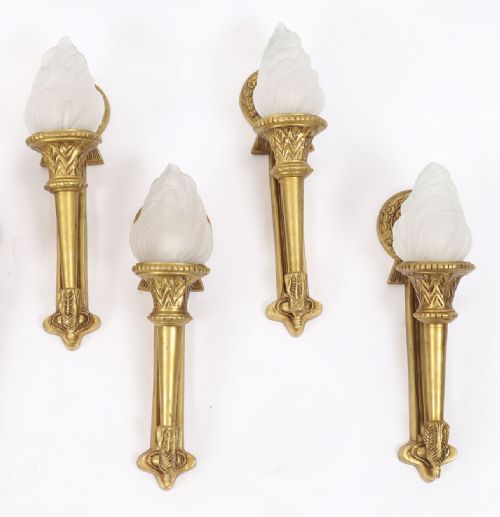
The selection ranges from twin-branch and multi-armed fixtures dating to the nineteenth century through to twentieth-century revivals. Pairs and sets of four are common, often incorporating brass, gilt bronze, and ormolu alongside glass elements.
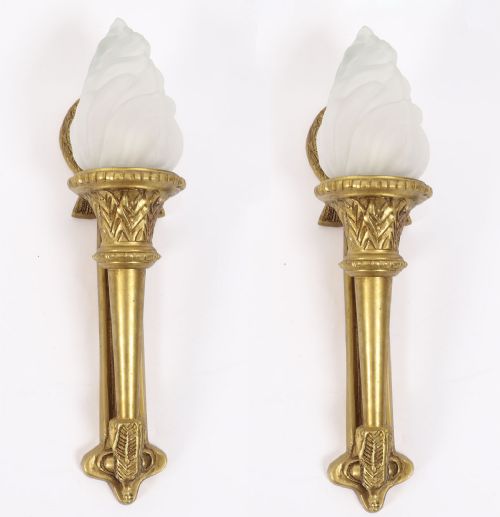
Originating largely from French workshops, these pieces manifest in diverse configurations including flaming torch designs, carriage lights, and toleware combinations. Collectors encounter substantial proportions alongside domestic variants, reflecting the versatility of classical lighting across different domestic spaces.
What varies in quality
Quality rests in the crispness of the metal chasing and the depth of the gilding or ormolu finish. Finer examples display sharp relief work on decorative motifs like lion heads and torch flames, whereas lesser pieces exhibit softer, shallower casting details.
The architectural proportion and structural integrity of the arms and backplates distinguish superior fixtures. Heavier cast weight and integrated construction denote workshops that maintained rigorous standards for decorative metalwork.
Several fierce brass lion heads keep permanent guard over nineteenth-century hallways, unflinching despite centuries of shifting interior fashions.
The Empire Brass Wall Lights Glossary
- Ormolu
- Gilded bronze produced by applying a mercury and gold amalgam to a bronze base and heating it until the mercury vaporised. This technique yields a durable, rich golden surface characteristic of fine classical lighting.
- Girandole
- A branched wall light or sconce designed with arms to hold multiple candles. These fixtures often feature reflective backplates or glass drops to maximise illumination.
- Tôle Peinte
- Painted sheet metal utilised in lighting fixtures to introduce colour and decorative contrast. It appears in shades like green alongside brass components.
- Applique
- A French term for a wall-mounted light fixture or sconce. It is frequently used interchangeably with wall lights in continental inventories.
Empire Brass Wall Lights: Frequently Asked Questions
How do I date empire brass wall lights?
Dating relies on stylistic markers, casting techniques, and material combinations seen across nineteenth-century and early twentieth-century examples. Earlier nineteenth-century pieces often display hand-chased detail and heavier bronze construction.
Later twentieth-century revivals adopt similar French Empire motifs but can show different manufacturing marks and assembly methods. Comparing backplates and fixing points helps establish the chronological context.
Were these lights originally electrified?
These fixtures were designed for candles before later being adapted for electricity. Many surviving examples have been rewired for modern domestic use while retaining their original brass and gilt frames.
Wiring updates are standard for antique lighting to meet current safety standards. Collectors look for installations that preserve the structural integrity of the original metal arms.
How should I clean gilded brass wall lights?
Maintenance requires gentle dusting with a soft, dry cloth to protect delicate gilt surfaces and ormolu finishes. Harsh chemical cleaners and abrasive cloths must be avoided to prevent stripping the historic patination.
Professional assessment is recommended for antique gilt surfaces showing tarnish or wear. Preserving the original finish maintains the visual character of the metalwork.
Where should I position wall sconces?
Wall sconces are traditionally mounted in pairs to flank architectural focal points such as fireplaces, doorways, or large mirrors. Their symmetrical designs suit formal reception rooms, hallways, and dining spaces.
Installation height depends on ceiling proportions and eye level. Ensuring secure wall fixings is essential given the substantial weight of cast bronze and brass fixtures.