

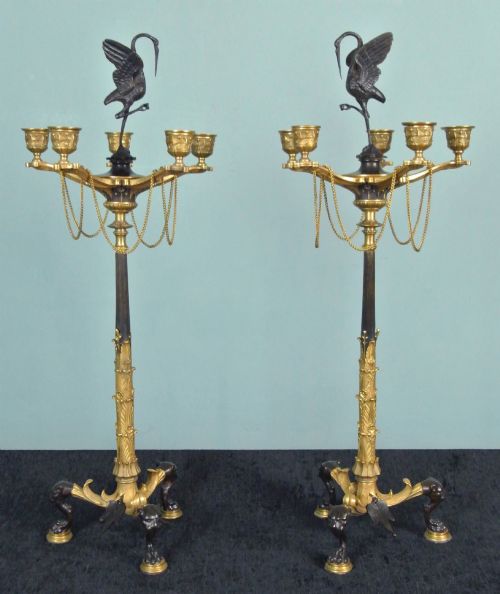


Decorative Brass Candelabra
These decorative brass candelabra bring genuine nineteenth-century weight and polish to a room, offering multiple candle arms in cast brass, ormolu, and bronze.
Decorative Brass Candelabra
When you search for decorative brass candelabra, you encounter multi-branched lighting fixtures designed to hold several candles at once. These pieces function both as practical table or mantel ornaments and as architectural statements for a room.
The versions most commonly met on this page date from the nineteenth century, ranging from early Regency and Charles X examples to later Victorian and Art Nouveau designs. They appear frequently in pairs, often incorporating materials such as marble, onyx, and cut glass alongside the cast metal work.
Alongside standard multi-branch candelabra, the selection includes related forms such as wall sconces, table lustres, and clock garnitures. Each object reflects the elaborate metalworking traditions of French and British workshops during this expansive period.
How they were made
Foundry workers utilised traditional sand-casting techniques to shape the brass, bronze, and ormolu components. Molten metal poured into moulds created the heavy, robust frames that define these multi-branched pieces.
Craftsmen then finished the surfaces through hand-chiselling, patination, and the application of gold leaf or gilt finishes. This combination of structural casting and meticulous surface detail allowed makers to achieve sharp relief and complex decorative motifs.
Decorative Brass Candelabra Retail Price Guide 2026
Typical asking prices for decorative brass candelabra among the pieces listed under this phrase on Sellingantiques today, from the lower quarter to the upper quarter. They describe what is for sale here now, not the wider market.
What varies in quality
The primary distinction lies in the crispness of the cast ornamentation and the depth of the hand-chased detail. Superior pieces exhibit sharply defined foliage, figures, and scrollwork, whereas lesser examples present softer, shallower contours from worn or simpler moulds.
Material composition also dictates the grade of the piece, with genuine ormolu and heavy gilt bronze showing a richer lustre than standard brass alloys. The integration of secondary materials, such as polished marble bases or hand-cut glass drops, further separates standard production from high-status workshop output.
Barbedienne
The Decorative Brass Candelabra Glossary
- Ormolu
- Gilded bronze produced by applying a mercury-gold amalgam to a bronze object and heating it to drive off the mercury. This technique creates a durable, golden surface finish characteristic of fine nineteenth-century metalwork.
- Candelabra
- A branched candlestick or holder for multiple candles or lamps. These fixtures typically feature a central shaft supporting two or more arms.
- Garniture
- A set of matching ornamental objects designed for display together, most commonly a mantel clock flanked by matching candelabra or vases. This arrangement creates a balanced decorative display on a fireplace mantel.
- Patination
- The surface alteration of metal caused by age, use, or chemical treatment. A desirable patination adds depth and character to bronze and brass components.
- Regency
- An architectural and design style spanning the early nineteenth century in Britain. It draws heavily on classical Greek and Roman motifs.
Decorative Brass Candelabra: Frequently Asked Questions
What are decorative brass candelabra?
These pieces are branched metal lighting fixtures designed to hold multiple candles, originating mainly from the nineteenth century. They combine structural metal arms with elaborate decorative casting.
Many examples incorporate stone bases, patinated finishes, or gilt bronze to enhance their visual impact on tables and mantelpieces.
How were they used historically?
Households placed these multi-arm fixtures on dining tables, sideboards, and mantelpieces to provide ambient illumination before electric lighting became common. They also served as status symbols that reflected candlelight across formal rooms.
Later adaptations sometimes converted these same bodies into electric lamps while retaining the original decorative branches.
How do I live with them?
Position these substantial pieces on sturdy surfaces like large sideboards, mantelpieces, or dedicated display tables where their weight and height are balanced. Keep them away from direct heat sources and clean them gently with a soft, dry cloth to protect the metal finish.
When electrical wiring is present, ensure a qualified person checks the components before regular use in a modern home.
How do I tell periods apart?
Early nineteenth-century pieces, such as Regency or Charles X examples, typically display strict classical symmetry and restrained architectural motifs. Later Victorian and Art Nouveau designs introduce more flowing, organic lines and asymmetrical botanical forms.
Examining the weight, the method of assembly, and the specific surface patination helps confirm whether a piece belongs to the early or late decades of the nineteenth century.