


Decorative Tea Caddies
These decorative antique tea caddies bring tactile warmth and history to a room, holding the luxury of a bygone era in wood, tortoiseshell, and brass.
Decorative Tea Caddies
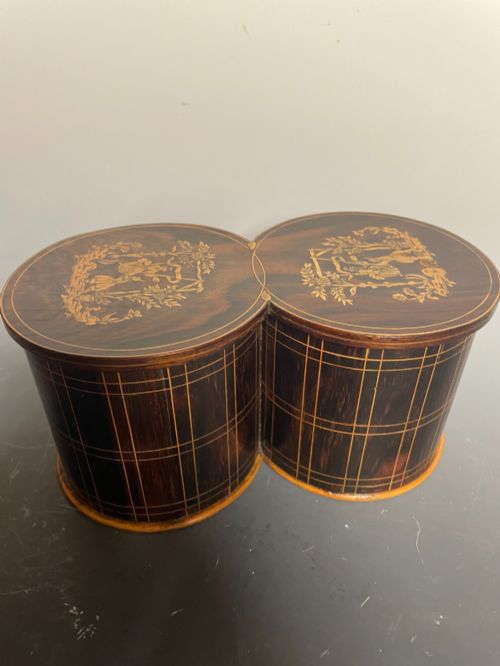
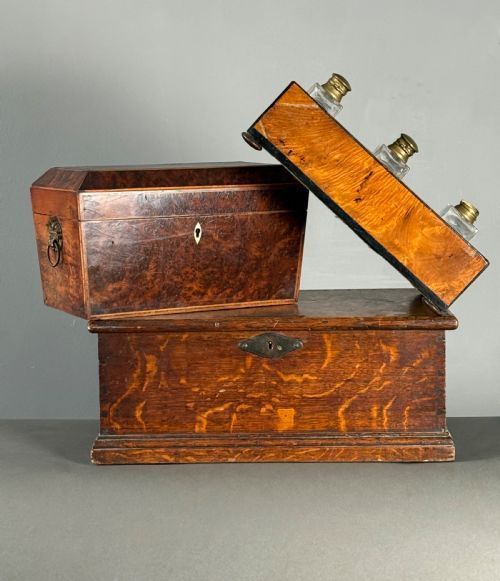
Decorative antique tea caddies are small, highly ornamented containers originally designed to store precious tea leaves under lock and key when tea was a luxury commodity. The selection here spans the eighteenth, nineteenth, and early twentieth centuries, reflecting changing domestic habits across Georgian, Regency, and Victorian periods.
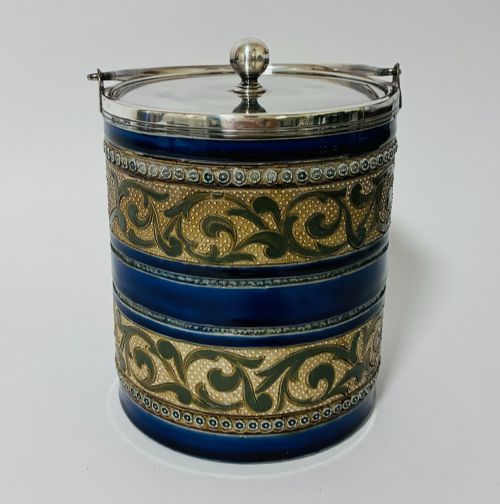
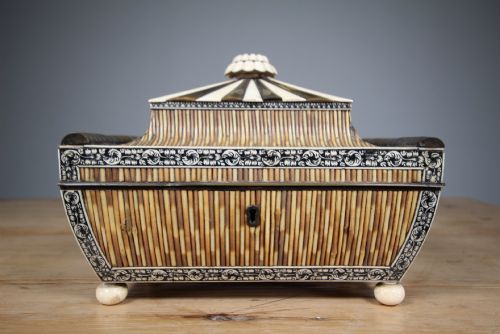
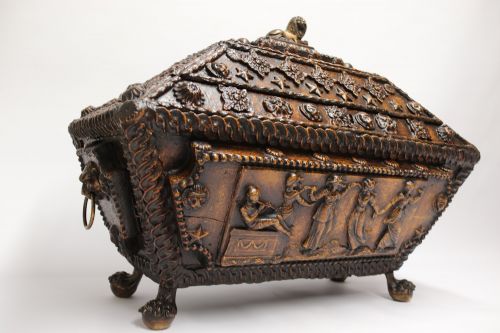
Beyond standard tabletop caddies, the selection includes sarcophagus-shaped boxes, tea canister lamps, and related forms incorporating bone, mother-of-pearl, and brass inlay. These pieces demonstrate a high standard of cabinetmaking, functioning as ornamental objects as much as storage vessels.
Materials and construction
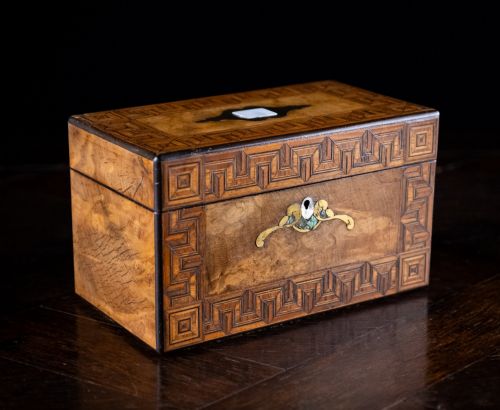
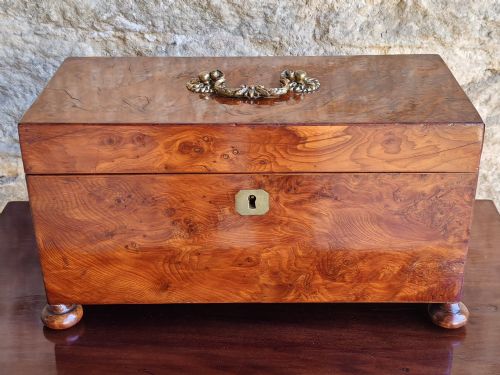
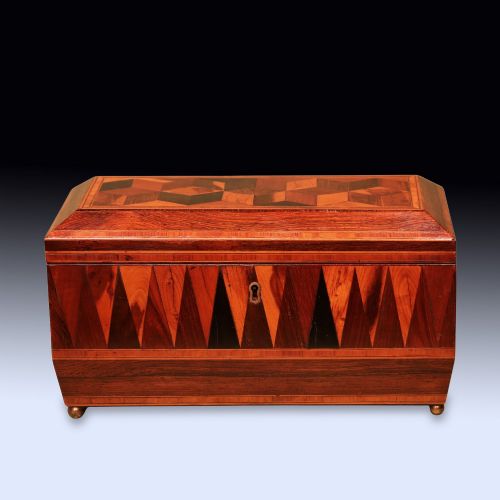
Makers utilised dense native and exotic timbers such as mahogany, walnut, yew, and rosewood, often applying intricate parquetry, marquetry, or veneer work to decorative surfaces. Tortoise shell, horn, and coromandel also appear, bonded to rigid carcases with traditional animal glues.
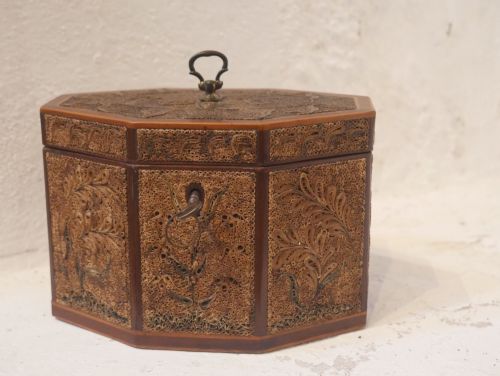
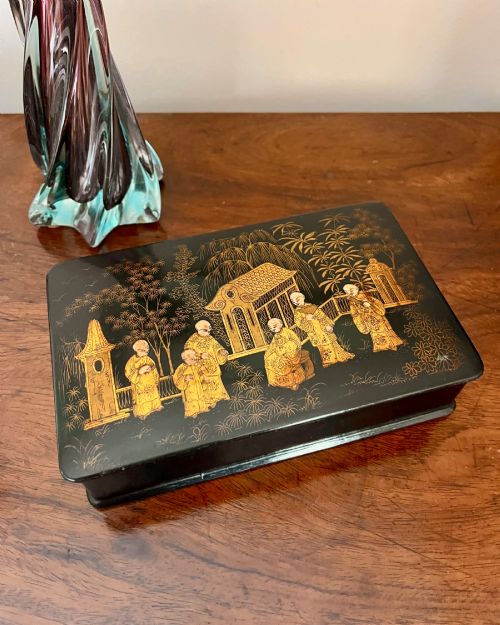
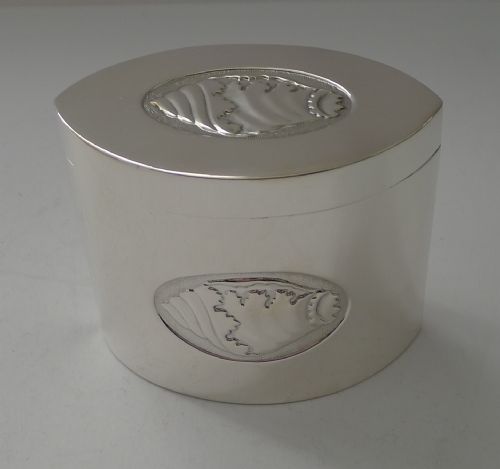
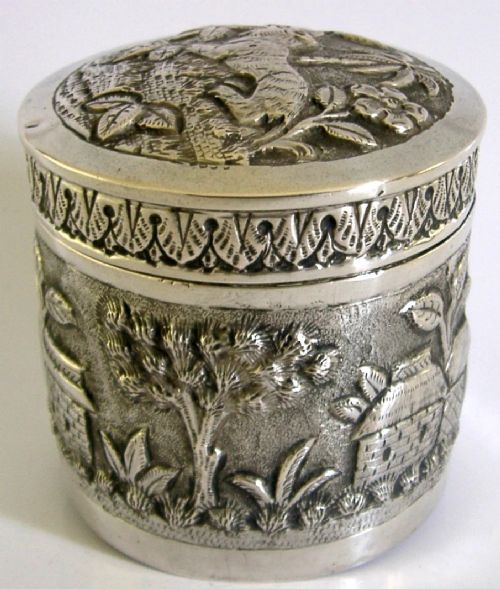
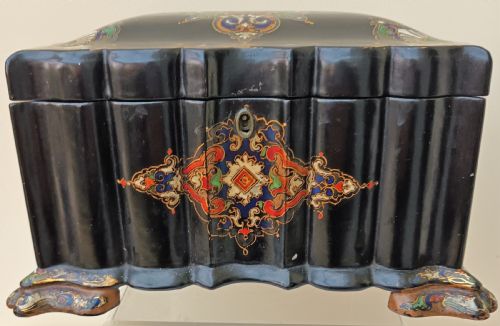
Metalwork played a structural and decorative role, featuring brass stringing, lock plates, and hinges alongside hand-hammered silver and toleware painted with gilt Chinoiserie motifs. Paper filigree, gesso, and mother-of-pearl inlays further enriched the surfaces of specialised caskets and canisters.
Many caddies feature tiny, original keyholes, inviting the delightful mystery of whether a working key might still turn the brass lock.
Assessing quality
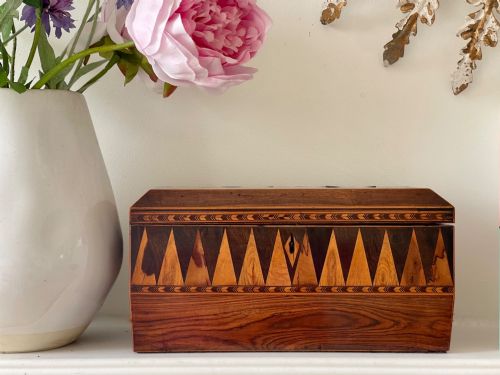
Quality rests upon the precision of the cabinetmaking, the choice and matching of wood veneers, and the survival of original interior components such as mixing bowls, inner lids, and working locks. Pieces featuring complex parquetry, Tunbridge ware, or delicate tortoise shell veneer require exceptional joinery skill.
The refinement of surface decoration distinguishes finer examples, whether through hand-painted Chinoiserie details on toleware, intricate paper filigree, or master craftsmanship in metal mounts and mother-of-pearl inlay.
Tahan of Paris
The Decorative Tea Caddies Glossary
- Tea caddy
- A small box or container originally made to store loose tea leaves securely. The word derives from 'catty', a Chinese unit of weight.
- Toleware
- Metalware, typically tin or iron, painted and lacquered with decorative finishes such as gilt Chinoiserie. It was popular for nineteenth-century tea canisters.
- Tunbridge ware
- Woodworking craftsmanship characterised by intricate mosaic patterns made from thousands of tiny tinted wood blocks. It appears on geometric panels of nineteenth-century boxes.
- Sarcophagus
- A box shape featuring a domed or peaked lid resting on a tapered rectangular base. This architectural form was particularly favoured during the Regency period.
- Marquetry
- The art of applying pieces of veneer to a structural structure to form decorative patterns or pictures. Craftsmen utilised various exotic woods to achieve tonal contrast.
Decorative Tea Caddies: Frequently Asked Questions
What were antique tea caddies used for?
Tea caddies served as secure storage containers for black and green tea when leaves were expensive commodities kept under lock by the master of the house.
Inside, the space was often divided into compartments or fitted with separate canisters to keep different tea varieties separate and dry.
How do I tell a Georgian tea caddy from a Victorian one?
Georgian tea caddies often feature restrained geometric veneers, mahogany, or satinwood with subtle brass escutcheons and simple box or oval shapes.
Victorian examples frequently introduce bolder ornamentation, utilising coromandel, papier-mâché, mother-of-pearl inlay, and heavier sarcophagus or hexagonal silhouettes.
Are original mixing bowls usually included?
Some caddies retain their original cut-glass or crystal mixing bowls, which sat in a central recess to blend different tea leaves before brewing.
Because these bowls were fragile glassware, many surviving caddies now lack them or house later replacements.
How do I care for a wood tea caddy?
Keep wooden tea caddies away from direct sunlight, radiators, and damp environments to prevent the delicate veneers and boxwood stringing from warping or cracking.
An occasional application of appropriate wax polish helps maintain the finish on timber surfaces without damaging older polishes.