



Decorative Gun
These decorative antique gun pieces are historical arms and artillery models crafted for display, offering tangible connections to past centuries.
Decorative Gun
A decorative antique gun encompasses historical firearms and artillery models, ranging from matchlock and flintlock muskets to signal cannons and desk ornaments. Buyers seeking these items will find a diverse selection spanning the 18th century, 19th century, and the Victorian era.
The objects on this page frequently originate from Indo-Persian, Afghan, European, and British military traditions. Forms include wall pieces, scale models, and holster pistols designed primarily for display rather than active service.
How they were made
Makers utilised traditional metalworking techniques, combining cast iron, brass, and steel for barrels and carriages. Wood elements such as oak, walnut, and hardwood provide sturdy stocks and mounts for both muskets and cannons.
Many firearms and wall pieces feature intricate ornamentation, incorporating bone inlay, brass furniture, and mother-of-pearl details. These decorative enhancements reflect the specific regional aesthetics of Indian, European, and Victorian workshops.
Decorative Gun Retail Price Guide 2026
Typical asking prices for decorative gun among the pieces listed under this phrase on Sellingantiques today, from the lower quarter to the upper quarter. They describe what is for sale here now, not the wider market.
Gunpowder once travelled in style inside brass flasks shaped like miniature pumpkins.
What varies in quality
The distinction between standard items and superior examples lies in the complexity of the metalwork and the intricacy of the inlay work. Pieces displaying extensive bone or brass inlay demonstrate a higher level of artisan skill.
Material preservation and structural integrity also differentiate the range. Well-maintained wooden carriages and complete metal components represent the more accomplished end of surviving items.
The Decorative Gun Glossary
- Jezail
- A type of long-gun common in Afghanistan and surrounding regions, often distinguished by a pronounced curved stock and intricate inlay.
- Matchlock
- An early type of firearm that uses a burning match to ignite the powder charge, frequently seen in traditional Indian Toradar muskets.
- Flintlock
- A firearm mechanism that uses a flint striking a steel frizzen to create sparks for ignition, prevalent in 18th-century European and American arms.
- Signal Cannon
- A small piece of artillery utilised for firing blank charges to signal events or time rather than for combat purposes.
- Shot Flask
- A container made from brass or other metals designed for holding gunpowder or shot, often formed in collections.
Decorative Gun: Frequently Asked Questions
What is a decorative antique gun?
A decorative antique gun comprises historical firearms, muskets, and artillery models produced for display rather than combat. These items include wall pieces, matchlocks, and signal cannons from various global traditions.
They serve as historical artefacts and interior display objects, reflecting the military and decorative arts of past centuries.
How were antique cannons used?
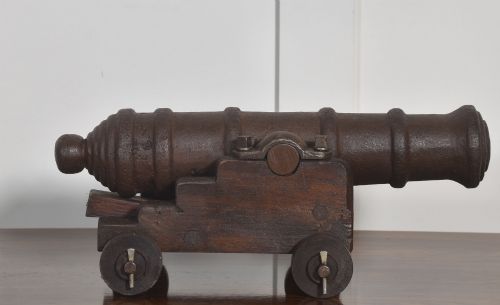
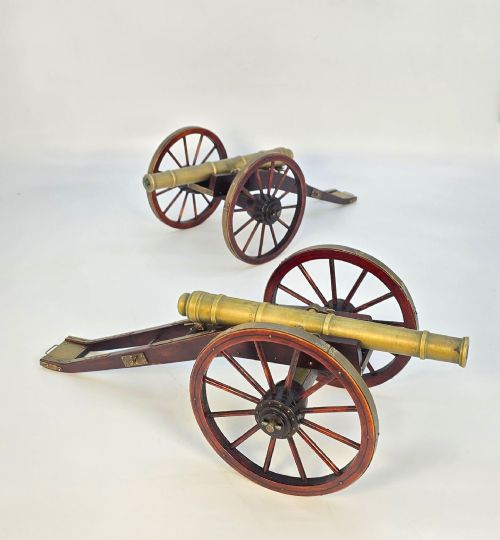
Antique cannons on this page range from full-sized signal cannons to scale models and desk ornaments. Signal versions were used to fire blank charges for maritime or estate announcements.
Smaller models and desk ornaments were created as presentation pieces or executive desk items during the 19th and early 20th centuries.
What materials make up these pieces?
Makers constructed these items using a combination of metals and woods such as brass, cast iron, steel, oak, and walnut. Decorative examples often incorporate bone inlay and mother-of-pearl.
These varied materials reflect both the functional requirements of firearms and the aesthetic preferences of specific periods like the Victorian era.
How do I identify an 18th century musket?
Eighteenth-century muskets often feature specific firing mechanisms like the flintlock or early matchlock systems. Regional characteristics, such as Italian Brescia-type furniture or Indo-Persian shaping, help determine origin.
Documentation of materials like hardwood stocks and brass mounts also aids in placing a piece within the correct historical period.