



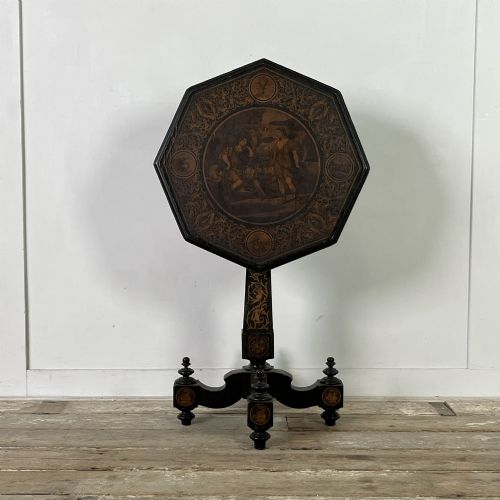


Decorated Occasional Table
A decorated occasional table brings surface art into daily rooms, offering small-scale display surfaces finished with paint, penwork, or lacquer.
Decorated Occasional Table
A decorated occasional table is a compact surface intended for placement around a room, encompassing side tables, lamp tables, window tables, and nests of tables. The evidence shows these pieces spanning Georgian, Victorian, and Edwardian periods alongside Regency and later styles.
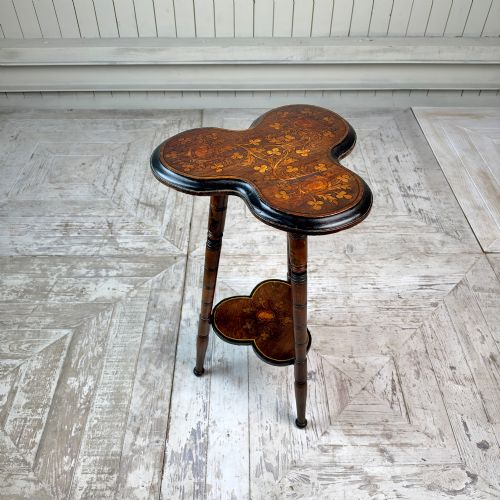
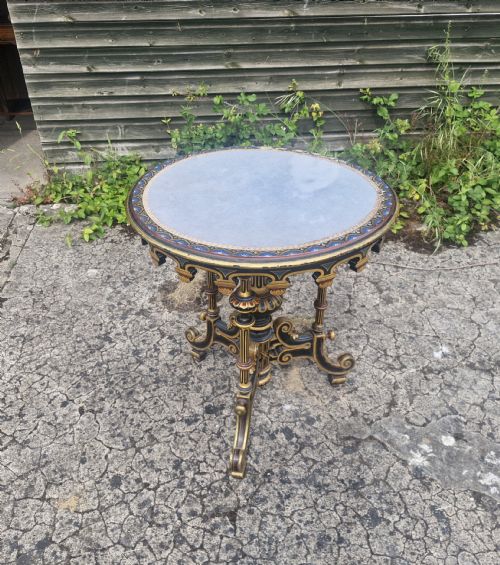
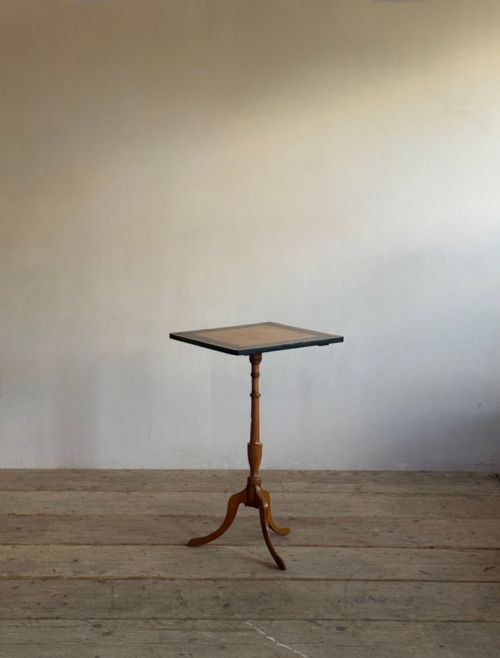
Buyers meet forms ranging from simple tripod and tilt-top tables to nests of four and geometric parquetry window tables. Surfaces carry diverse ornamentation including penwork, ink work, lacquer, and portrait painting.
Origins include English Country and French traditions, with Chinoiserie standing out as a prominent aesthetic across multiple centuries. These tables function equally well as standalone decorative accents and practical supports.
Materials and Techniques
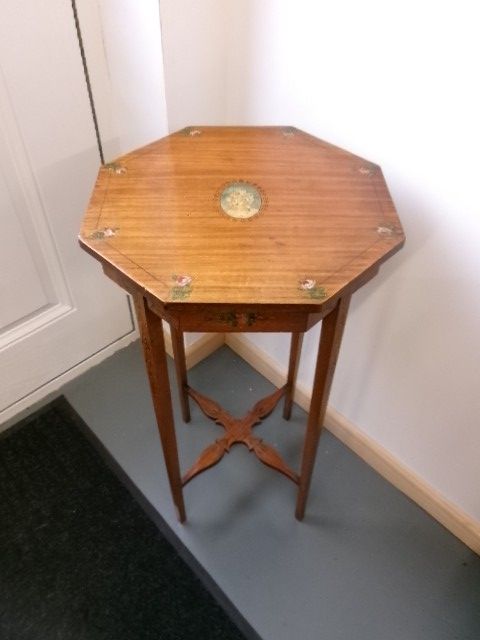
Construction relies heavily on timbers such as satinwood, satin walnut, and general wood substrates finished to support detailed surface work. Lacquer provides a deep, glossy ground for Chinoiserie scenes, while gold leaf, brass, and gilt accents highlight structural edges and decorative motifs.
Decoration is executed through specialist techniques including penwork, ink work, hand painting, and porcelain mounting. Inlaid geometric parquetry and pottery inserts further demonstrate the varied craftsmanship applied to these occasional surfaces.
Decorated Occasional Table Retail Price Guide 2026
Typical asking prices for decorated occasional table among the pieces listed under this phrase on Sellingantiques today, from the lower quarter to the upper quarter. They describe what is for sale here now, not the wider market.
Form variations include side tables, lamp tables, nests of four, work boxes, and chess tables with painted or inlaid surfaces.
Distinctions in Quality
Quality rests upon the execution of the surface decoration, distinguishing standard painted finishes from meticulous penwork, intricate Chinoiserie lacquer, and detailed portrait work. The crispness of parquetry geometry and the integration of porcelain mounts also dictate the grade of the piece.
Structural integrity within smaller forms, such as nests of tables and tripod bases, separates standard utility items from finer examples. The selection of base woods like satinwood provides another indicator of higher manufacture standards.
The Decorated Occasional Table Glossary
- Chinoiserie
- European interpretation and imitation of Chinese and East Asian artistic traditions. This style appears frequently on black lacquer occasional tables and nests.
- Penwork
- Decorative technique using fine ink lines applied with a pen to create intricate surface patterns. It is seen on Regency and Georgian tripod and chess tables.
- Parquetry
- Geometric mosaic of wood pieces laid down in a patterned surface. This technique appears on window tables from the early twentieth century.
- Satinwood
- Hard, yellowish timber used for fine cabinet making and decorative veneers. It forms the primary material for several Edwardian occasional tables.
- Tilt-top
- Table construction featuring a mechanism that allows the top to pivot vertically when not in use. This mechanism is found on nineteenth-century ink work examples.
Decorated Occasional Table: Frequently Asked Questions
Where should I place an occasional table?
These tables fit easily beside seating arrangements, near windows, or in hallways where surface space is needed without blocking movement.
Nests of tables offer flexibility by expanding when guests visit and tucking away compactly afterward.
How do I identify a Chinoiserie finish?
Chinoiserie finishes typically feature dark lacquer grounds decorated with gilt or painted motifs depicting figures, pavilions, and landscapes.
This aesthetic spans multiple periods in the listings, appearing on both single occasional tables and nests of four.
What is penwork decoration?
Penwork involves detailed line drawing executed in ink directly onto a prepared wood surface, often resembling engraved prints.
Examples in the evidence date from the Georgian and Regency periods, frequently ornamenting tripod and chess tables.
How do I care for painted wooden tables?
Painted and lacquered surfaces require gentle dusting with a dry or slightly damp cloth, avoiding harsh chemical cleaners that damage historic finishes.
Keeping them away from direct heat sources prevents the wood underneath from warping and cracking the decoration.