





Deco Metal Tray
A deco metal tray brings geometric clarity and functional elegance to a surface, offering a durable serving piece shaped by early twentieth-century design.
Deco Metal Tray
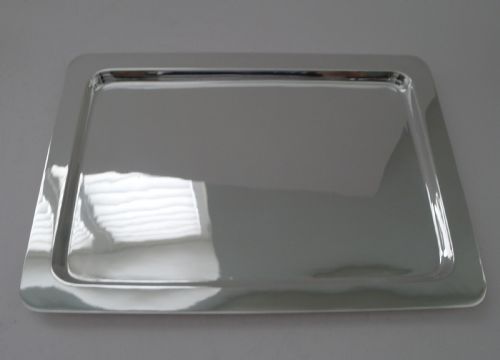
A deco metal tray brings together the clean lines and geometric motifs characteristic of the period, serving practical functions for drinks, desk organisation, and domestic service. These pieces emerge primarily from the 1920s, 1930s, and 1940s, capturing the distinct transition from ornate floral motifs to streamlined modernity.
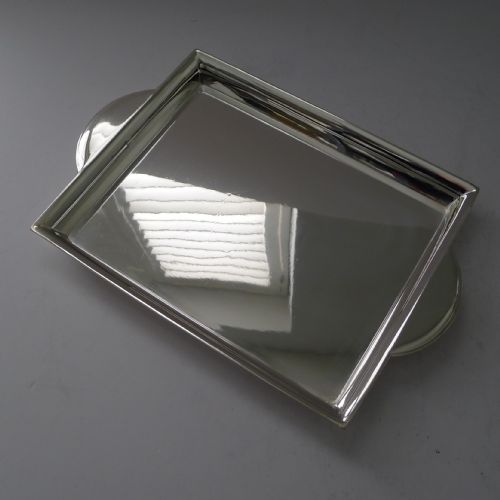
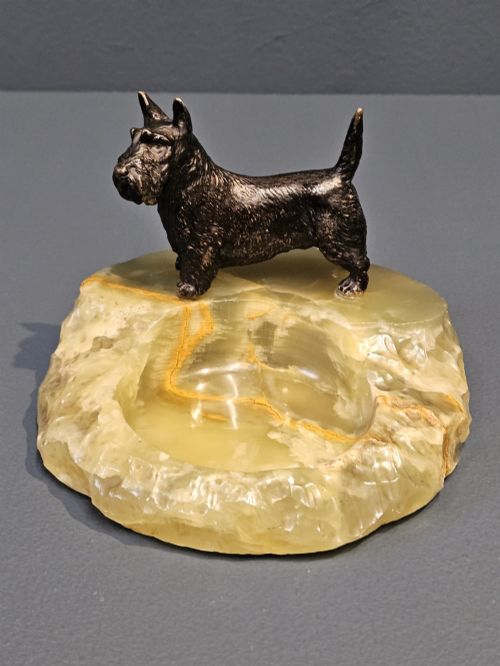
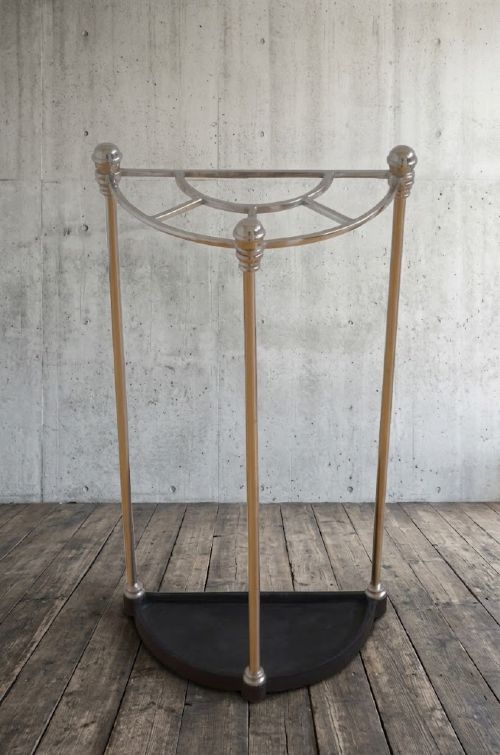
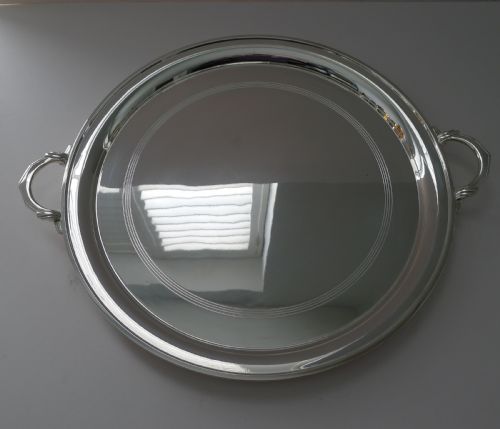
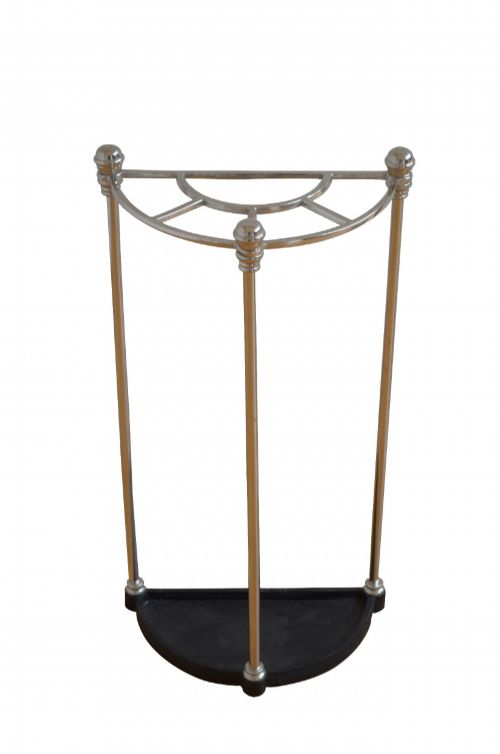
The version most commonly met on this page is the cocktail or serving tray rendered in silver plate, often featuring handles or raised galleries. Alongside these standard serving forms, variations span from round silver-plated serving dishes to demi-lune umbrella stands and desk tidies incorporating bronze and onyx.
Makers and makers' marks anchor many of these items in specific European workshops, particularly French and English centres of metalwork production. The stylistic vocabulary draws heavily on French Art Deco as well as mainstream Art Deco, sometimes retaining subtle influences from the preceding Art Nouveau period.
What varies in quality
The distinction between standard commercial output and finer work rests on the weight of the metal and the precision of the plating. Heavier gauge metals provide a more substantial feel in the hand and resist warping along the edges of the tray over decades of use.
Design attribution and maker involvement elevate individual pieces, particularly when manufactured by recognised firms such as Christofle, Mappin & Webb, or Hukin & Heath. The crispness of cast details, such as handles or integrated animal figures, demonstrates the level of skill employed during the initial shaping of the object.
Deco Metal Tray Retail Price Guide 2026
Typical asking prices for deco metal tray among the pieces listed under this phrase on Sellingantiques today, from the lower quarter to the upper quarter. They describe what is for sale here now, not the wider market.
Listings feature items spanning from the Art Nouveau period through the 1920s, 1930s, and into 1940.
Christofle Paris·Mappin & Webb·Hukin & Heath·John Collyer and Co·Brille Paris
The Deco Metal Tray Glossary
- Silver Plate
- A thin layer of silver applied to a base metal core, such as copper, brass, or pewter, to give the appearance and lustre of solid silver. This technique allowed manufacturers to produce substantial serving items at a lower cost.
- Cold Painted
- A method of applying non-fired paint to metal objects, typically bronze or spelter, after the casting process is complete. Pieces decorated this way require careful handling to preserve the original pigment.
- Demi-Lune
- A half-moon shape commonly utilised for umbrella stands and hall furniture designed to sit flush against a wall. The geometry saves floor space while maintaining capacity for sticks and canes.
- Spelter
- An alloy primarily composed of zinc, often cast into decorative figures and trinket dishes during the early twentieth century. It served as an economical alternative to bronze.
- Onyx
- A banded variety of chalcedony used as a heavy, decorative base for desk accessories and pen trays. Its natural stone grain provides a contrasting texture to polished metal components.
Deco Metal Tray: Frequently Asked Questions
How do I clean a silver plated tray?
Use a soft cloth and a specialised silver polish designed to remove tarnish without stripping the plated surface.
Avoid abrasive sponges or harsh chemical dips that can damage the underlying base metal.
What is the difference between silver plate and pewter?
Silver plate consists of a base metal coated in a thin layer of pure silver to create a bright, reflective shine. Pewter is a distinct tin alloy with a softer, darker grey finish that contains no silver coating.
Both materials were widely used for domestic wares during the art deco period but offer entirely different visual textures.
Can I use these trays for serving drinks?
Most serving trays and cocktail trays are structurally robust enough for daily use with glassware and bottles.
Take care to dry the surface promptly after use to prevent moisture from tarnishing the metal or lifting the plating.
How do I identify a French art deco piece?
French pieces often display bolder sculptural elements, distinct maker marks from Parisian firms, and a heavier emphasis on luxury materials like onyx.
Stylistic touches tend to lean towards avant-garde geometric patterns rather than standard domestic utility.