

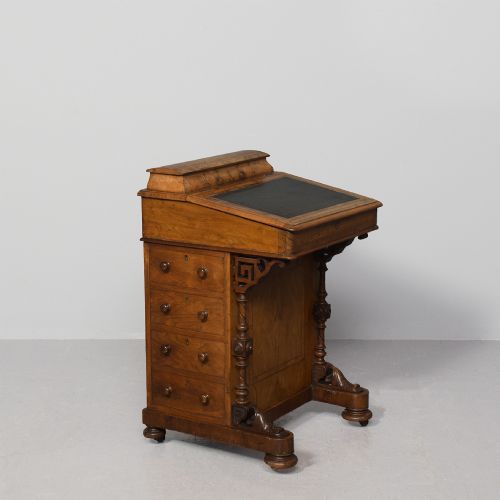
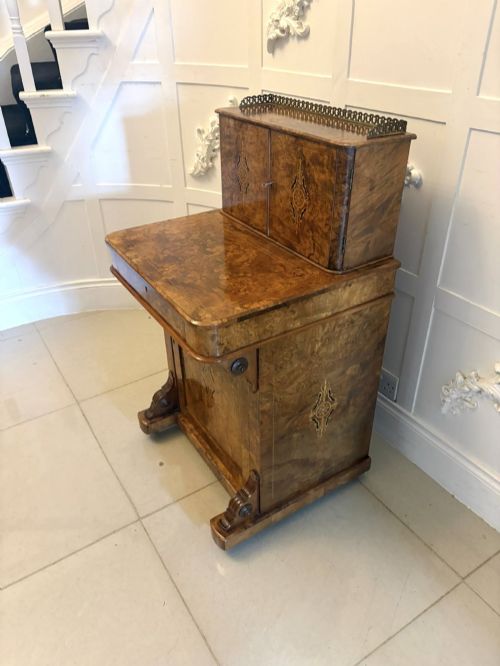
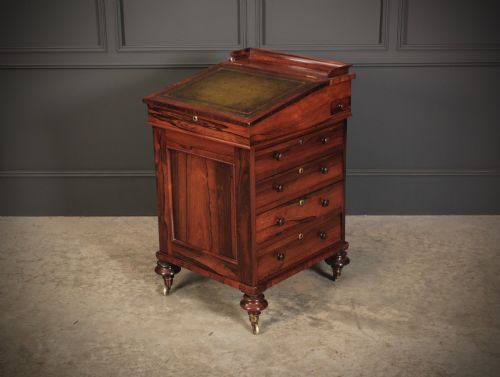
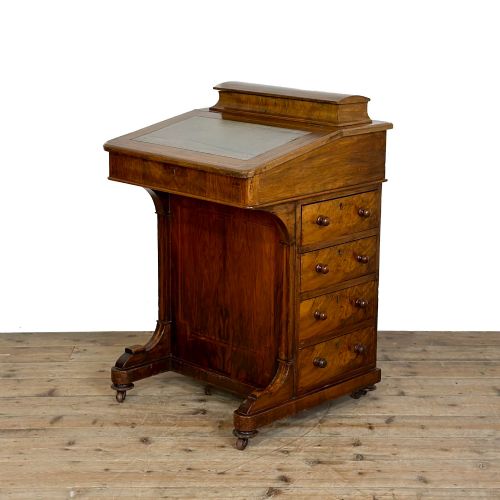
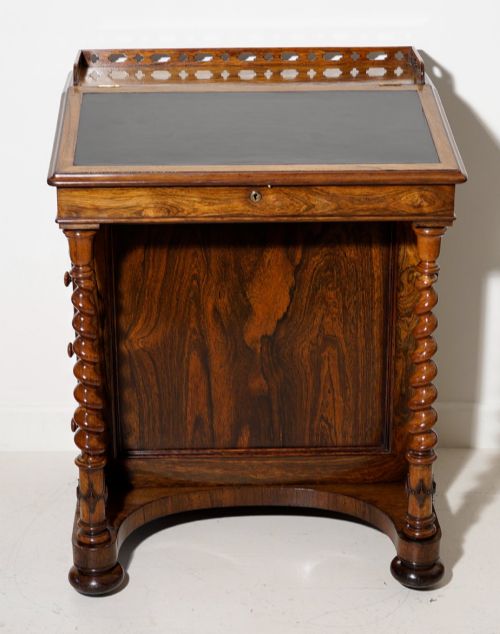
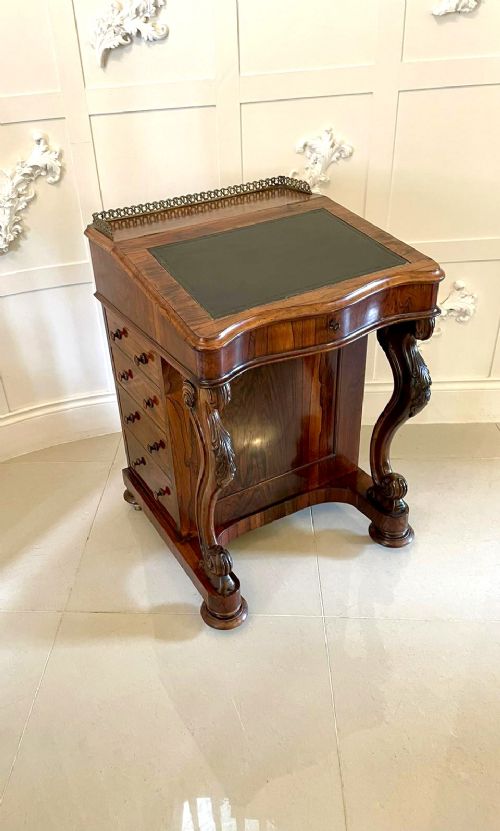
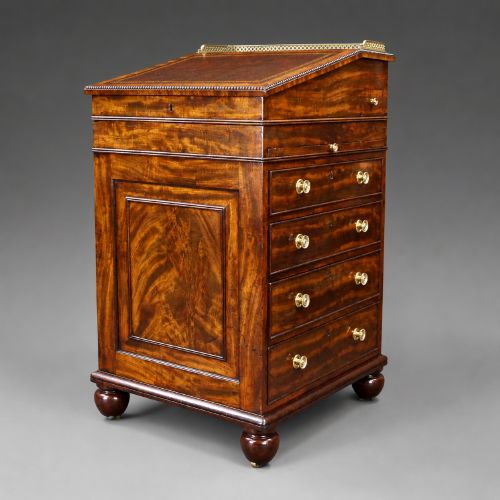
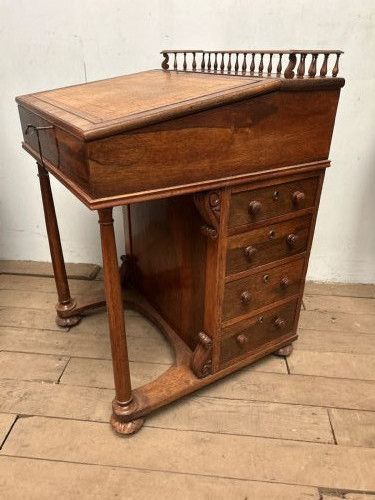
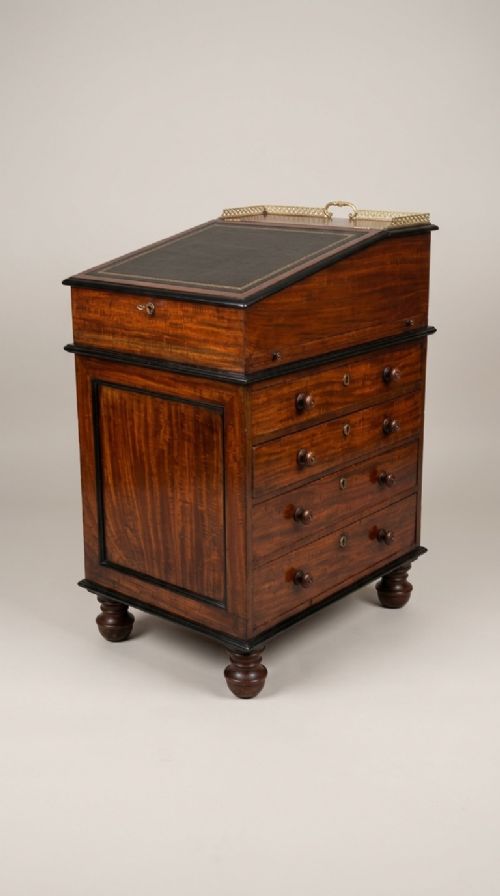
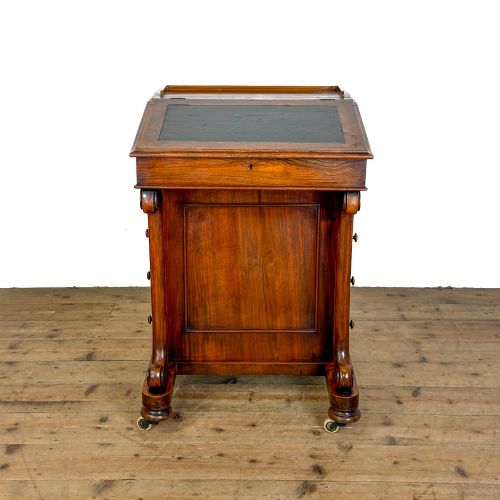


Davenport Writing Cabinet
A davenport writing cabinet is a compact desk offering deep storage and a sloping writing surface, prized for its clever engineering and small footprint.
Davenport Writing Cabinet
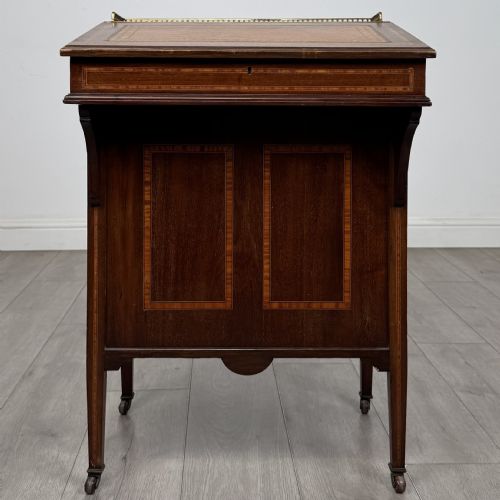
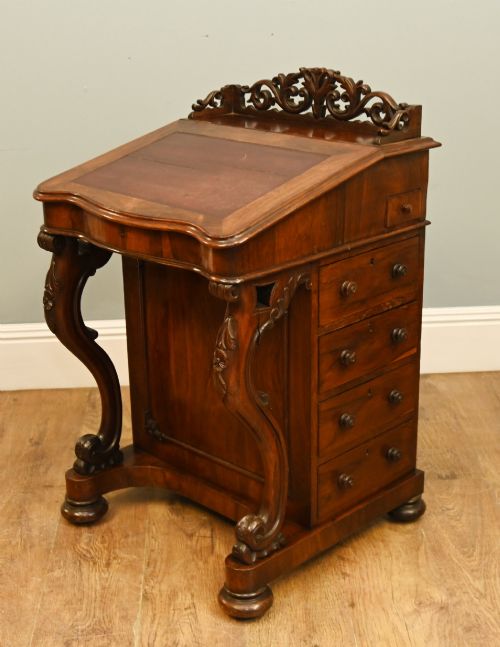
A davenport writing cabinet combines a small desk with a sloping writing surface and internal drawers, designed to occupy minimal floor space while providing dedicated workspace. Buyers searching for a davenport writing cabinet encounter varied iterations spanning Georgian, Regency, and Victorian periods.
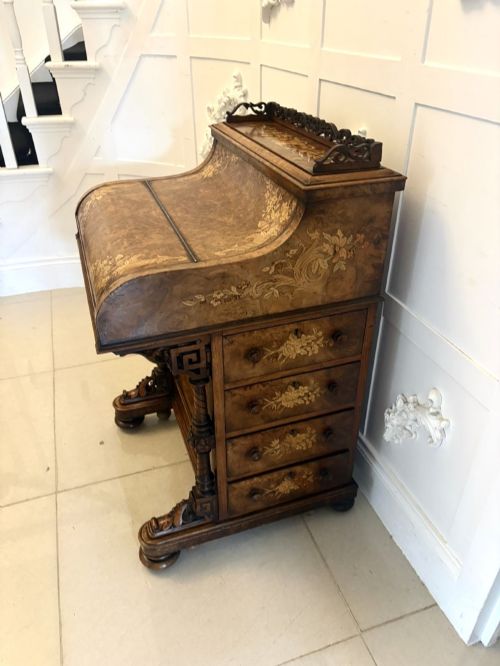
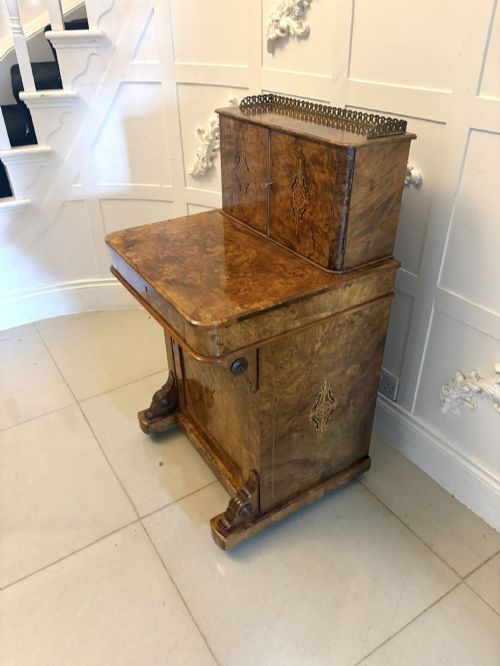
Victorian and nineteenth century examples predominate on this page, often constructed in rich timbers with stationery compartments built into the upper superstructure. These pieces range from standard stationery cabinets to pop-up designs and specialised piano top forms.
Early variants include Regency and Georgian pieces showing cleaner architectural lines, whilst later Victorian iterations showcase elaborate marquetry inlay, burr walnut veneers, and specialised mechanical fittings.
Materials and Construction
Cabinetmakers utilised dense hardwoods such as mahogany, rosewood, and walnut as structural carcases, frequently applying burr walnut or flame mahogany veneers to exterior surfaces for decorative impact. Marquetry inlay and ebonised details appear across selected pieces to accent the woodwork.
Working surfaces often incorporate inset leather writing panels, while hardware components like brass paw feet, brass mountings, and interior fittings provide both functional support and visual contrast against the dark timber.
Davenport Writing Cabinet Retail Price Guide 2026
Typical asking prices for davenport writing cabinet among the pieces listed under this phrase on Sellingantiques today, from the lower quarter to the upper quarter. They describe what is for sale here now, not the wider market.
Some Victorian davenports feature a carved wooden green man peering out from the timber to watch over your daily correspondence.
Evaluating Quality and Craftsmanship
Quality rests in the selection of timber figures, such as matched flame mahogany or high-grade burr walnut veneers, and the precision of the marquetry inlay. Superior examples display seamless integration of secondary compartments and sliding or pop-up mechanisms.
Cabinetmaking attribution elevates a piece, with documented workshop production showing finer joinery, robust internal framing, and well-executed brass hardware compared to anonymous commercial output.
Gillows of Lancaster·Gillow and Co
The Davenport Writing Cabinet Glossary
- Davenport
- A compact desk featuring a sloping top hinged to reveal storage, typically supported by a pedestal of drawers. The form originated in the late eighteenth century.
- Burr walnut
- Timber taken from a growth on a walnut tree, yielding swirling, knotty grain patterns prized for decorative veneer work.
- Marquetry
- Decorative veneer work arranged in intricate patterns or floral motifs using various tinted woods.
- Secretaire
- A piece of furniture containing a writing drawer or fold-down writing surface concealing small compartments.
- Pop-up
- A mechanical superstructure raised from the rear of the desk to house stationery and inkwells.
Davenport Writing Cabinet: Frequently Asked Questions
What is a davenport desk?
A davenport desk is a compact writing cabinet featuring a sloping lid that lifts or sloped forward for correspondence, set above a pedestal of drawers. It provides a dedicated writing space within a very small footprint.
Most versions incorporate interior pigeonholes and stationary storage beneath the lid, with side drawers accessible to the seated writer.
How were davenport cabinets used?
These pieces served primarily for personal correspondence, household accounts, and letter writing in nineteenth-century drawing rooms and private studies. The enclosed compartments kept writing materials tidy when not in use.
They functioned as neat alternatives to larger bureau bookcases, offering writing facilities without dominating the room.
How do I date a davenport?
Dating relies on timber selection, hardware, and structural style, moving from Georgian and Regency forms toward elaborate Victorian marquetry and pop-up mechanisms. Earlier pieces tend to show restrained mahogany designs.
Mid-nineteenth-century examples frequently feature burr walnut veneers, brass galleries, and mechanical stationery boxes that emerged with Victorian industrial innovations.
Where should I place a davenport?
Freestanding davenports suit living rooms, studies, or bedrooms where floor space is limited but a writing surface is desired. Many feature finished backs, allowing placement away from walls.
Their compact scale means they fit easily into awkward corners or beside seating areas as functional decorative items.