
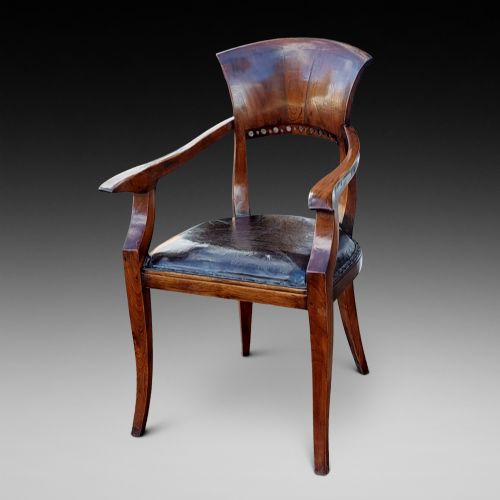
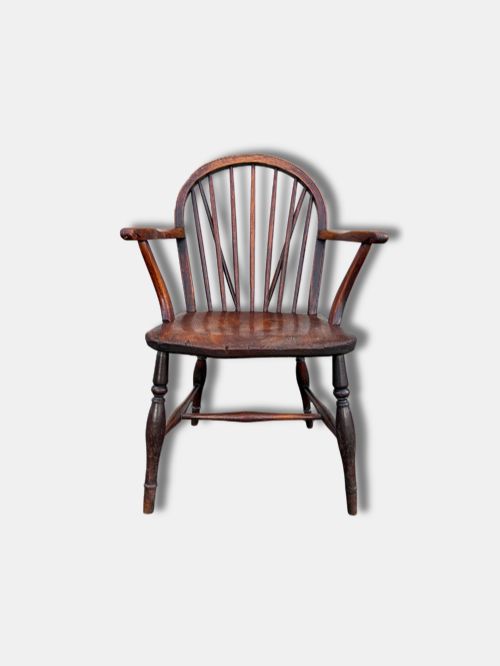
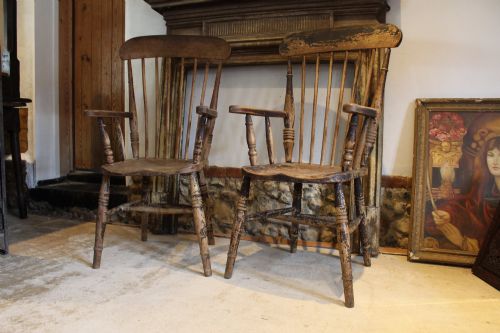
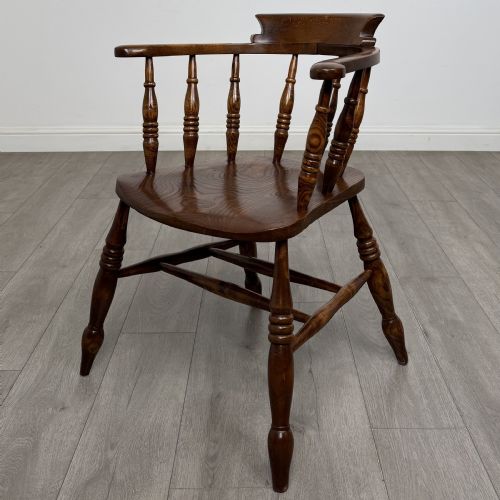
Dark Wooden Desk Chair
A dark wooden desk chair offers solid timber construction and practical seating, grounding a workspace with traditional British character.
Dark Wooden Desk Chair
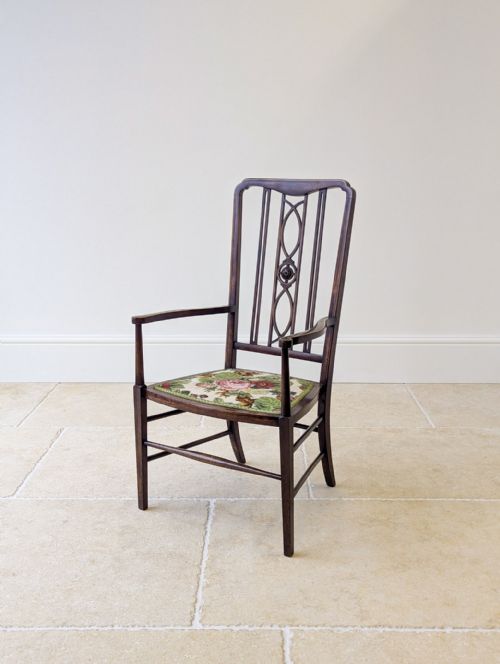
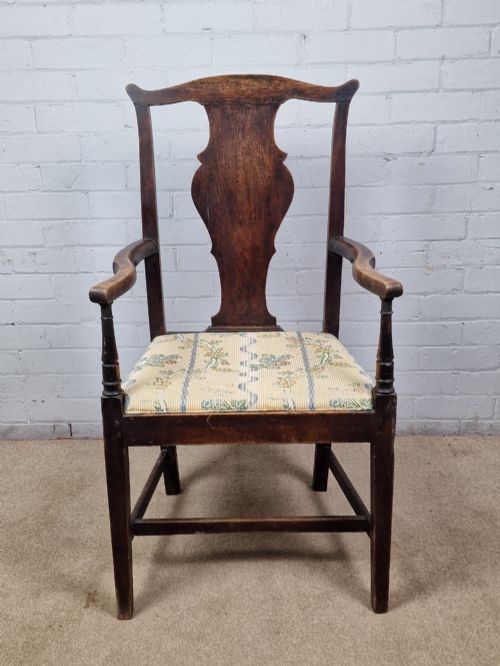
A dark wooden desk chair combines sturdy timber frames with functional seating designs suited to daily study and work. These pieces draw from centuries of British cabinet making, spanning robust country workshops and formal urban parlours alike.
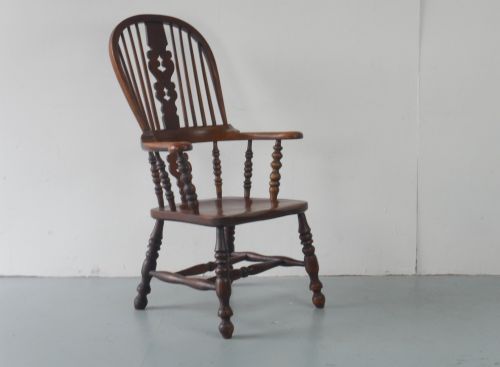
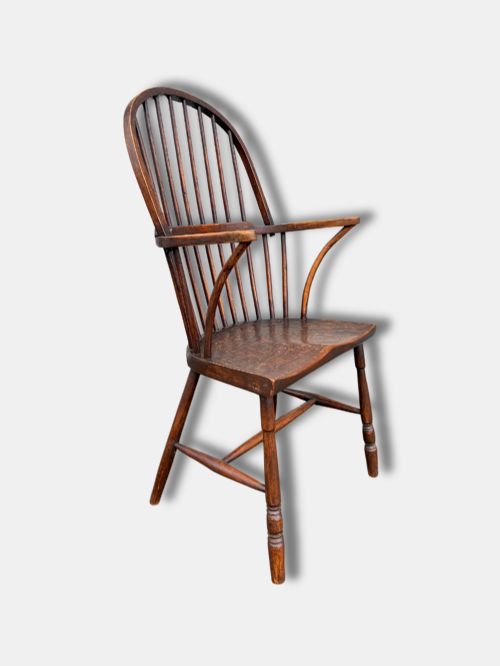
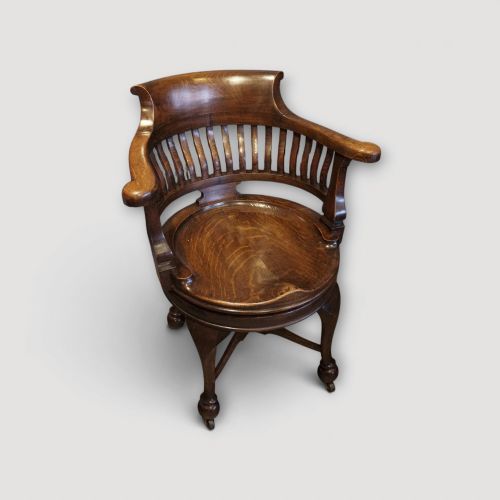
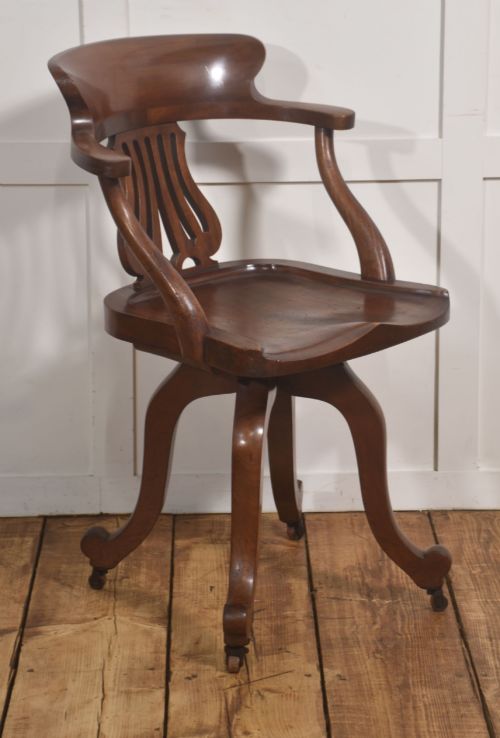
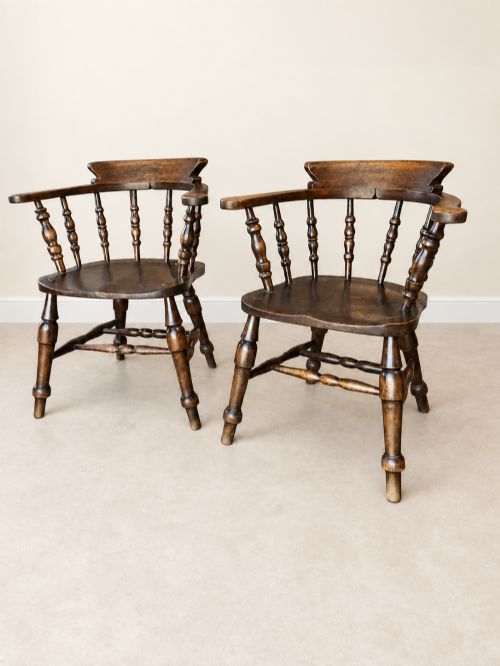
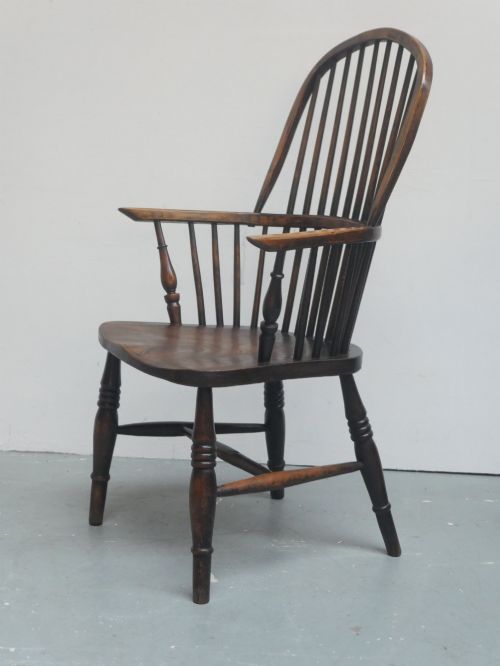
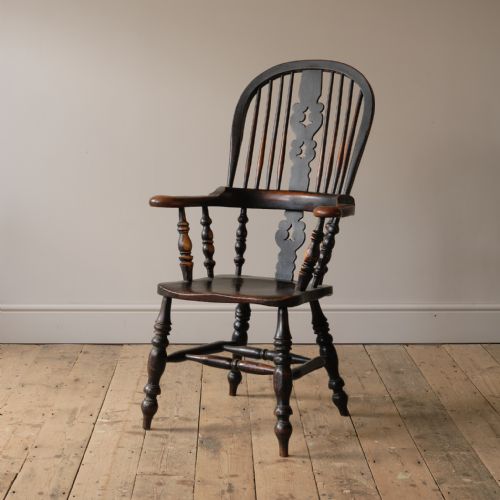
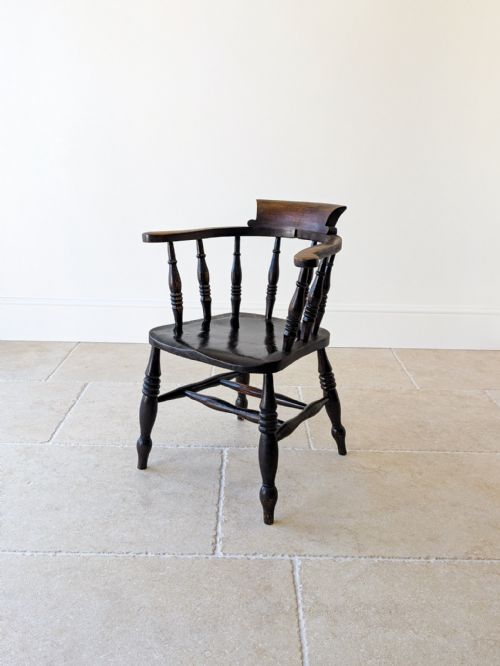
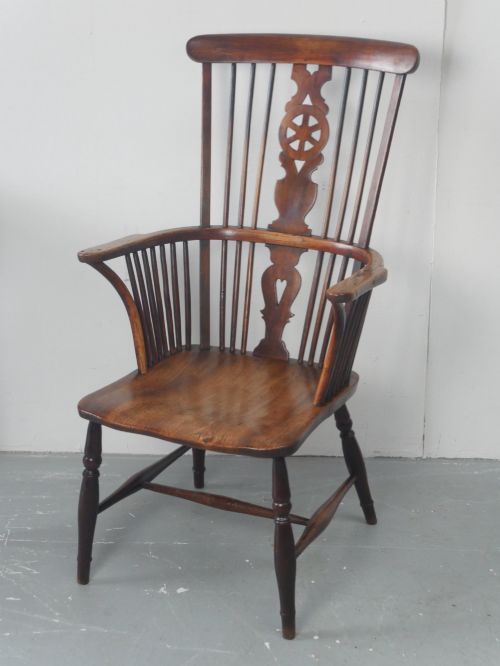
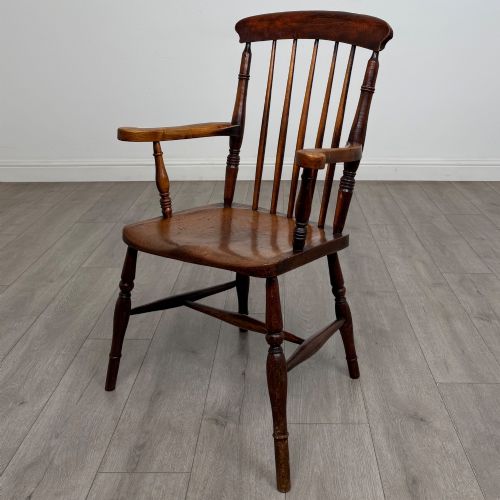
The most common examples encountered here are Windsor armchairs, captains chairs, and smokers bows built from native hardwoods. They emerge predominantly from the eighteenth and nineteenth centuries, reflecting periods such as the Georgian, Victorian, and Edwardian eras.
Makers utilised resilient local timbers to create seats that supported long hours at a table or bureau. Buyers seek these forms for their honest utility and the warm patina accumulated over generations of service.
Materials and construction methods
Makers constructed these chairs using a combination of dense hardwoods selected for strength and flexibility. Elm, ash, and beech frequently form the bent components and carved seats of country windsors, while mahogany and oak shape formal eighteenth and nineteenth-century seating.
Joinery relied on traditional methods such as wedged tenons, pegged joints, and steam bending to shape sturdy armbows and comb backs. Craftsmen often paired contrasting timbers within a single frame, using elm for comfortable scooped seats and ash or yew for resilient spindles.
Some nineteenth-century smokers bows clearly bear the generous proportions demanded by nineteenth-century gentlemen who took their pipework seriously.
Distinctions in quality
Quality rests upon the crispness of the timber carving, the integrity of the original joints, and the depth of the natural finish. Superior examples display thoughtful selection of grain patterns, particularly in yew and mahogany, alongside well-proportioned spindles and armbows.
The skill of the original maker dictates the comfort and balance of the piece, evident in the careful sculpting of solid timber seats. Chairs retaining their original surface finish and uncompromised structural pins command greater appreciation than heavily restored alternatives.
Hindley & Sons
The Dark Wooden Desk Chair Glossary
- Windsor chair
- A wooden chair constructed with a solid sculpted seat into which the legs and back spindles are directly fitted. This form evolved through regional British traditions, particularly in the Thames Valley.
- Smokers bow
- A low-backed Windsor armchair featuring a continuous curved armrail supported by turned spindles. These sturdy seats became common in domestic studies and commercial offices during the nineteenth century.
- Captains chair
- A compact wooden armchair designed with a rounded low back suited for office use. They frequently combined elm and beech timbers to withstand heavy daily wear.
- Comb back
- A Windsor chair design where the central vertical spindles extend upward to support a horizontal top rail resembling a comb. This variation appeared widely across eighteenth-century workshops.
- Carver
- A traditional term for an armchair, typically designed to match a set of smaller side chairs intended for dining or study tables.
Dark Wooden Desk Chair: Frequently Asked Questions
How do I identify a genuine period desk chair?
Examine the construction methods beneath the seat, looking for hand-cut joinery and signs of age-appropriate wear. Period pieces typically display traditional pegging and native timber patination rather than modern mechanical fasteners.
Compare the proportions and turning details against documented examples from specific eras like the Georgian or Victorian periods. Genuine age reveals itself in the organic shifting of wood grain and the soft lustre of old finishes.
Were these chairs originally made for offices?
Many sturdy wooden armchairs served multiple domestic and commercial functions in studies, libraries, and counting houses before becoming dedicated desk seats. Vernacular forms like captains chairs and smokers bows were built specifically for prolonged sitting.
As the nineteenth century progressed, cabinet makers adapted traditional seating designs with lower proportions and robust frames to meet the demands of growing administrative workplaces.
What is the difference between elm and mahogany versions?
Elm appears predominantly in country vernacular furniture, prized for its interlocking grain that resisted splitting in scooped Windsor seats. This timber carries a rugged, tactile quality typical of rural English workshops.
Mahogany was reserved for formal urban environments, offering a fine, dark grain that accepted sharp carving and polished to a refined sheen. These formal chairs often reflect specific architectural styles like Chippendale or Regency.
How should I care for a historic wooden chair?
Keep wooden seating away from direct heat sources and rapid humidity shifts to prevent the natural timber from splitting or warping. Maintain the finish by applying occasional light coats of quality beeswax.
Avoid harsh chemical cleaners that strip historical patina, relying instead on a soft, dry cloth for routine dusting. Check the structural joints periodically to ensure pegs and tenons remain secure.