

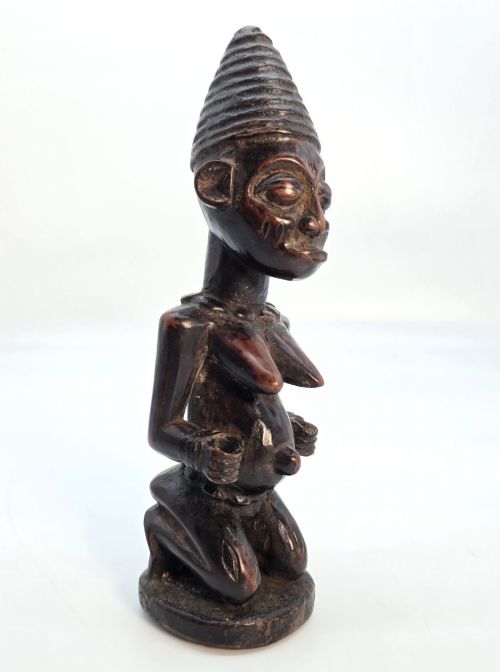


Dark Wood Tribal Sculpture
These dark wood tribal sculpture pieces bring together carved hardwood figures, masks and ceremonial objects shaped by diverse global hands across the nineteenth and twentieth centuries.
Dark Wood Tribal Sculpture
When you search for dark wood tribal sculpture, you encounter a varied selection of carved hardwood and wood figures, masks, headrests and ritual objects originating from African, Himalayan and South Indian traditions. The selection spans the nineteenth century through to the mid-twentieth century, including works associated with specific cultural groups such as the Yoruba, Edo, Fang and Baule peoples.
Originating from diverse geographic regions including West Africa, Central Mali, the Ivory Coast, Nepal and South India, these items reflect the distinct artistic languages of their respective makers. The grouping captures both utilitarian items transformed by carving and dedicated sculptural pieces intended for ceremonial or spiritual use.
What varies in quality
The standard of a carving rests upon the confidence of the tool work and the expressiveness of the form, distinguishing fluid, purposeful shaping from stiffer or more perfunctory execution. Mastery of proportion and the depth of relief carving create a stronger presence in figures and masks.
Surface history significantly influences the character of a piece, with handling, age and applied pigments combining to form a coherent, undisturbed patina. Examples that retain their original structural integrity alongside evidence of genuine cultural use hold distinct visual depth.
Abegunde of Ede
The Dark Wood Tribal Sculpture Glossary
- Patina
- The surface sheen and coloration developed through age, handling, and exposure to oils or smoke over decades. It serves as a primary indicator of historical depth.
- Hardwood
- Dense timber derived from broad-leaved trees, providing the robust substance required for detailed and enduring tribal carvings.
- Reliquary
- A container or protective sculpture designed to hold sacred relics or ancestral remains, commonly seen in Fang traditions.
- Oracle
- A carved ritual object, such as a friction oracle, utilised within indigenous communities for divination and spiritual guidance.
Dark Wood Tribal Sculpture: Frequently Asked Questions
What defines tribal sculpture?
Tribal sculpture encompasses carved wooden figures, masks and ritual objects created by indigenous artists for spiritual, ceremonial or utilitarian purposes. These works rely on traditional motifs and regional styles passed down through generations.
The materials typically involve dense local hardwoods, sometimes combined with bone, brass or pigment. Each piece reflects the distinct artistic conventions of the culture that produced it.
How are periods identified?
Dating relies on surface wear, tool marks, wood shrinkage and historical documentation associated with specific carving traditions. Stylistic markers also link pieces to distinct nineteenth or twentieth-century eras.
Examining the depth of the patina and the nature of the wood grain helps establish the age of an unrecorded sculpture. Comparisons with documented examples from known regions provide further chronological context.
Where were these pieces used?
These sculptures and masks served varied roles in community life, including ancestral veneration, agricultural rituals, dances and domestic functions. Many objects were active participants in ceremonies rather than static display items.
Functional pieces like headrests and tables combined daily utility with symbolic carving, while masks and figures held central places in ritual performances.
How should I care for dark wood?
Preserving carved wood requires stable indoor humidity away from direct heat sources and strong sunlight to prevent cracking or fading. Occasional dusting with a soft, dry cloth is generally sufficient for maintenance.
Avoid applying modern polishes or oils, as these can disrupt the historic surface patina. Allowing the wood to age naturally maintains its original character.