

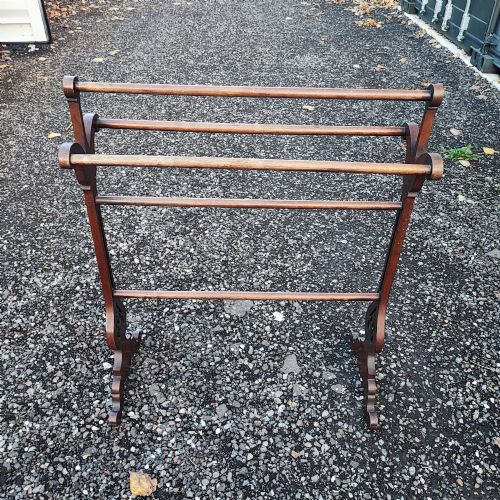
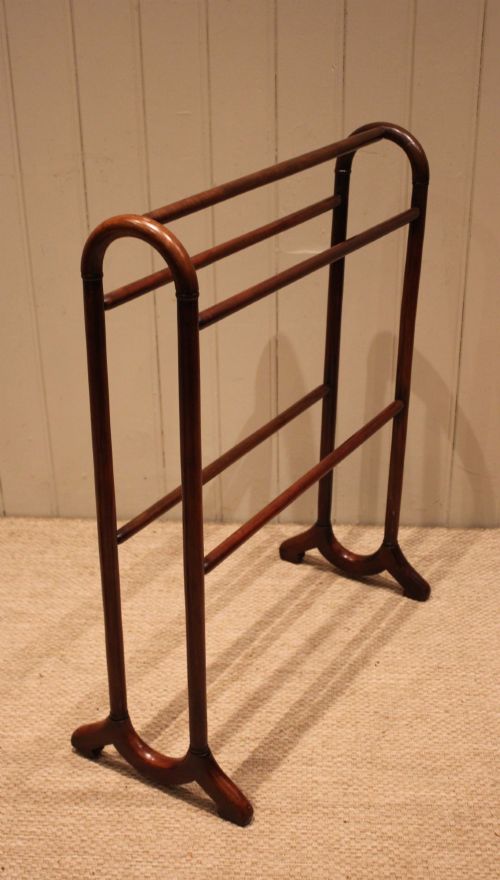
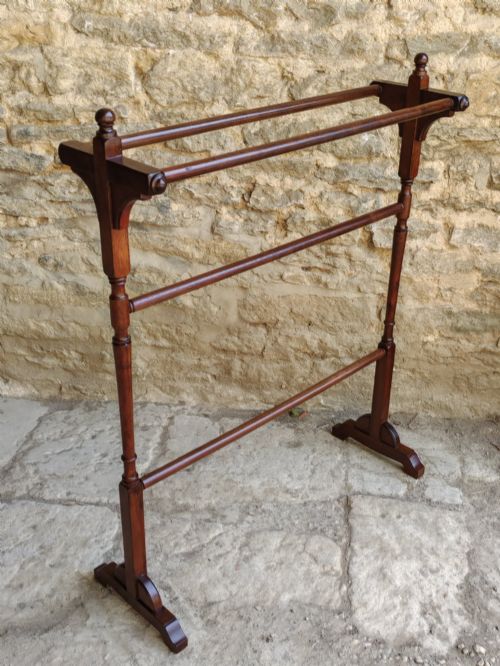
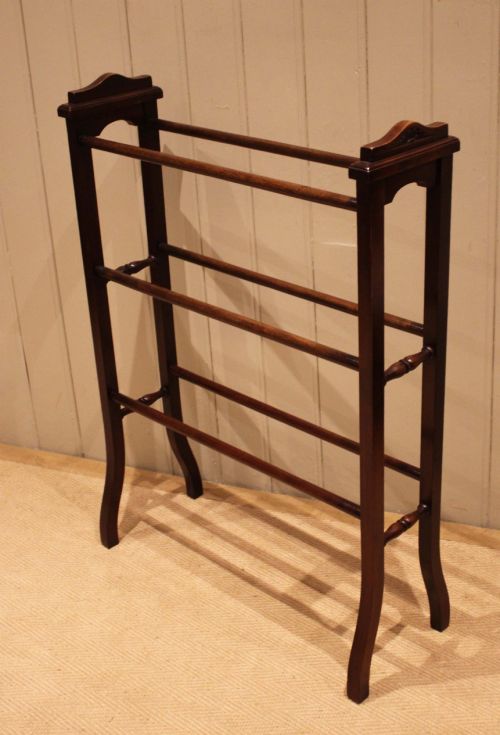


Dark Wood Towel Stand
A dark wood towel stand brings practical warmth to a room, offering sturdy rails shaped from rich timbers for everyday use.
Dark Wood Towel Stand
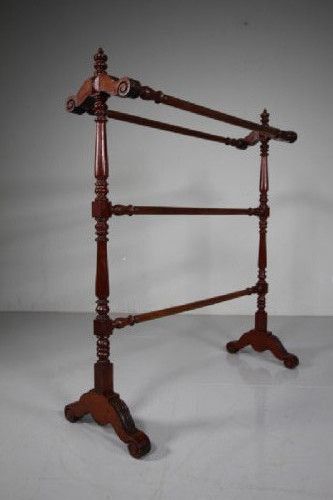
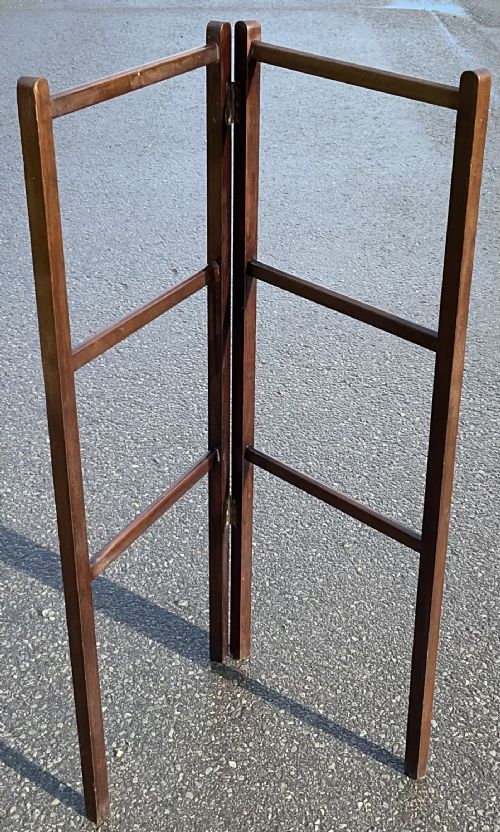
A dark wood towel stand provides a dedicated place to hang linens, appearing frequently in Edwardian and Victorian forms across these listings. These practical items include folding rails, large standing frames, and occasional clothes racks designed for domestic utility.
The selection ranges from simple Edwardian mahogany pieces to substantial William IV and Gothic Revival examples in walnut and elm. Makers shaped these items for bedrooms and dressing rooms, utilising rich timbers to combine utility with domestic elegance.
Visitors encounter various related forms here, such as Chinese carved hall stands and washstands, alongside traditional towel rails. Mahogany remains the dominant timber, often enhanced by satinwood inlay or brass details.
How they were made
Cabinetmakers constructed these stands primarily from mahogany, walnut, elm, and beech, selecting dense hardwoods capable of supporting heavy damp linens. Carpenters shaped the frames with traditional joinery, creating stable bases and pivoting or fixed rails.
Surface decoration relies on natural timber grain, occasionally augmented by subtle satinwood inlay or detailed carving as seen in Chinese Qing Dynasty pieces. Brass fittings and ceramic components appear on washstands and specific rail designs to provide functional contrast.
Dark Wood Towel Stand Retail Price Guide 2026
Typical asking prices for dark wood towel stand among the pieces listed under this phrase on Sellingantiques today, from the lower quarter to the upper quarter. They describe what is for sale here now, not the wider market.
Listings feature dark wood towel stands primarily in mahogany, walnut, and elm, spanning from the mid-nineteenth century to the Edwardian period.
What varies in quality
The distinction between standard utility items and finer examples lies in the selection of timber and the crispness of the turning. Heavier frames with substantial proportions, such as oversized William IV designs, demonstrate superior material substance.
Refinements like satinwood inlay, carved details, and integrated brass hardware elevate certain pieces beyond simple domestic furniture. The integrity of the joints and the choice of dense hardwoods dictate the long-term stability of each stand.
The Dark Wood Towel Stand Glossary
- Mahogany
- A durable tropical hardwood prized for its deep reddish-brown colour and fine grain. Cabinetmakers utilised it extensively for high-quality furniture throughout the nineteenth and early twentieth centuries.
- Gothic Revival
- An architectural and decorative style popular during the Victorian era. It incorporates medieval motifs, pointed arches, and sturdy proportions into domestic furnishings like walnut towel rails.
- William IV
- A design period spanning the early nineteenth century characterised by heavy, robust proportions and classical restraint. Pieces from this era often feature substantial timber framing.
- Satinwood inlay
- A decorative technique where contrasting light-coloured wood is inserted into recesses of a darker primary timber. It creates delicate geometric or floral patterns on the surface.
- Bentwood
- A method of steaming wood until pliable and bending it into curved forms. This technique appears on specific Edwardian stands and washstands.
Dark Wood Towel Stand: Frequently Asked Questions
How do I date a dark wood towel stand?
Dating relies on stylistic clues, timber choice, and construction methods visible in the frame. Edwardian examples often show lighter proportions, while Victorian and William IV pieces tend to be heavier and more robust.
Hardware, such as brass fittings and ceramic elements, further helps place a piece within the nineteenth or early twentieth century. Examining the joints and overall wear provides additional context for the age.
Can I use a vintage towel stand in a modern bathroom?
These stands function well in contemporary spaces, providing practical hanging space for towels or garments. Their rich dark woods add texture and character to modern interiors.
Care should be taken with excessive bathroom moisture to protect the antique wood finish. Placing the stand in a well-ventilated area preserves the timber over time.
What is the difference between a towel rail and a clothes rack?
Towel rails are typically lower structures designed specifically for hanging bath linens and small textiles. Clothes racks and robe stands offer greater height to accommodate longer garments.
Both forms utilise similar dark wood construction and standing frames. The primary distinction lies in their proportions and intended domestic placement.
Are folding towel stands stable?
Folding models are engineered with hinged sections that lock or stay braced when extended for use. Quality examples maintain structural integrity through well-fitted wooden hinges and sturdy side supports.
Users should check that the folding mechanism moves smoothly without excessive play. Proper construction ensures the stand remains upright under the weight of damp textiles.