




Dark Wood Scientific Instrument
A dark wood scientific instrument brings practical utility and precise engineering together in a handsome domestic or travel object.
Dark Wood Scientific Instrument
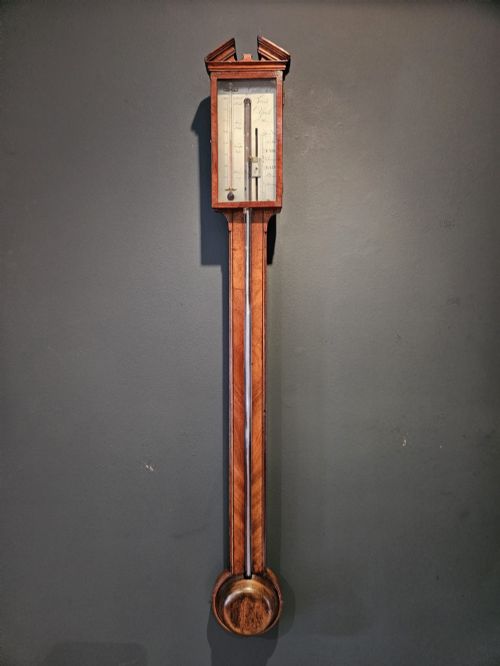
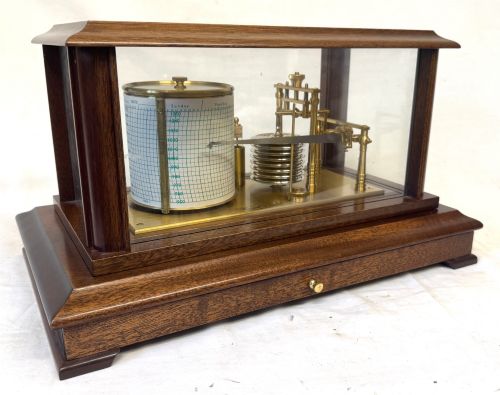
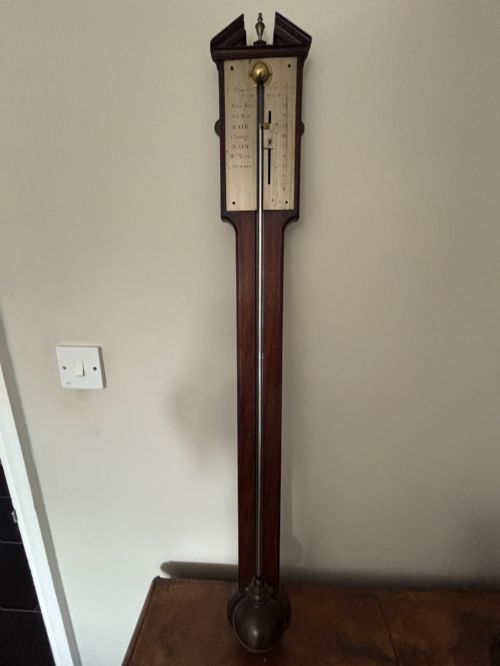
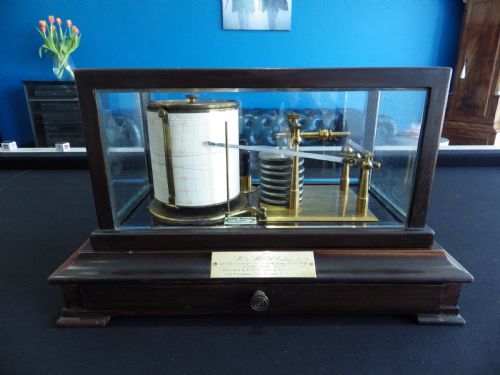
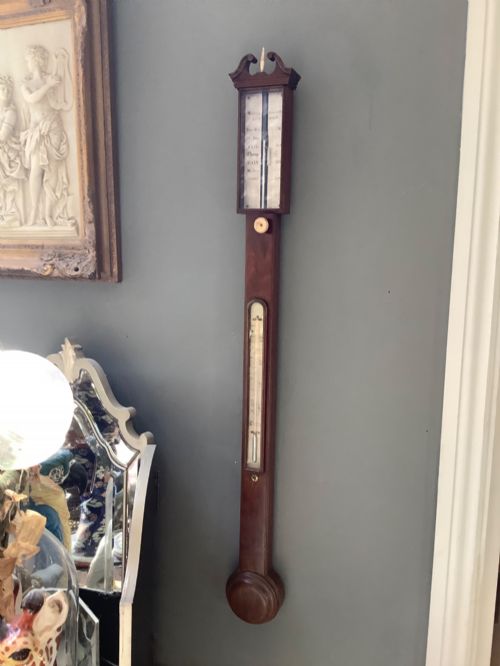
A dark wood scientific instrument encompasses functional measurement devices housed in timbers such as mahogany, rosewood and oak. You will frequently encounter stick barometers, wheel barometers and barographs among the items available on this page.
The selections span periods from the mid eighteenth century through the Victorian era and into the twentieth century. Makers concentrated utility into compact forms designed for travellers, ships and domestic interiors.
Compasses, thermometers, barometers and collector cabinets form the core of this category. Each piece combines mechanical or optical components with dense, figured timber cases.
How they were made
Cabinets and cases utilise dense hardwoods like mahogany and rosewood, frequently shaped with turned mouldings or inlaid with boxwood and ebony stringing. Woodworkers joined these timbers carefully to protect delicate internal mechanisms from humidity and temperature shifts.
Precision components rely on brass dials, silvered metal scales and cast brass bezels paired with blown glass tubes. Makers engraved scales by hand and filled the incisions with dark wax to ensure clear reading against the reflective metal surface.
Mercury filled tubes and aneroid capsule movements provide the operational heart for barometric instruments. Workshop tools such as glass cutters and metal gravers allowed craftsmen to calibrate each dial individually.
Dark Wood Scientific Instrument Retail Price Guide 2026
Typical asking prices for dark wood scientific instrument among the pieces listed under this phrase on Sellingantiques today, from the lower quarter to the upper quarter. They describe what is for sale here now, not the wider market.
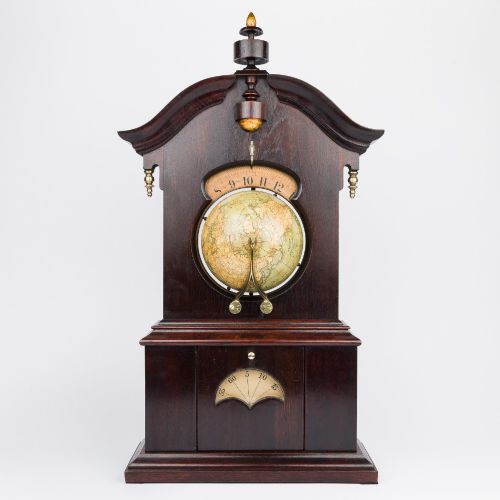
One exceptional Victorian wall piece combines timekeeping with barometric forecasting inside the elaborate shape of a mercury-bearing caduceus.
What varies in quality
Quality rests in the precision of the mechanical graduation and the integrity of the timber case. Superior examples display crisp hand-engraved scales and cabinetwork executed with fine dovetails and matched veneers.
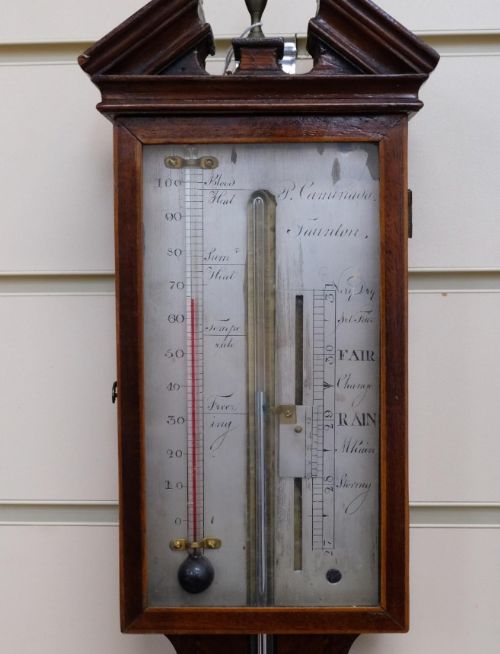
Signatures inscribed on silvered brass plates or engraved directly onto the mechanism separate standard production items from workshop pieces created by noted makers. Original components and untruncated wooden cistern covers preserve the historical standing of a barometer or thermometer.
The depth of colour and grain figure in the rosewood or mahogany case indicates the grade of material selected by the original cabinetmaker. Fine proportions and restrained inlay distinguish superior domestic pieces from utilitarian instruments.
George Adams·Negretti and Zambra·John Gilbert·Dollond of London
The Dark Wood Scientific Instrument Glossary
- Barometer
- An instrument that measures atmospheric pressure to forecast weather changes. Most examples here utilise a column of mercury or an aneroid metal chamber.
- Stick barometer
- A tall, narrow instrument where the mercurial column is exposed against a vertical scale. These represent the dominant form among Georgian and Victorian pieces.
- Wheel barometer
- A dial instrument connected to a float inside the tube, driving a pointer around a circular face. These often incorporate a thermometer at the top.
- Silvered brass
- A brass plate treated with a silver compound to create a matte white surface for engraved inscriptions and numerals. This finish provides high contrast against black filled lettering.
- Aneroid barometer
- A weather indicator operating without liquid, using a flexible metal box that expands or contracts with air pressure changes.
- Barograph
- A mechanical device that records barometric pressure continuously onto a rotating paper chart driven by clockwork.
Dark Wood Scientific Instrument: Frequently Asked Questions
How do stick barometers work?
A column of mercury rises and falls in a glass tube in response to atmospheric pressure variations. The exposed fluid level aligns with graduated scales on the brass plate.
Changes in weather alter the pressure on the mercury reservoir at the base. Readers observe the height of the column to track rising or falling weather patterns.
Are these barometers still accurate?
Many mercurial and aneroid instruments retain functional accuracy if the internal mechanisms remain sealed and intact. Historical barometers provide reliable readings when properly calibrated against modern standards.
Ambient temperature and transport can affect mercury columns. Careful handling ensures the glass tubes and cisterns stay undamaged during relocation.
What is the difference between mahogany and rosewood cases?
Mahogany offers a reddish brown tone with straight or ribbon grain patterns favored in Georgian workshop design. It provides a stable housing for sensitive internal movements.
Rosewood presents a darker, heavily figured grain with distinctive contrasting streaks. Makers selected rosewood for decorative Victorian items intended for prominent display in domestic interiors.