

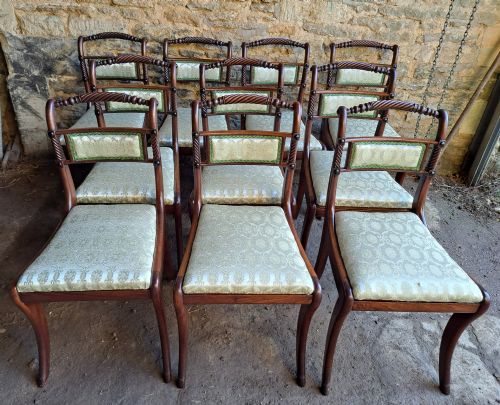
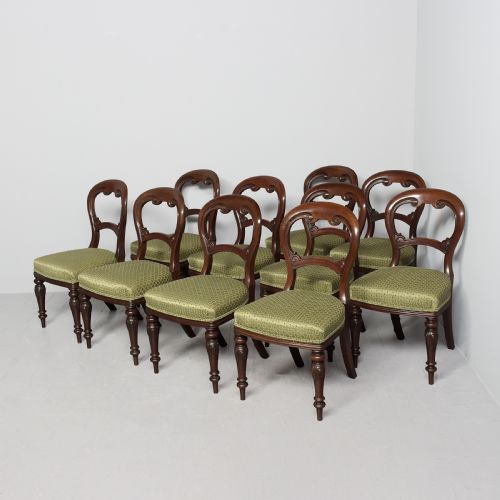
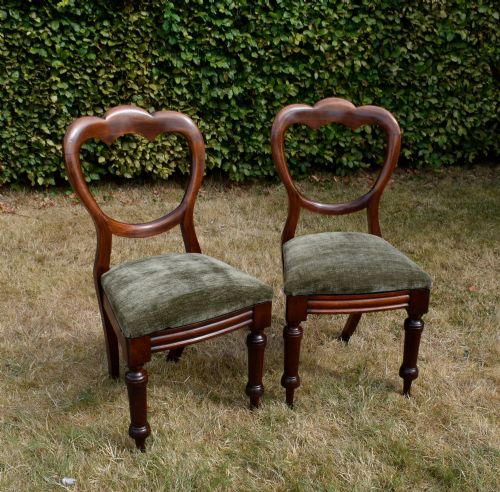
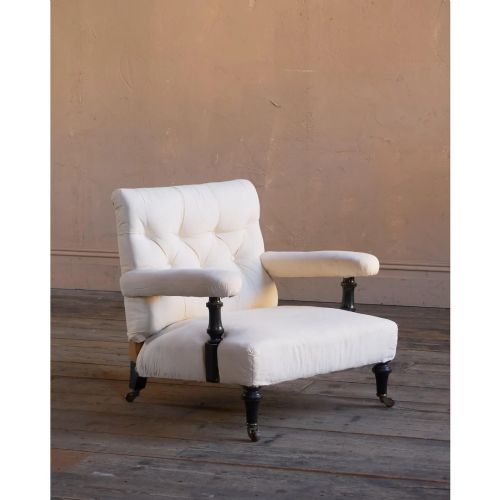
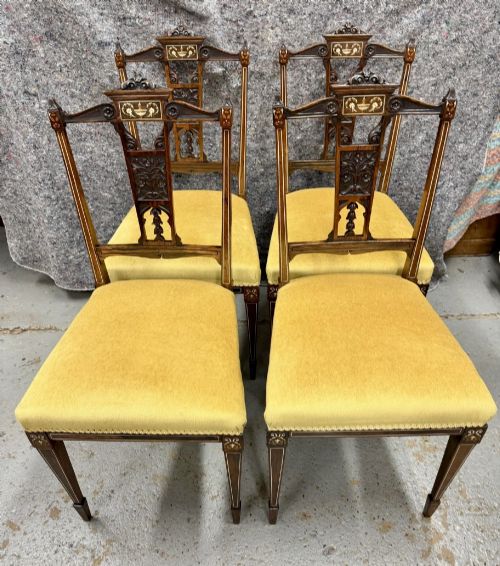


Dark Wood Salon Chairs
Dark wood salon chairs bring richness and formal elegance to a room, spanning periods from Victorian to Edwardian.
Dark Wood Salon Chairs
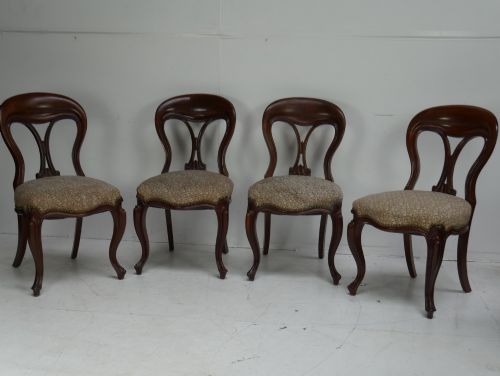
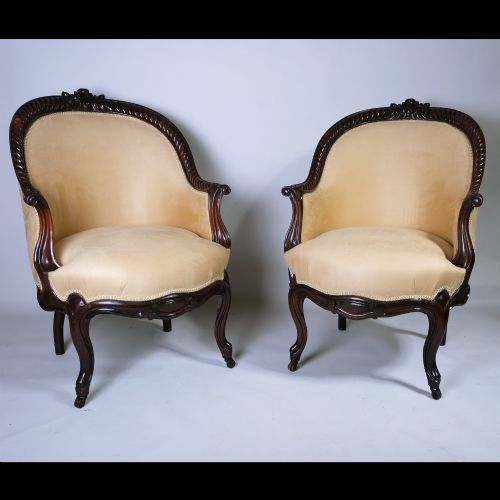
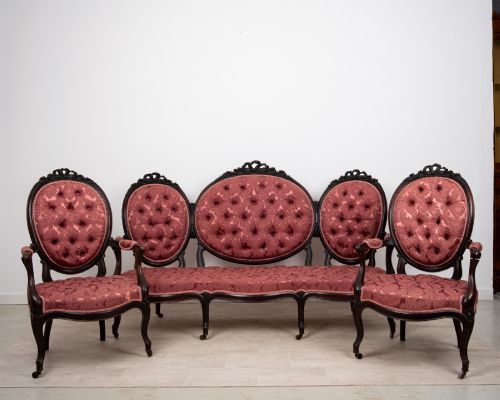
Dark wood salon chairs encompass seating forms created primarily during the nineteenth and early twentieth centuries, featuring timbers such as rosewood, mahogany, and walnut. Buyers seeking dark wood salon chairs typically find side chairs, armchairs, and parlour suites designed for formal reception rooms.
The selection on this page leans heavily toward Victorian and Edwardian examples, alongside Sheraton Revival and French revival styles. These pieces range from single occasional chairs to large matching sets intended for social gatherings.
Materials and construction
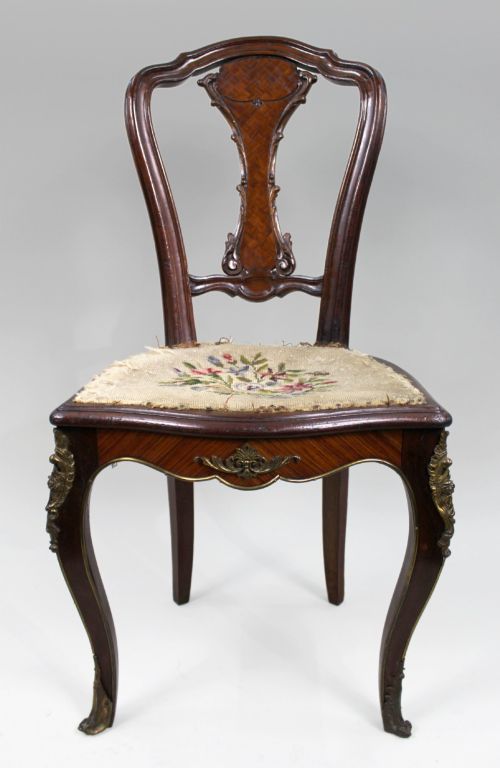
Cabinetmakers utilised dense hardwoods like rosewood, mahogany, walnut, and kingwood to construct the frames, frequently employing marquetry, inlay, and carved details. Structural stability relied on traditional joinery methods suited to the demands of daily parlour use.
Upholstery materials such as velvet, tapestry, fabric, and textile were fastened over deep buttoning or sprung foundations, accompanied by decorative elements including brass mounts and ormolu.
Dark Wood Salon Chairs Retail Price Guide 2026
Typical asking prices for dark wood salon chairs among the pieces listed under this phrase on Sellingantiques today, from the lower quarter to the upper quarter. They describe what is for sale here now, not the wider market.
Listings feature timbers including mahogany, rosewood, walnut, and kingwood across Victorian and Edwardian periods.
Distinctions in craftsmanship
Quality rests in the crispness of the timber carving, the precision of the marquetry and stringing, and the integrity of the underlying frame construction. Finer examples display superior timber selection with rich grain patterns and harmonious proportions.
The presence of original upholstery materials or sympathetic reupholstery using period-appropriate textiles preserves the decorative harmony intended by the maker.
Mellier and Co·Baumann
The Dark Wood Salon Chairs Glossary
- Balloon back
- A chair back shaped in a continuous curved oval resembling a balloon, characteristic of Victorian seating. This design provides ergonomic support while maintaining an elegant silhouette.
- Marquetry
- The art of applying pieces of veneer to a structure to form decorative patterns. Craftsmen use varied timber species to create complex pictorial or geometric motifs on chair splats and rails.
- Ormolu
- Gilded bronze mounts applied to furniture for decorative effect. This technique appears frequently on French revival pieces.
- Barley twist
- A turning technique resembling a twisted rope, used on the legs and structural uprights of chairs. It adds tactile texture and visual movement to the dark timber frame.
Dark Wood Salon Chairs: Frequently Asked Questions
How do I identify a Victorian salon chair?
Victorian salon chairs typically exhibit dark timbers such as rosewood or walnut, often featuring balloon backs, carved details, or deep buttoned upholstery. They date from the mid to late nineteenth century and reflect the period's preference for formal comfort.
Examine the construction methods and timber grain to distinguish genuine nineteenth-century pieces from later revivals. The integration of textiles like velvet and tapestry also points directly to this era.
What is the difference between a salon chair and a dining chair?
Salon chairs are designed primarily for occasional seating in reception rooms and parlours, often featuring decorative open arms, inlaid woodwork, or French revival styling. Dining chairs are built specifically for use around a dining table, prioritising uniform sets and sturdy upright frames.
While some listings group them together due to similar proportions and dark wood construction, salon chairs usually place greater emphasis on ornamental detailing rather than heavy dining use.
Are these chairs suitable for daily use?
Most antique salon chairs retain sturdy hardwood frames made from mahogany, walnut, or rosewood, making them robust enough for regular sitting. However, the internal webbing, springs, and upholstery may require gentle treatment or professional restoration depending on their age.
Placing them in low-traffic areas or ensuring the joints and fabric have been properly maintained helps preserve their structural integrity for everyday living.
How should I care for dark wood furniture?
Maintain dark timber frames by dusting regularly with a soft, dry cloth and avoiding placement near direct heat sources or strong sunlight. These precautions prevent the wood from drying out and protect the original polish from fading.
Avoid harsh chemical cleaners, choosing instead specialist beeswax or traditional furniture polish recommended for antique hardwoods to nourish the grain.