
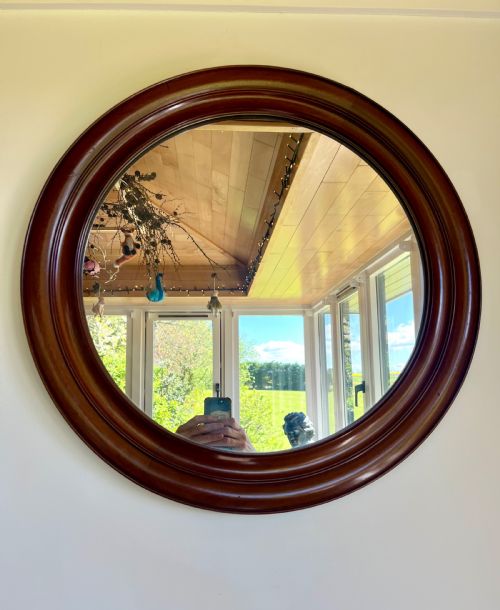


Dark Wood Moulding
Dark wood moulding frames architectural salvage, mirrors and chests of drawers from the seventeenth century onwards.
Dark Wood Moulding
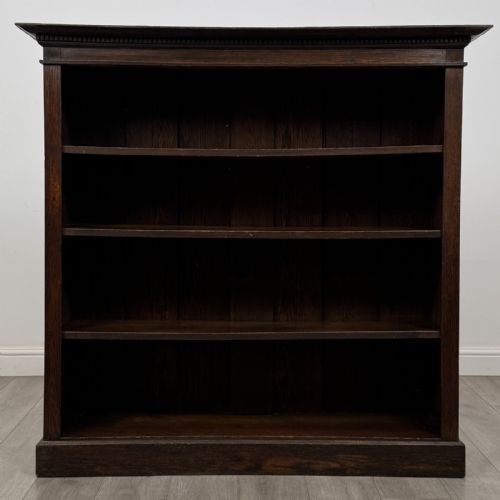
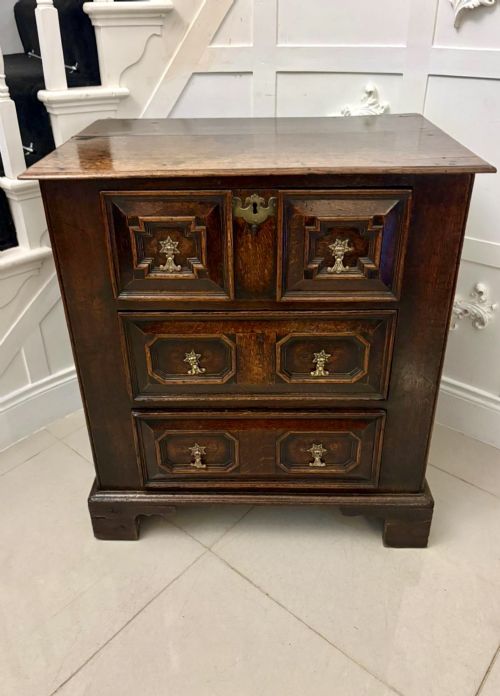
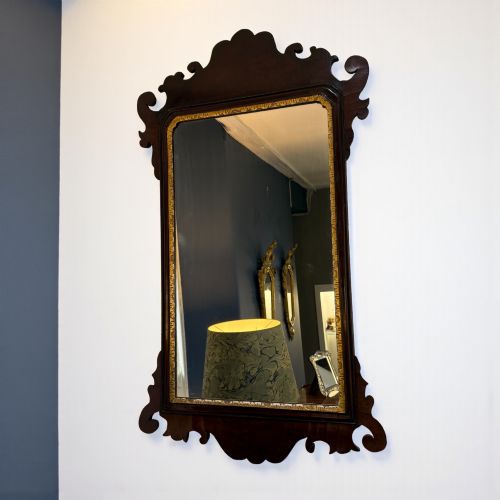
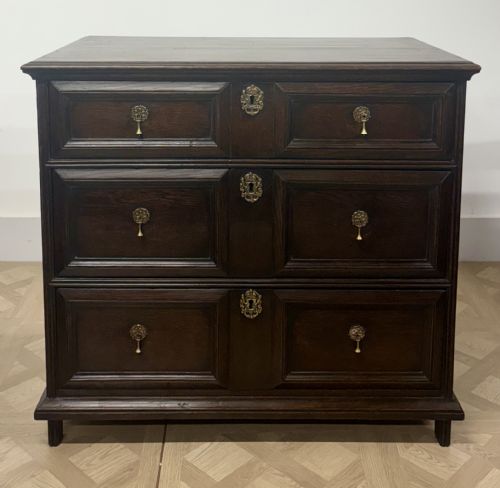
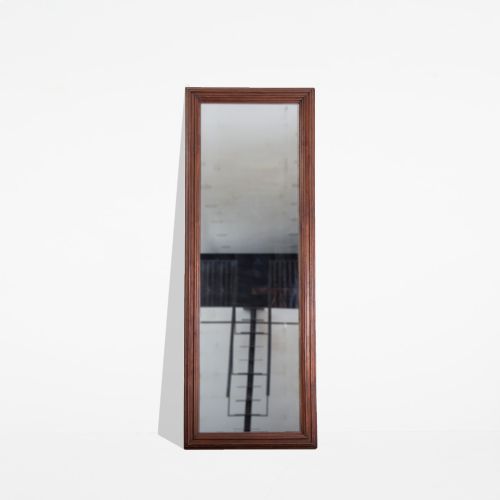
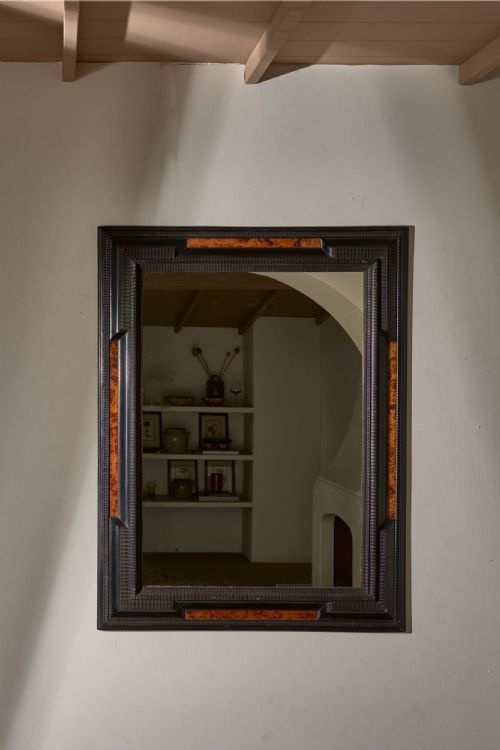
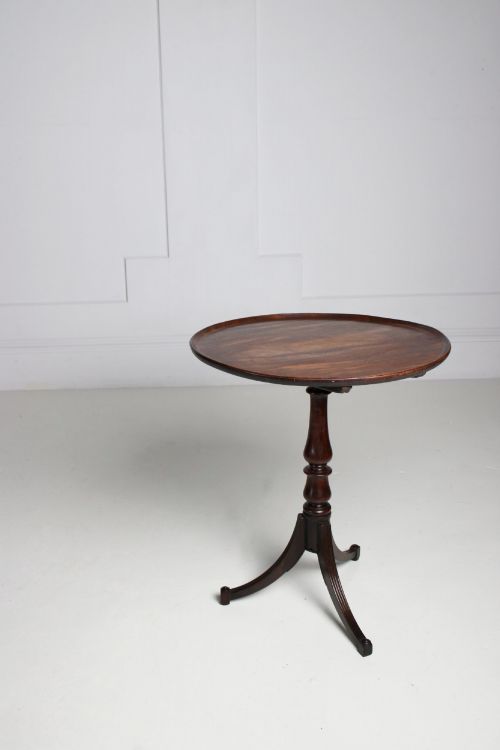
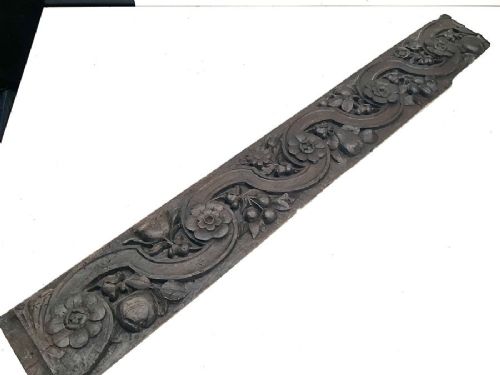
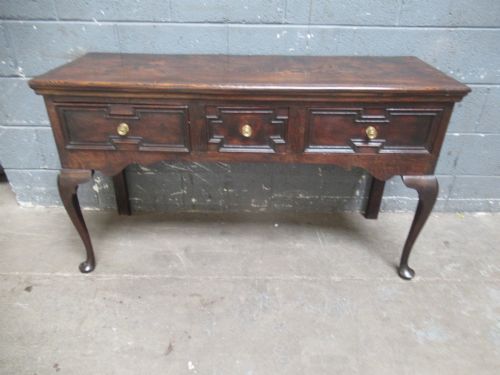
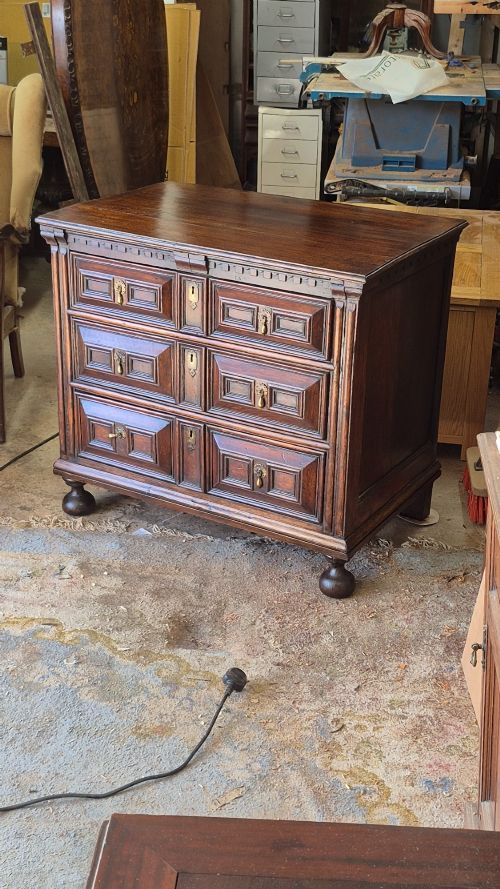
Dark wood moulding defines timber decoration found across mirrors, chests of drawers and architectural salvage on this page. These pieces span seventeenth-century oak coffers to later walnut and mahogany furniture.
The selection ranges from early geometric panels and carved friezes to Victorian wall mirrors and Edwardian bookcases. Oak and walnut predominate, often shaping the structural borders of furniture and wall decor.
What varies in quality
The crispness of the carved detail and the depth of the timber grain distinguish finer examples from simpler work. Original surfaces and patination elevate the character of earlier pieces.
Proportion and the integrity of the applied mouldings determine the visual balance of mirrors, chests and architectural fragments.
An enormous nineteenth-century carved gingerbread mould depicting a man on a horseback joins the mirrors and chests.
The Dark Wood Moulding Glossary
- Geometric moulding
- Raised wooden strips arranged in geometric patterns, frequently seen on seventeenth-century oak chests and coffers.
- Pediment
- A decorative crown or architectural crowning feature placed above mirrors, bookcases or doorframes.
- Frieze
- A broad horizontal band of sculpted or carved decoration, often positioned below the cornice of a piece.
- Architectural salvage
- Elements rescued from older buildings, including panels, mouldings and decorative carvings.
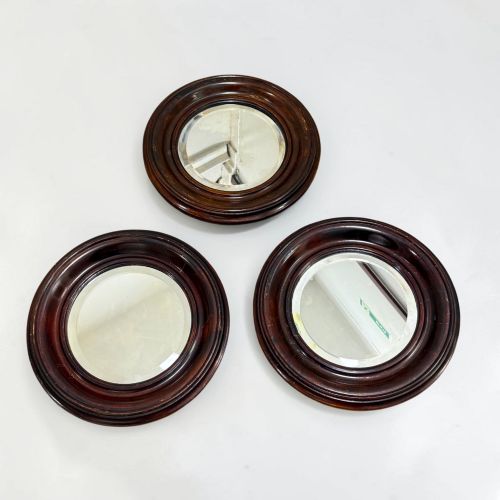
- Cushion frame
- A convex, rounded mirror frame profile popular in the nineteenth century.
Dark Wood Moulding: Frequently Asked Questions
What periods do these pieces come from?
The items span from the sixteenth and seventeenth centuries through the Georgian and Victorian eras up to the early twentieth century.
Earlier examples feature seventeenth-century oak and walnut, while later items represent Victorian and Edwardian manufacturing.
How do I identify seventeenth-century oak moulding?
Seventeenth-century pieces typically display hand-cut geometric mouldings applied to solid oak structures like chests and coffers.
These often include pegged construction and deep patination acquired over centuries of handling.
Where were these wooden mouldings used?
Mouldings served as structural and decorative framing on mirrors, chests of drawers, dressers and architectural wall panels.
They also appeared on specialised items such as bookcases and decorative pediments.
How should I care for dark wood surfaces?
Keep wooden pieces away from direct heat sources and sudden humidity changes to prevent timber splitting or warping.
Gentle dusting with a dry cloth maintains the finish without stripping natural oils from the antique wood.