

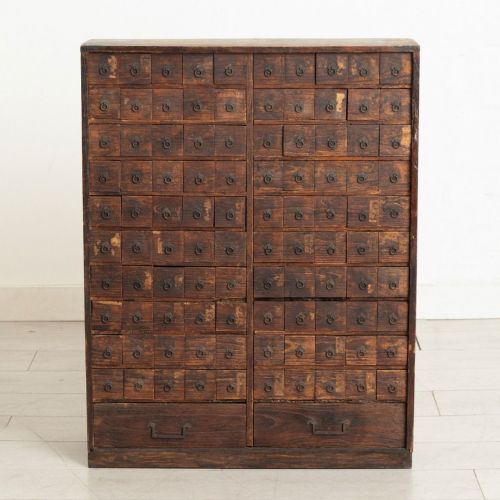


Dark Wood Japanese Chest
A dark wood japanese chest is a utilitarian masterpiece of traditional craftsmanship, prized for its robust joinery and rich timber grain.
Dark Wood Japanese Chest
When you search for a dark wood japanese chest, you encounter sturdy storage forms created for daily life and commerce across historical periods. The listings present utilitarian objects designed for specific tasks, ranging from mercantile storage to personal security.
The most frequent form on this page is the tansu chest, alongside apothecary banks of drawers and tabletop cabinets. These pieces originate primarily from the nineteenth century and the Meiji period, reflecting traditional Japanese carpentry.
Each chest serves a distinct function, such as merchant bookkeeping, shipboard transport, or coin storage. Their enduring appeal lies in this combination of honest utility and refined traditional construction.
How they were made
Constructed from resilient timbers such as keyaki wood, cedar, chestnut, and general hardwood, these chests rely on natural grain and strength. Makers selected these woods for their durability and capacity to withstand heavy use.
Iron, forged iron, and bronze hardware reinforce the structure while providing functional handles, lock plates, and corner brackets. The combination of dense wood and heavy metalwork creates an exceptionally sturdy piece.
Dark Wood Japanese Chest Retail Price Guide 2026
Typical asking prices for dark wood japanese chest among the pieces listed under this phrase on Sellingantiques today, from the lower quarter to the upper quarter. They describe what is for sale here now, not the wider market.
Listings on this site span the nineteenth century, the Victorian era, and the nineteen-twenties, incorporating both Edo and Meiji styles.
What varies in quality
Quality in a dark wood japanese chest rests on the complexity of its internal configuration and the integrity of its joinery. Superior examples integrate secret compartments, finely fitted drawers, and robust sliding panels that operate smoothly.
The degree of elaboration in the forged iron or bronze metalwork also marks the difference between simple utility and finer craftsmanship. Heavier, hand-forged mounts and intricate decorative elements indicate a piece made for a wealthy merchant or household.
The Dark Wood Japanese Chest Glossary
- Tansu
- A traditional Japanese mobile storage chest built primarily for domestic or commercial utility. These cabinets feature multiple drawers and compartments arranged for efficient organisation.
- Keyaki
- A species of elm native to Japan, highly prized for its dense grain and strength. Makers utilised this timber for the primary structure of better-quality merchant chests.
- Zenibako
- A traditional Japanese wooden money box fitted with secure compartments for coin storage. These compact boxes often feature heavy iron hardware and locking mechanisms.
- Meiji Period
- The era in Japanese history spanning from eighteen sixty-eight to nineteen twelve, characterised by openness to foreign trade and continued traditional craftsmanship. Pieces from this time display refined decorative metalwork.
Dark Wood Japanese Chest: Frequently Asked Questions
What is a tansu chest?
A tansu is a traditional Japanese storage cabinet designed for domestic use, merchant bookkeeping, or travel. These pieces feature robust wooden construction and functional iron hardware.
They evolved into specialised forms like ship's chests and merchant cabinets, tailored to the specific storage needs of their owners.
How were these chests used?
These chests served practical storage roles in Japanese homes, shops, and vessels. Merchants used them to keep ledgers, coin boxes, and inventory securely organised.
Larger chests accommodated clothing and household goods, while smaller tabletop versions held medicines or valuables.
How do I care for dark wood?
Maintain these wooden pieces by keeping them away from direct heat sources and fluctuating humidity. Apply natural wax sparingly to nourish the dry timber.
Avoid harsh chemical cleaners that might damage the original surface or the surrounding iron mounts.
How do I date a chest?
Dating relies on stylistic clues, construction methods, and historical periods such as the nineteenth century or Meiji era. The type of joinery and the weight of the iron hardware offer reliable indicators.
Consulting the specific materials used, like keyaki wood or forged iron, helps narrow the production timeframe.