





Dark Wood Inlaid Centre Table
A dark wood inlaid centre table commands the middle of a room, bringing rich timber tones and precise marquetry together.
Dark Wood Inlaid Centre Table
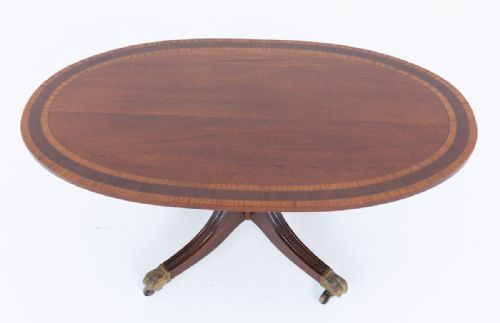
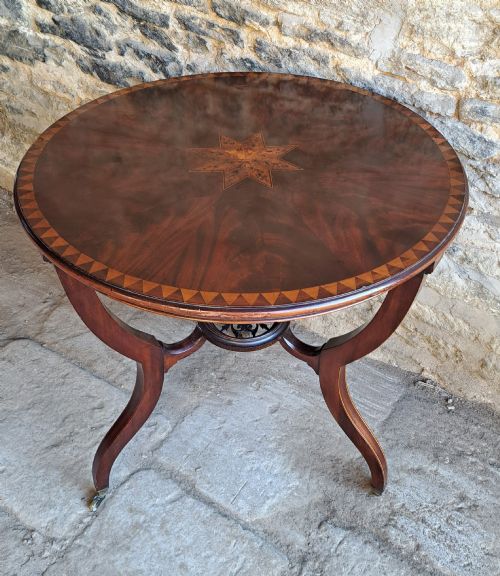
A dark wood inlaid centre table sits freestanding in a room, designed to be viewed from all sides rather than pushed against a wall. The pieces found here span the Regency, Victorian, and Edwardian eras, alongside pieces from the nineteen-twenties.
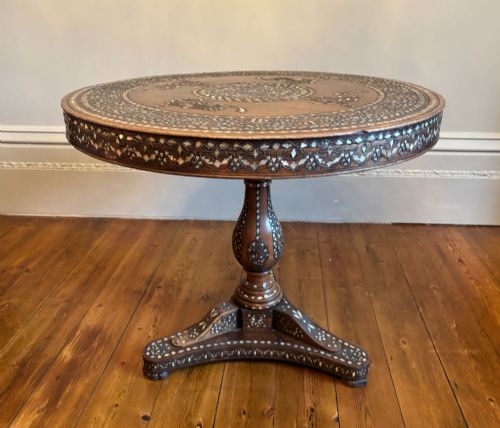
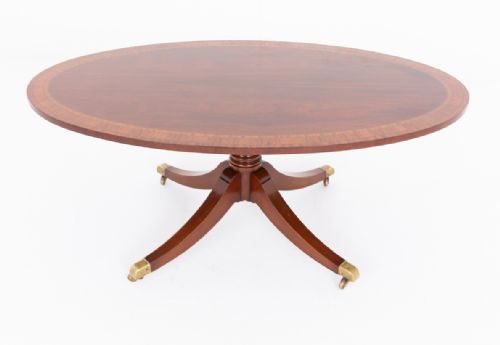
Rosewood and mahogany form the structural foundation of the majority of these tables, supplemented by walnut, ebony, and satinwood. Forms range from traditional circular drum tables and oval coffee tables to occasional tables and drop-leaf variations.
Materials and technique
Cabinetmakers utilised dense tropical hardwoods such as rosewood, mahogany, and ebony, often selecting figured grains like flame mahogany and burr walnut for the primary surfaces. These timbers provide a dark, stable canvas for decorative work.
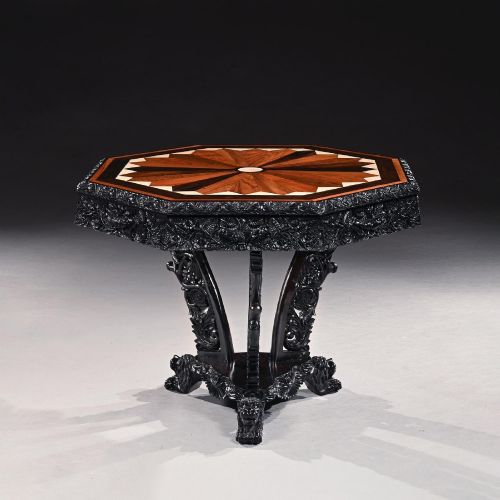
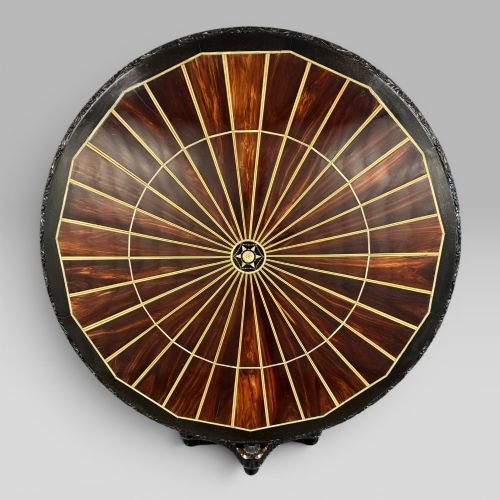
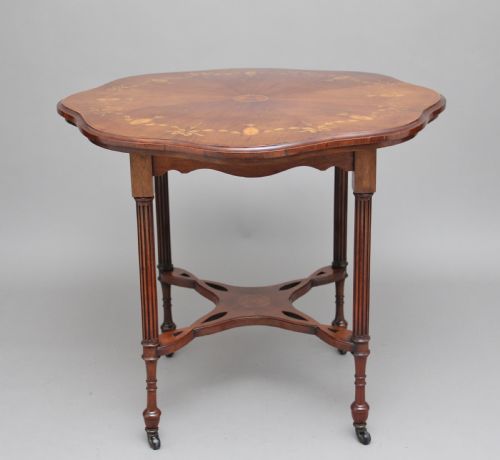
Inlay work incorporates contrasting light woods like boxwood and satinwood, alongside marquetry panels and brass stringing. Brass mounts and inlays appear particularly in Regency pieces, whilst Edwardian and Victorian examples lean towards botanical and geometric wood marquetry.
Dark Wood Inlaid Centre Table Retail Price Guide 2026
Typical asking prices for dark wood inlaid centre table among the pieces listed under this phrase on Sellingantiques today, from the lower quarter to the upper quarter. They describe what is for sale here now, not the wider market.
Listings feature rosewood, mahogany, walnut, and ebony across Regency, Victorian, and Edwardian periods.
Judging the work
Quality rests on the crispness of the timber selection and the precision of the inlay. Finer tables display tightly fitted marquetry with no visible gaps between the contrasting woods and the base timber.
Structural integrity and timber ageing separate standard examples from exceptional ones. Tables with balanced proportions, original brass or timber components, and well-maintained patination represent the upper tier of the range.
Gillows
The Dark Wood Inlaid Centre Table Glossary
- Marquetry
- Decorative patterns formed by fitting together thin veneers of wood and other materials onto a structural surface. This technique allows for elaborate pictorial or geometric designs.
- Crossbanding
- A border of veneer laid around the edge of a table top with the grain running perpendicular to the central panel. This frames the main timber and protects the edge grain.
- Stringing
- A thin, narrow strip of contrasting wood or brass inlaid into a channel in the timber surface. It creates fine linear borders around table tops and drawers.
- Drum table
- A circular library or centre table with a deep top containing drawers, usually supported by a central pillar and tripod base. The shape resembles a drum.
- Stretcher
- A horizontal timber rail connecting the legs of a table to provide structural stability. On these tables, stretchers often feature central bosses or decorative turnings.
Dark Wood Inlaid Centre Table: Frequently Asked Questions
What is a centre table used for?
A centre table stands independently in the middle of a room rather than against a wall. Historically, these pieces held lamps, books, or decorative objects in principal reception rooms.
Today, they serve a similar function in larger spaces, offering a surface that can be approached from all sides while displaying rich timber grain and inlay.
How do I care for a rosewood table?
Rosewood requires stable humidity and protection from direct sunlight to prevent the timber from drying out or fading. Regular dusting with a soft, dry cloth maintains the surface.
Avoid placing hot or wet items directly on the polished wood. Periodic application of appropriate wax preserves the natural lustre of the finish.
How do I tell Regency from Victorian tables?
Regency tables, produced in the early nineteenth century, frequently incorporate brass inlay, restrained geometric lines, and pillar-and-base supports. The timber choice leans heavily towards dark rosewood and mahogany.
Victorian pieces, made later in the nineteenth century, often display more exuberant marquetry, floral motifs, and varied structural forms like stretcher bases and walnut tops.
Can I use an antique centre table as a coffee table?
Some pieces listed as centre tables or occasional tables share the lower height profile suitable for seating areas. However, traditional centre tables were designed for standing height or general parlour use.
Check the specific dimensions of each piece to ensure the height matches your seating arrangements before placing it in a modern living space.