
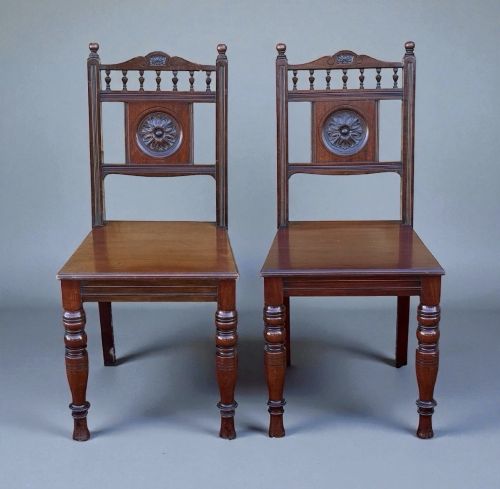


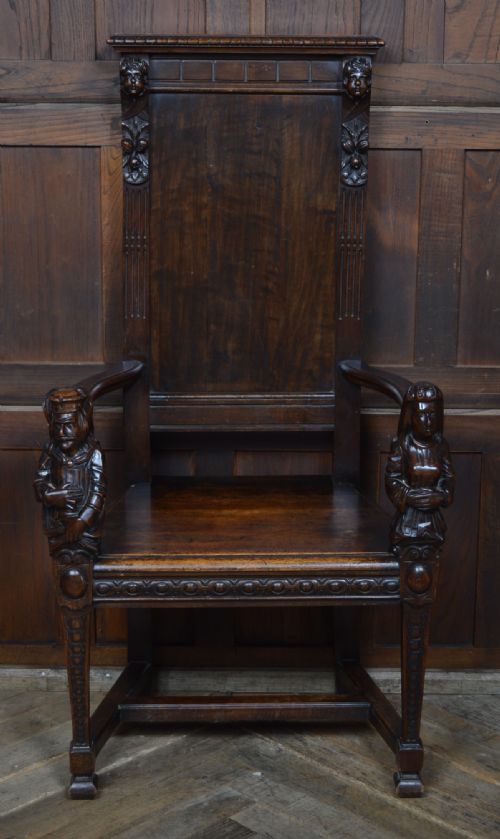


Dark Wood Hallway Chairs
Dark wood hallway chairs are timber seats designed for entryways, bringing sculptural carved detail and rigid practicality to narrow passages.
Dark Wood Hallway Chairs
Dark wood hallway chairs encompass timber seating designed for entryways, ranging from individual side chairs to sets and pairs. When exploring dark wood hallway chairs, the most common form encountered is the upright wooden seat intended for brief use rather than lounging.
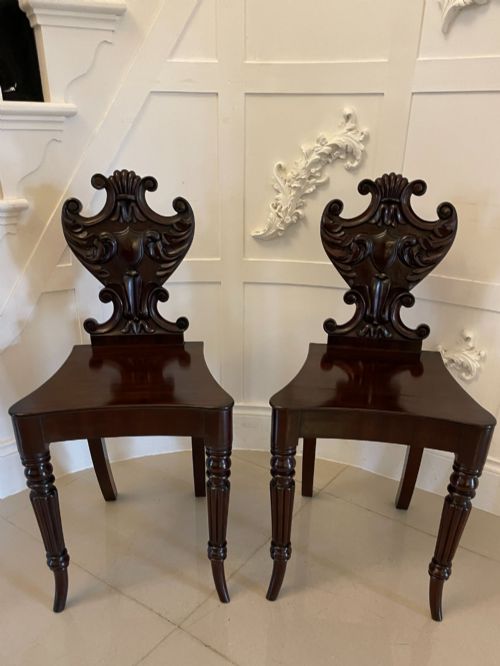
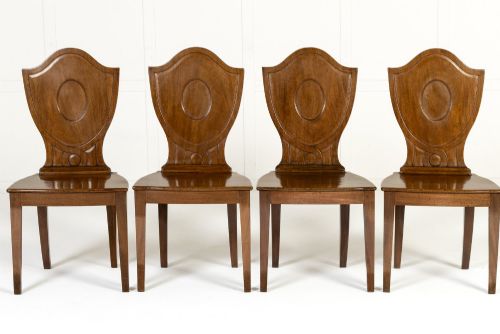
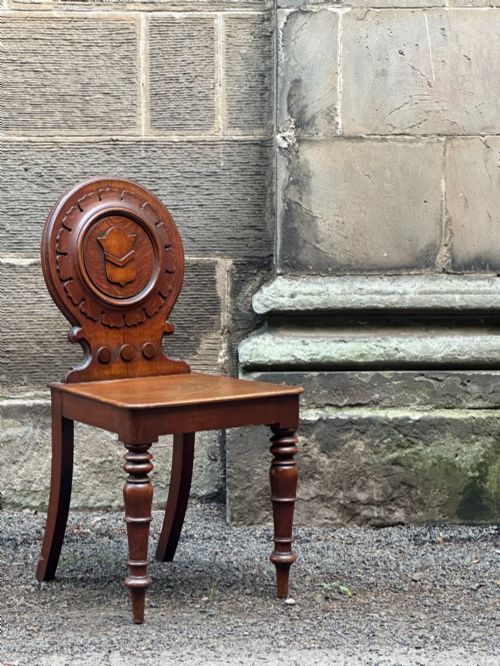
These pieces emerge across the Georgian, Regency and Victorian periods, with nineteenth-century examples dominating the selection. Workshops utilised dense timbers like mahogany, oak and fruitwood to shape solid seats, carved panels and high backs.
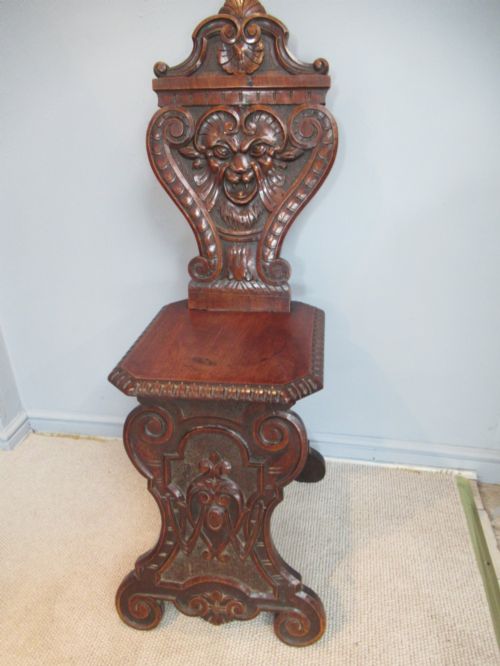
Makers often incorporated styles such as Gothic Revival and Italian Renaissance Revival alongside classic George III designs. Alongside standard single chairs, the wider category includes armchairs, settees, benches and window seats fashioned from the same dark timbers.
How they were made
Cabinetmakers worked primarily with solid mahogany, oak and fruitwood to build these entrance seats. They selected dense boards capable of withstanding heavy daily use in busy passageways while taking crisp carved details.
Carpenters joined frames using traditional woodworking joints such as mortise and tenon to ensure structural rigidity. Surfaces were often finished with hand-carved shell motifs, fretwork backs and panel details rather than heavy padding.
Monks benches double as tables when the back folds down, proving Victorians loved clever convertible furniture in tight hallways.
What varies in quality
Quality rests heavily on the depth and crispness of the timber carving, distinguishing utilitarian items from master-carved statement pieces. Sharp relief work on shell backs and fretwork panels shows greater workshop skill.
The selection of timber grain also dictates distinction, particularly in figured mahogany or quarter-sawn oak surfaces. Uniformity in timber choice across sets and pairs preserves visual cohesion.
The Dark Wood Hallway Chairs Glossary
- Hall Chair
- A rigid wooden seat placed in an entryway, typically featuring a solid carved timber seat and a high decorated back. These pieces prioritise sculptural presence over upholstered comfort.
- Mahogany
- A durable tropical hardwood prized for its deep reddish-brown tone and smooth grain. Cabinetmakers favoured it for formal seating throughout the eighteenth and nineteenth centuries.
- Fruitwood
- A dense timber sourced from fruit-bearing trees such as pear or apple, offering a warm tone and fine texture. It appears in regional nineteenth-century seating.
- Gothic Revival
- An architectural and decorative style drawing inspiration from medieval forms, marked by pointed arches and heavy carved tracery. This aesthetic influenced many Victorian entrance seats.
- Fretback
- A chair back pierced with decorative openwork patterns, often geometric or scrollwork. This technique lightened the visual weight of heavy timber frames.
Dark Wood Hallway Chairs: Frequently Asked Questions
Where did people put hall chairs?
These seats stood strictly in entrance halls, corridors and landing spaces rather than living rooms. Guests used them briefly while waiting to be announced.
Their rigid timber construction discouraged lounging, keeping entryways clear and orderly.
Are these chairs comfortable?
Most examples feature solid wooden seats without upholstery, designed for short periods of sitting. Some variants incorporate fabric inserts or cushions, but utility came before comfort.
Makers focused on upright posture and striking visual impact against hallway walls.
How do I date a Victorian hall chair?
Look to the combination of timber, carving style and structural proportions to indicate the decade. Mid-nineteenth-century pieces often display mahogany with classical revival motifs.
Later Victorian examples frequently utilise oak alongside heavier Gothic or Renaissance revival detailing.
What is the difference between a hall chair and a side chair?
Hall chairs are specifically built for entryways, usually featuring rigid wooden seats and prominent carved backs bearing family crests or decorative shields. Side chairs generally offer lighter frames intended for dining rooms or parlours.
Both lack arms, but hall chairs prioritise architectural impact over domestic dining comfort.