

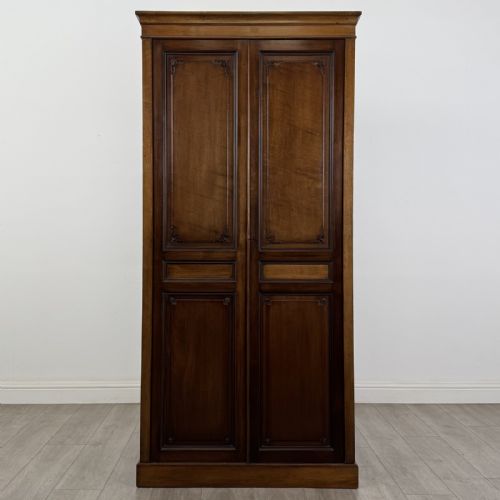
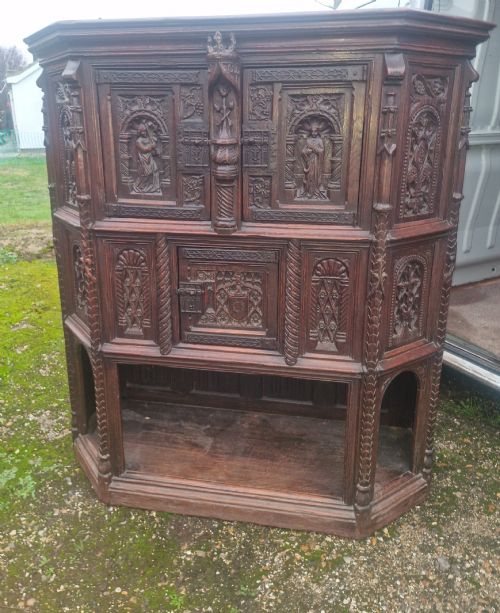
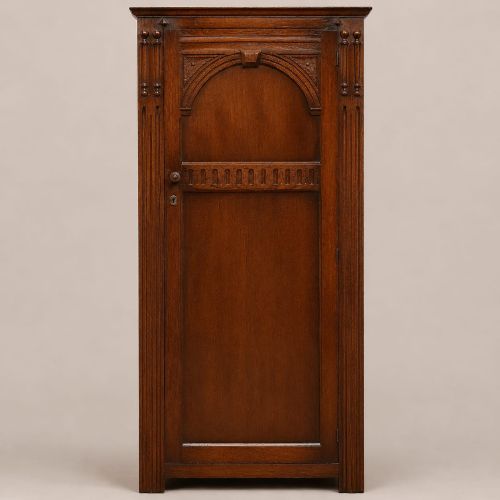
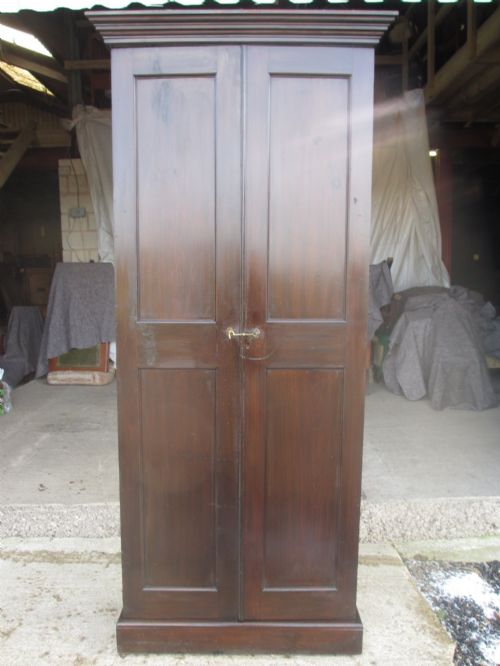
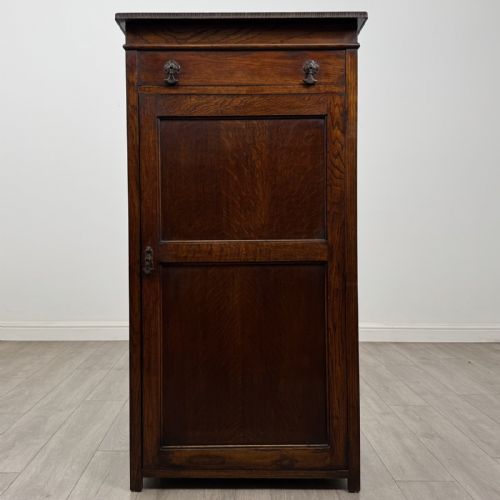
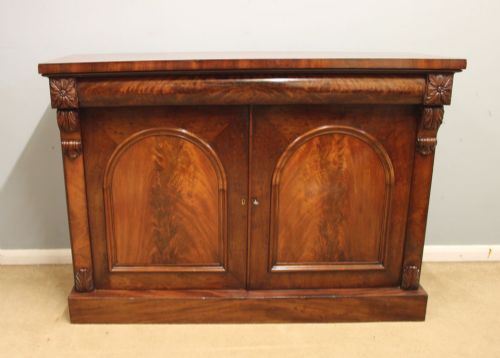
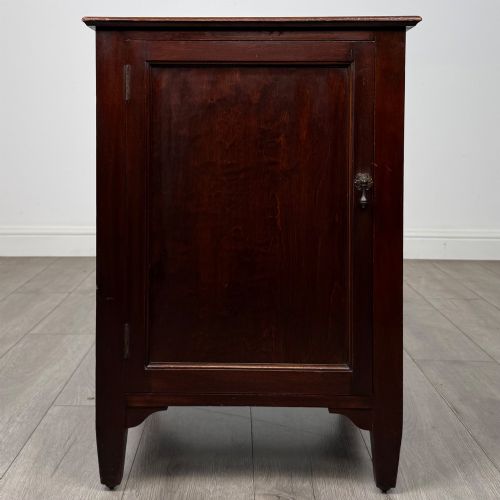
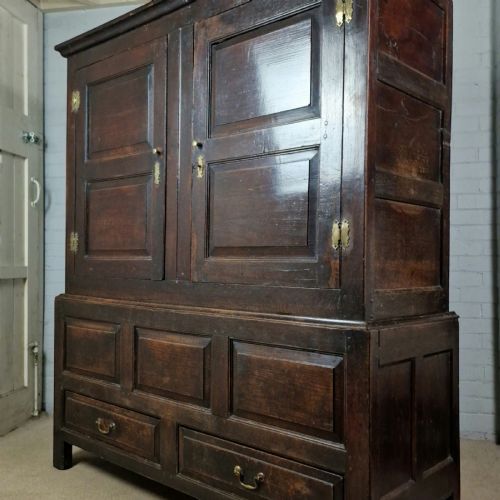
Dark Wood Hall Cupboard
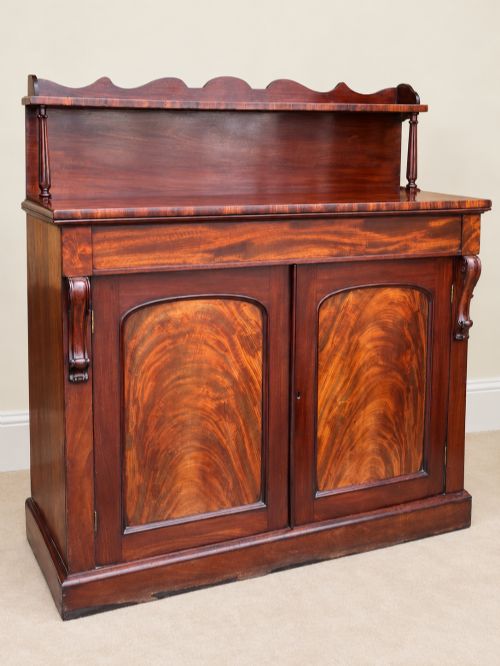
A dark wood hall cupboard is a practical piece designed to anchor an entranceway, bringing deep timber tones and straightforward storage into the home.
Dark Wood Hall Cupboard
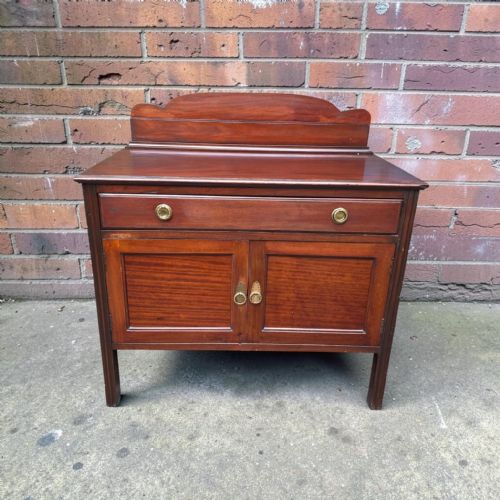
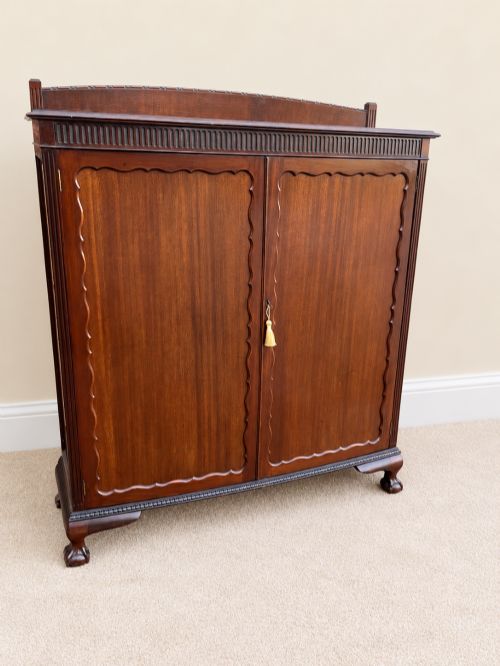
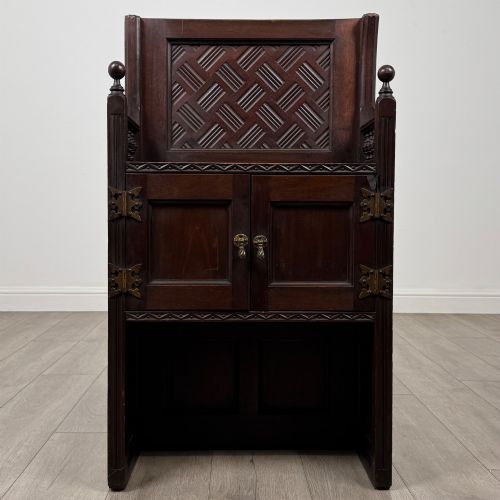
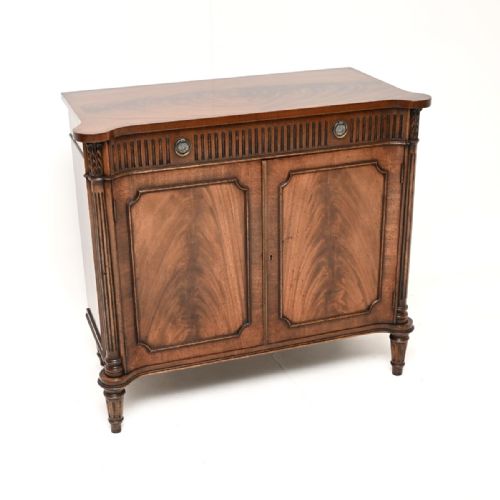
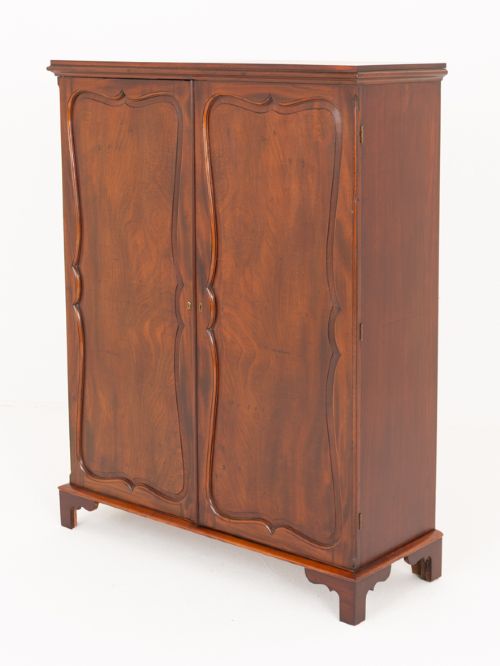
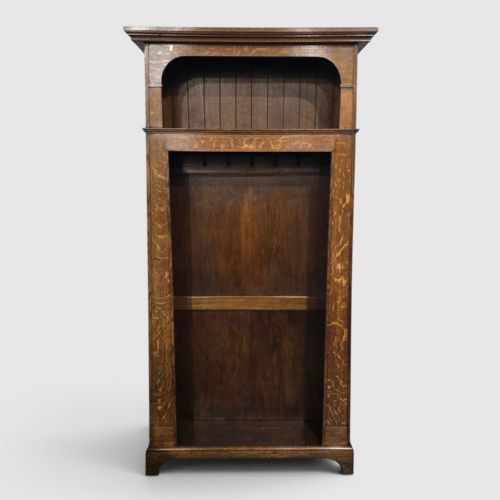
A dark wood hall cupboard serves as a substantial storage solution for entryways and reception spaces, keeping outer garments and household items neatly concealed. When searching for a dark wood hall cupboard, buyers encounter forms ranging from Georgian press cupboards to Edwardian oak variations and Victorian single-door wardrobes.
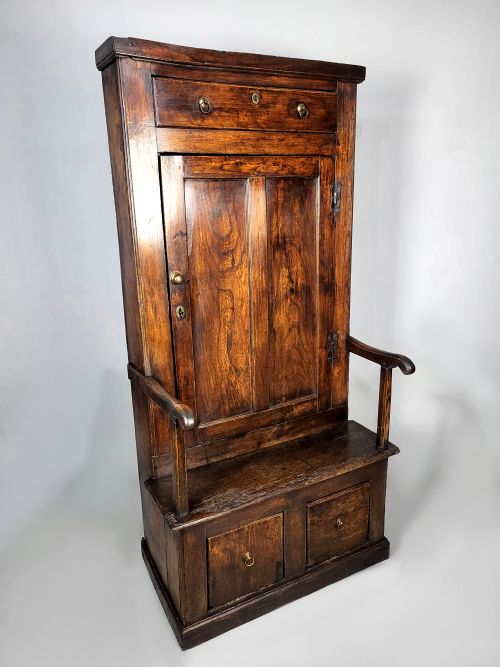
The selection on this page draws on periods spanning from the eighteenth century through to the early twentieth century, taking in styles such as Jacobean Revival, Arts and Crafts, and Victorian Country. Oak and mahogany dominate the material record, frequently accompanied by brass hardware and iron fittings.
Buyers are most likely to meet pieces constructed as side cabinets, hanging hall robes, or compact cupboards with lift-up lids and central storage. These items reflect the domestic needs of their respective eras, offering functional utility paired with deep timber patination.
Materials and construction methods
Timbers such as oak, mahogany, elm, and yew form the structural core of these pieces, selected for their durability and rich grain. Carpenters utilised solid boards alongside mahogany veneer, shaping them into sideboards, court cupboards, and narrow wardrobes.
Metal components play a distinct role in both function and detail, with brass handles and iron hinges securing doors and lids. Stained wood and mahogany stains were also applied to alter the timber tone, matching prevailing aesthetic tastes of the Victorian and Edwardian periods.
Dark Wood Hall Cupboard Retail Price Guide 2026
Typical asking prices for dark wood hall cupboard among the pieces listed under this phrase on Sellingantiques today, from the lower quarter to the upper quarter. They describe what is for sale here now, not the wider market.
The listings feature pieces spanning the 17th, 18th, 19th, and early 20th centuries, constructed primarily from oak, mahogany, elm, and yew.
Factors that distinguish quality
The standard of a piece rests heavily on the selection of timber and the integrity of the joinery, with solid woods generally commanding greater attention than veneered surfaces. Superior examples display thoughtful proportions and careful timber matching across doors and panels.
Hardware integration and carving detail further separate the tiers of craftsmanship. Fine pieces incorporate well-fitted brass or iron fittings and crisply executed period ornamentation rather than superficial additions.
The Dark Wood Hall Cupboard Glossary
- Press cupboard
- A large storage piece featuring upper compartments for linen or garments above lower drawers or cupboards. These items often showcase prominent Georgian or Victorian cabinet work.
- Livery cupboard
- A traditional food or clothing storage cabinet from earlier periods, characterised by ventilated or panelled doors. They represent some of the earliest domestic storage forms found in timber.
- Mahogany veneer
- A thin layer of figured mahogany applied over a secondary wood base to provide a decorative exterior surface. This technique allowed cabinetmakers to display striking grain patterns economically.
- Demi-lune cabinet
- A half-moon shaped side cabinet designed to sit flush against a wall in hallways or reception rooms. They offer slender storage footprint options in mahogany or other fine woods.
Dark Wood Hall Cupboard: Frequently Asked Questions
What is a dark wood hall cupboard used for?
These cupboards provide enclosed storage in entryways for coats, shoes, and everyday items, keeping the hallway free of clutter.
Their substantial timber presence also establishes a formal or traditional decorative anchor as soon as visitors step through the door.
How do I identify a Georgian hall cupboard?
Georgian pieces typically display robust mahogany or oak construction with understated classical proportions and high-grade timber selection.
Look for traditional joinery techniques and period-appropriate brass hardware that reflect eighteenth-century cabinet making standards.
Where should I place a hall wardrobe?
A hall wardrobe fits best in spacious entryways, boot rooms, or wide corridors where adequate clearance allows the doors to open fully.
Ensure the depth of the cabinet matches your floor space so it does not obstruct natural pathways through the home.
What distinguishes Edwardian oak cupboards?
Edwardian examples often combine traditional oak framing with lighter construction methods and occasional mahogany staining or simpler panel designs.
They bridge historic craft traditions with the more practical, space-conscious domestic requirements of the early twentieth century.