





Dark Wood Dog Carving
These dark wood dog carving pieces combine utility and animal study, offering functional desk wares and striking figures.
Dark Wood Dog Carving
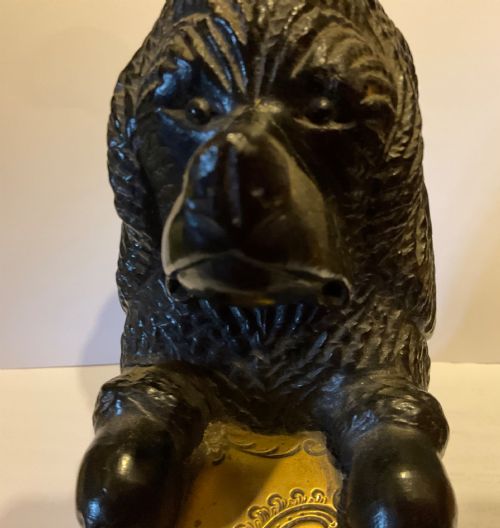
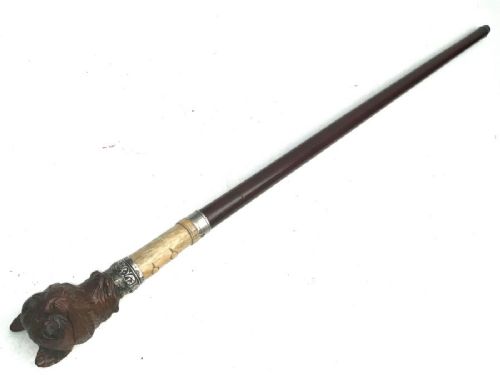
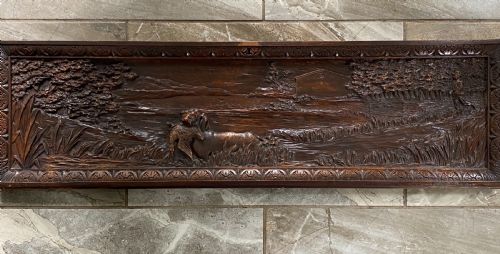
A dark wood dog carving typically takes the form of functional desk accessories and furnishings such as inkwells, match dispensers, and tobacco boxes alongside freestanding sculptures and wall panels. The most common examples you will encounter are Black Forest pieces dating from the nineteenth century, particularly around eighteen ninety, which frequently incorporate glass eyes and hinged compartments.
The selection extends from European Black Forest hound and fox figures to Chinese root wood and hardwood depictions of Foo dogs or lion dogs. These objects served utilitarian domestic roles in Victorian studies and parlours, doubling as novelty items and decorative animal carvings.
Materials and construction
Carvers utilised various timbers including walnut, linden wood, oak, and general timber to execute these animal studies. Detail work relied on hand-carving techniques, often accented with inset glass eyes for realism in European pieces.
Asian examples utilise root wood and dense hardwoods to achieve the swirling forms characteristic of traditional Chinese Foo dog sculptures. Metal fittings such as brass appear on functional compartments like inkwells and match holders.
Listings span the nineteenth century, Victorian era, and the nineteen thirties, featuring walnut, linden wood, oak, and root wood.
Distinctions in quality
Quality rests in the anatomical accuracy of the carving and the depth of expression captured in the animal's head or posture. Master carvers achieved realistic texture in fur and muscle, whereas simpler workshop pieces remain basic in form.
Integration of function also defines superior examples, where hinged lids on tobacco boxes or inkwells fit flush into the carved wooden body without disrupting the sculptural silhouette.
The Dark Wood Dog Carving Glossary
- Black Forest
- A style of wood carving originating from the mountain region spanning Switzerland and Germany, known for realistic animal figures and foliage. These items date predominantly from the nineteenth century.
- Foo Dog
- A traditional Chinese guardian lion sculpture, often paired, depicted with curly mannes and fierce expressions. They appear in root wood and other carved materials.
- Humidor
- A moisture-controlled box designed for storing cigars, frequently encountered as carved wooden novelty containers in nineteenth-century workshops.
- Inkwell
- A small pot or reservoir for holding ink, often mounted on a stand and incorporated into desktop animal carvings during the Victorian period.
Dark Wood Dog Carving: Frequently Asked Questions
What were dark wood dog carvings used for?
Many of these carved wooden dogs served practical functions on Victorian desks and smoking tables. They housed ink for writing, matches for lighting pipes, or tobacco and cigars.
Other pieces functioned purely as decorative sculptures, wall panels, or furniture supports like side tables shaped as seated hounds.
How do I date a Black Forest dog carving?
Dating relies on style, materials, and mechanical evidence such as hinges and glass eyes. Pieces from the nineteenth century often show deep hand-carving in walnut or linden wood.
Later twentieth-century examples, including Art Deco figures, display smoother lines and simplified geometric forms distinct from Victorian naturalism.
What is the difference between European and Chinese dog carvings?
European pieces, particularly from the Black Forest tradition, focus on realistic sporting dogs, hounds, and St Bernards with glass inset eyes. They frequently double as inkwells or match holders.
Chinese carvings depict mythological Foo dogs or lion dogs using root wood or dense hardwoods, emphasising stylised power rather than domestic realism.