

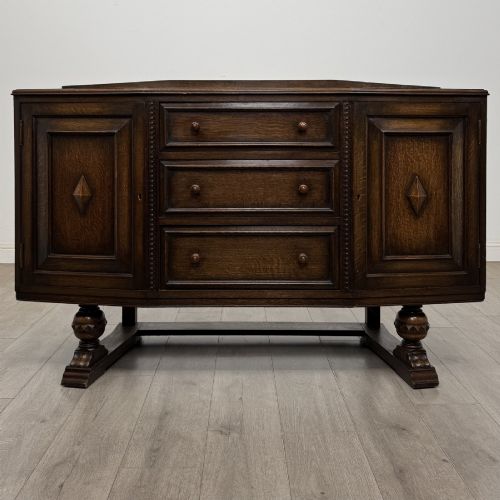
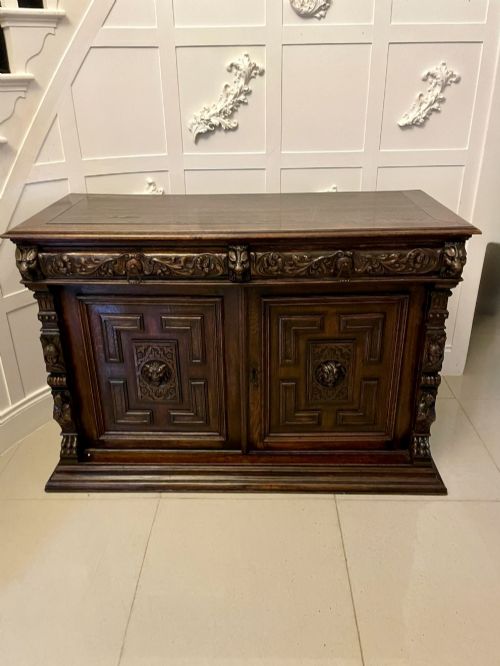
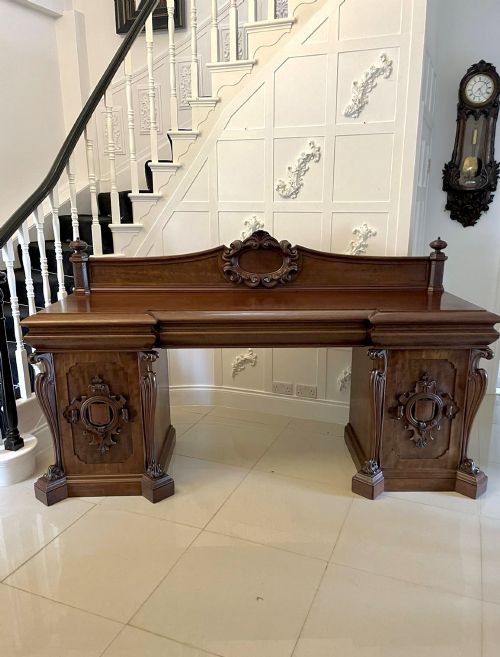
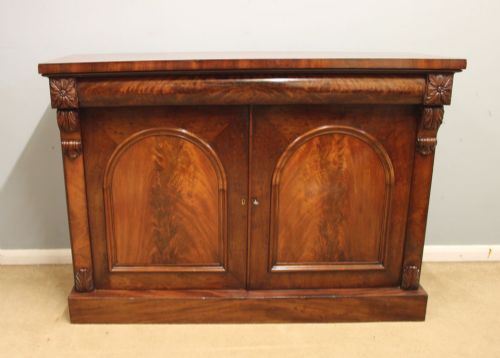
Dark Wood Dining Credenza
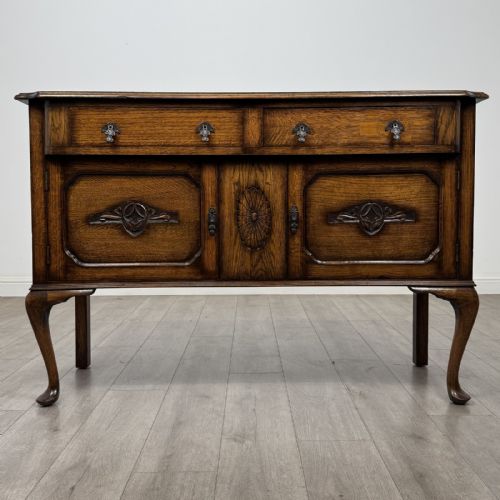
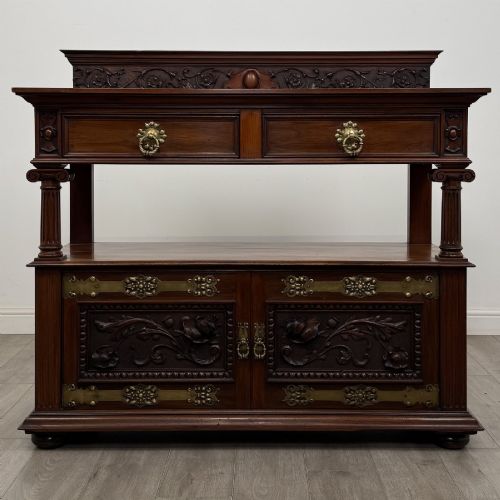
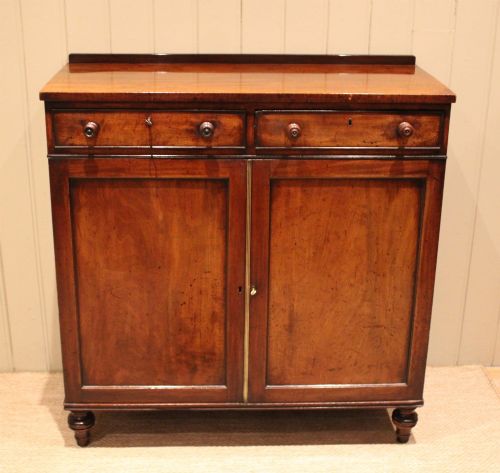
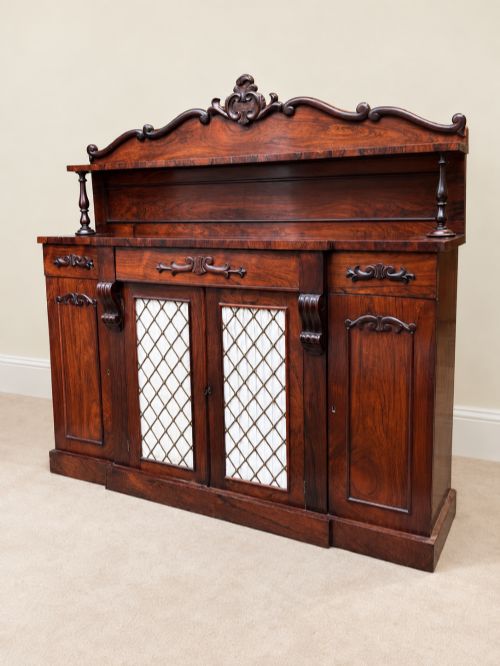
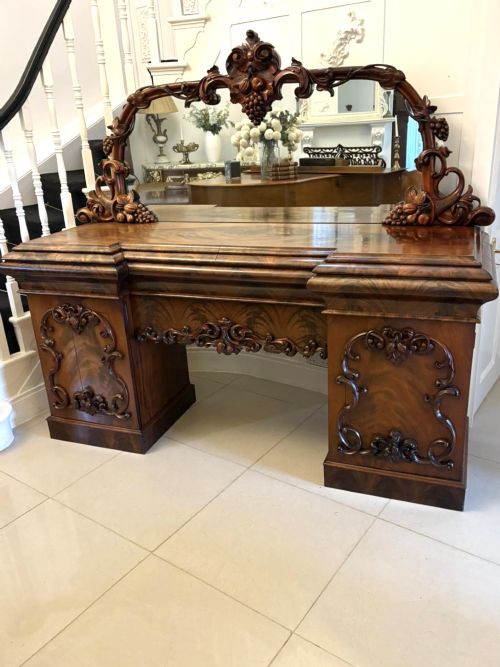
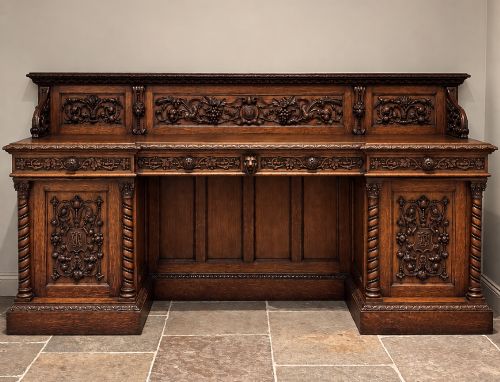
A dark wood dining credenza brings solid proportion and deep timber tones to a room, serving as a steadfast storage piece for dining rooms.
Dark Wood Dining Credenza
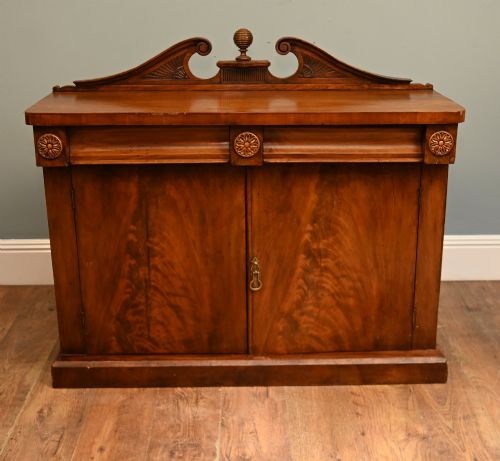
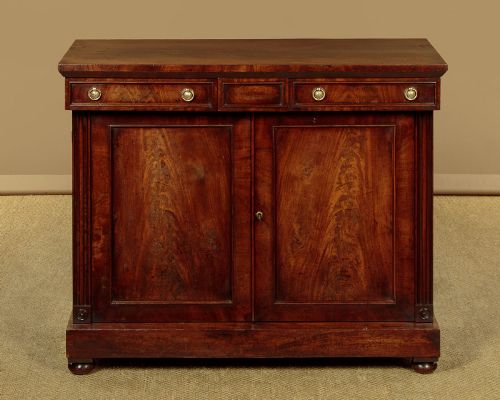
A dark wood dining credenza aligns with the broader group of sideboards, side cabinets, and chiffoniers recorded in the listings. These pieces function as heavy serving surfaces and storage cabinets intended for dining spaces.
The inventory on this page draws chiefly from nineteenth-century pieces, including Victorian, Edwardian, and Georgian examples, along with specific decades from the eighteen-fifties onwards. Mahogany, oak, walnut, and rosewood form the core of these items.
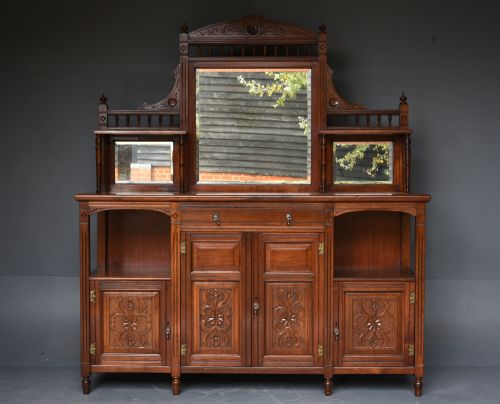
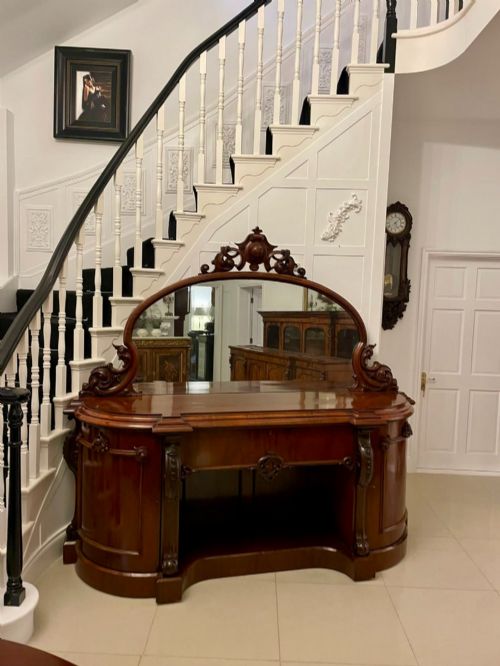
Makers and workshops constructed these forms to anchor a dining room layout, often pairing cupboards and drawers with mirror backs or tiered upper display sections. Buyers encounter both restrained geometric designs and heavily carved revival styles.
How they were made
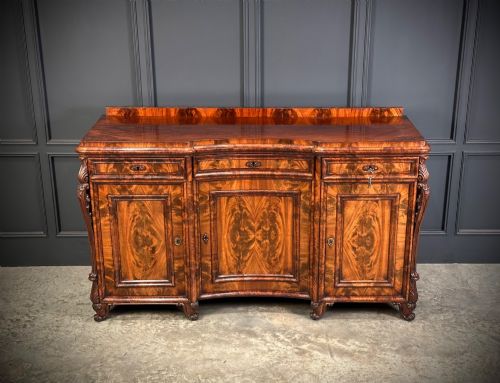
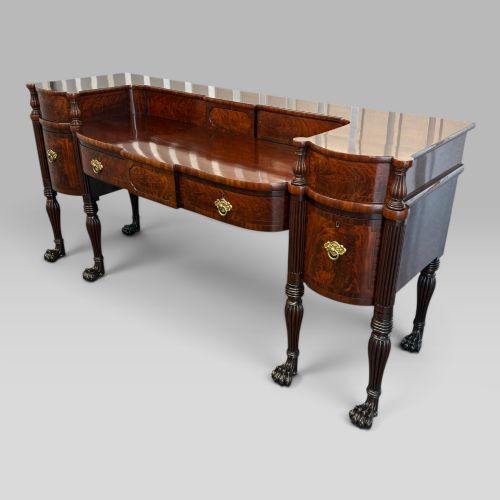
Cabinet makers utilised dense timbers such as mahogany, oak, and rosewood, frequently applying flame mahogany veneer to large cupboard doors and drawer fronts to highlight striking wood grain patterns. Solid sections formed structural frames, claw and ball feet, and turned legs.
Decorative details rely on traditional joinery alongside applied elements like linenfold panels, geometric mouldings, and brass hardware. Certain pieces incorporate glass panels for side cabinets or mirror plates set into carved wooden frames above the main surface.
Dark Wood Dining Credenza Retail Price Guide 2026
Typical asking prices for dark wood dining credenza among the pieces listed under this phrase on Sellingantiques today, from the lower quarter to the upper quarter. They describe what is for sale here now, not the wider market.
Listings feature eighteenth-century Georgian forms alongside nineteenth-century Victorian and Edwardian revivals in mahogany, oak, walnut, and rosewood.
What varies in quality
Quality rests upon the selection of timber figures, where richly patterned flame mahogany or burr walnut veneer denotes superior cabinet work compared to plain stock. The depth and crispness of hand-carved elements, from linenfold panels to lion paw feet, separate standard production from exceptional examples.
Structural integrity reveals itself in the weight of the timber and the precision of the joinery across large four-door sideboards and breakfront carcasses. Original handles, integrated mirrors, and intact brass fittings preserve the historical integrity of the piece.
The Dark Wood Dining Credenza Glossary
- Chiffonier
- A compact sideboard featuring enclosed shelving beneath a surface, often topped with a small mirror or shelf structure. These cabinets became popular during the nineteenth century for smaller dining and living spaces.
- Flame mahogany
- A distinct timber figure created by cutting through burls or branches where the grain ripples outward in a flame-like pattern. Cabinet makers reserved this veneer for primary focal points on drawer fronts and doors.
- Breakfront
- A furniture facade where the central section projects forward from the flanking cabinets. This configuration creates visual depth and allows for varied internal storage depths.
- Linenfold
- A carved wooden panel motif that mimics folded fabric or linen cloth. This technique appears frequently on revival oak cabinetry from the Victorian and Edwardian eras.
- Serpentine
- A curved furniture front characterised by a convex centre flanked by concave curves. This contour requires skilled woodworking to shape both solid timber and veneered surfaces.
Dark Wood Dining Credenza: Frequently Asked Questions
What is a dark wood dining credenza used for?
These pieces serve as practical storage furniture in a dining room, holding tableware, linens, and serving dishes within their enclosed cupboards and drawers. The top surface functions as a sideboard for serving food or displaying decorative objects during meals.
Historically, they evolved to meet the demands of formal dining, keeping dining accessories close at hand while anchoring the room's decor with substantial timber construction.
How do I identify a Victorian sideboard?
Victorian sideboards typically feature dense mahogany, walnut, or oak timbers with substantial proportions and deep carving. Many examples incorporate mirror backs with elaborately carved wooden frames resting on the main credenza top.
Details such as heavy paneling, bold turnings, and regional revival influences help distinguish these nineteenth-century pieces from lighter Edwardian or earlier Georgian designs.
What is the difference between a sideboard and a chiffonier?
A sideboard is generally a larger, wider piece designed for a main dining room, offering extensive cupboard space and drawers for heavy service. A chiffonier is typically more compact, functioning as a smaller side cabinet with enclosed lower storage.
While both terms appear across nineteenth-century listings, chiffoniers often include simpler upper shelves or mirrors suited to domestic sitting rooms as well as dining spaces.
How should I care for a mahogany dining credenza?
Maintain antique mahogany surfaces by keeping them away from direct sunlight and strong heat sources, which can dry out the timber and veneer. Dust regularly with a dry cloth and apply appropriate furniture wax sparingly to nourish the wood.
Avoid placing damp items directly on the polished wooden top to prevent water rings and preserve the original finish.