
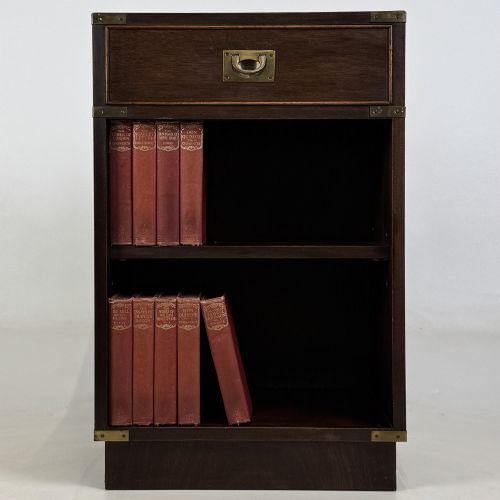


Dark Wood Corner Bookcase
A dark wood corner bookcase uses idle wall space to display volumes and objects while anchoring a room with period character.
Dark Wood Corner Bookcase
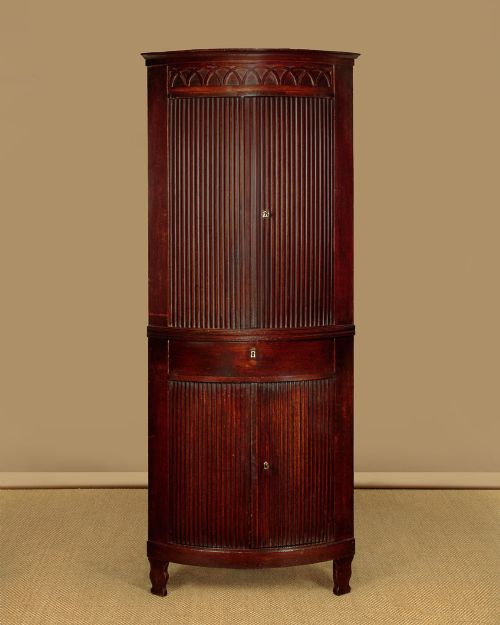
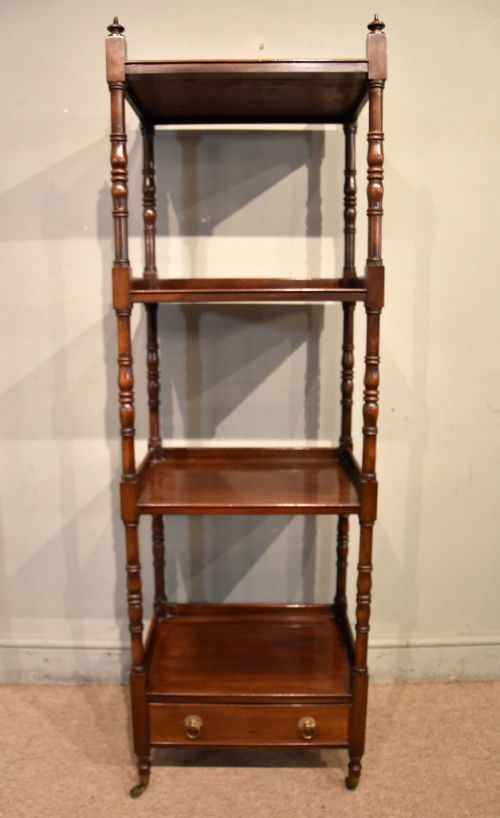
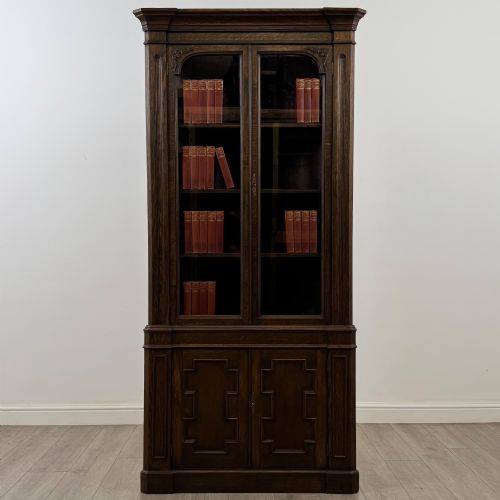
A dark wood corner bookcase turns awkward room junctions into display space, appearing most often as mahogany or rosewood cupboards, tiered whatnots and glazed cabinets spanning the Georgian, Victorian and Edwardian eras.
The pieces on this page range from modest single-door corner cupboards to towering double-height architectural units and multi-tiered etageres, utilising timbers like oak alongside the predominant mahogany.
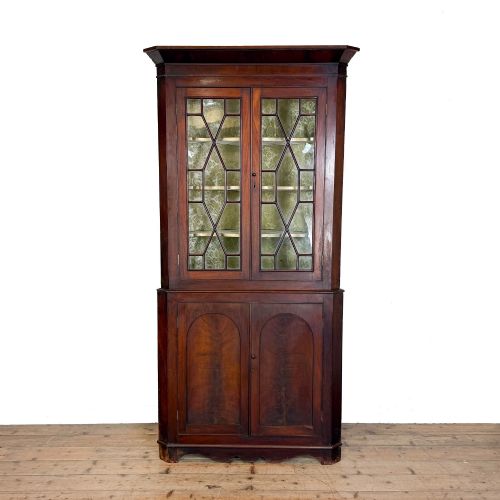
Georgian and Victorian examples focus heavily on figured mahogany and glazed doors, whilst Edwardian pieces frequently introduce marquetry inlay and Sheraton Revival motifs to lighter interpretations of the form.
How they were made
Cabinetmakers constructed these pieces primarily from solid and veneered mahogany, rosewood and oak, often mounting delicate brass hardware and incorporating glass panes into curved bow-front doors.
Satinwood inlay and intricate marquetry decorated the surfaces of later Edwardian and Revival iterations, contrasting sharply with the deep, dark grain of mid-nineteenth-century rosewood and mahogany stands.
The listings span the 18th, 19th and 20th centuries, featuring mahogany, rosewood and oak across forms from whatnots to double-height cupboards.
What varies in quality
The distinction between ordinary and exceptional pieces lies in the selection of the timber grain, the precision of the dovetail joinery in the internal shelving, and the subtlety of any inlay work.
Superior examples demonstrate meticulous matching of flame mahogany veneers across door panels, balanced proportions in tiered etageres, and well-executed glazing bars that hold original panes securely.
Goodhall, Lamb and Heighway of Manchester
The Dark Wood Corner Bookcase Glossary
- Whatnot
- A set of open shelves supported by pillars, designed for displaying ornaments and books. These pieces often feature three to six tiers.
- Marquetry
- Decorative veneer work forming pictures or patterns by using thin slices of wood, shell or ivory. This technique frequently appears on Edwardian cabinets.
- Vitrine
- A glass-fronted cabinet or glass case for displaying fine wares. These are usually mounted in corners or built into larger display units.
- Bow front
- A convex, outwardly curved front facade typical of certain Georgian and Victorian corner cabinets. This shape softens the hard angles of a room.
- Etagere
- A piece of furniture consisting of a set of open shelves for small objects. The term is often used interchangeably with whatnot in nineteenth-century pieces.
Dark Wood Corner Bookcase: Frequently Asked Questions
How do I fit a corner bookcase?
Measure the wall depth from the internal corner outward to ensure the frame sits flush against both walls without obstructing skirting boards.
Take note of door swings and any cornice overhangs that might interfere with adjacent picture rails or light switches.
What is a whatnot used for?
A whatnot provides open tiered shelving specifically designed for holding books, small decorative objects and collections.
These versatile stands populated nineteenth-century drawing rooms where vertical display space was at a premium.
How do I date a corner cabinet?
Examine the timber species, construction joints and glass characteristics to establish the likely period of manufacture.
Georgian pieces often display heavy mahogany framing and hand-blown glass panes, whilst Edwardian versions favour satinwood inlay and lighter marquetry.
Are corner bookcases sturdy?
The ninety-degree angle naturally braces the furniture against two intersecting walls, providing inherent stability for heavy volumes.
Heavier double-height cupboards and multi-tiered stands distribute weight evenly across solid timber legs or direct floor contact.