



Dark Wood Coin Cabinet
A dark wood coin cabinet is a compact multifixture chest designed to house small specimens, combining functional organisation with fine cabinetmaking.
Dark Wood Coin Cabinet
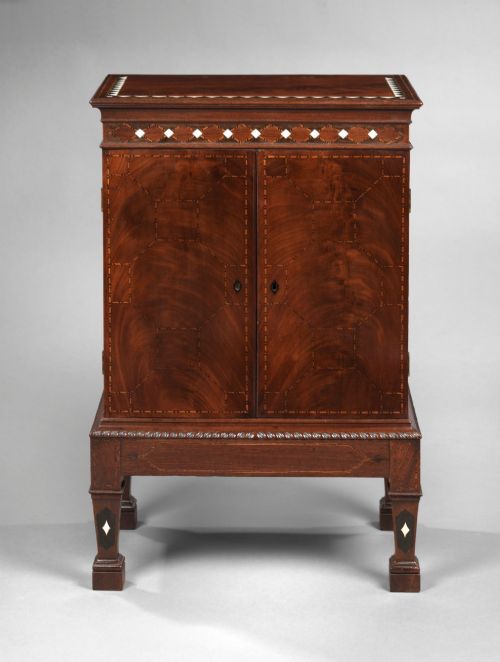
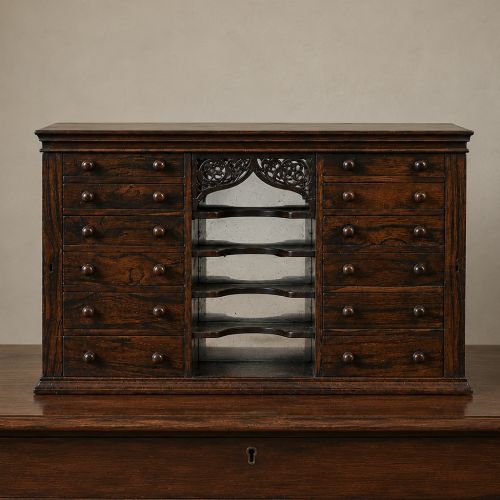
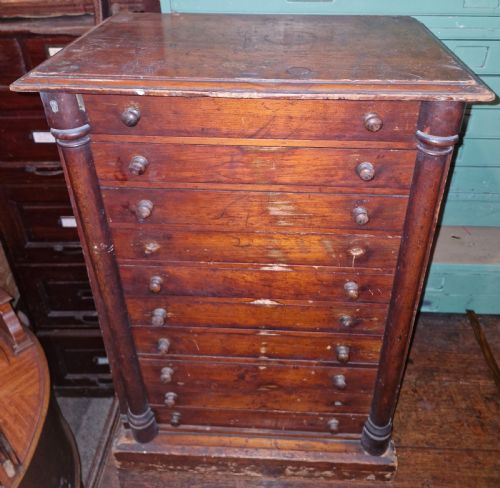
A dark wood coin cabinet typically appears in this selection as a mahogany, rosewood, or stained deal collector cabinet featuring multiple small drawers. These pieces date from the Georgian, Regency, William IV, and Victorian periods, extending through to nineteen hundred.
Buyers encounter formats ranging from compact banks of drawers and miniature chest styles to large thirty-two and forty drawer storage cabinets. Many examples incorporate brass drop handles, glass fronts, or mirrored doors suited for display.
The objects serve primarily for the organised storage of numismatic collections, medals, or natural history specimens. Their architecture prioritises dense bank formations and precise internal drawer fits.
Materials and construction methods
Cabinetmakers utilised solid mahogany and rosewood alongside stained deal, frequently pairing the dense timber with brass drop handles. Some iterations incorporate bone inlay or mirror glass elements within the exterior or door designs.
Construction relies on multioffice drawer banks enclosed by hinged doors or drop panels, requiring exact carpentry to ensure dust-free storage across numerous shallow trays.
The listings span the Georgian, Regency, William IV, and Victorian eras, alongside nineteen hundred, using mahogany, rosewood, stained deal, brass, and glass.
Distinctions in craftsmanship
Quality differentiates through the precision of the drawer construction and the density of the timber utilised in the carcase. Pieces bearing maker attributions or substantial drawer counts demonstrate superior workshop output.
The refinement of brass hardware fittings and the presence of specialised glazing or mirrored elements elevate the architectural merit of individual cabinets.
Brady of Edmonton·Charles William Schofield
The Dark Wood Coin Cabinet Glossary
- Collector cabinet
- A specialised piece of furniture fitted with numerous shallow drawers designed to house small objects or specimens. These range from miniature chests to substantial forty drawer storage units.
- Bank of drawers
- An arrangement of multiple small drawers stacked vertically or horizontally within a single housing. This format maximises storage capacity within a compact footprint.
- Wellington chest
- A tall vertical chest of drawers secured by a hinged locking side stile that fastens over the drawer edges. This form provides added security for the contents.
- Specimen chest
- A cabinet intended for holding natural history samples or small artefacts in shallow fitted trays. They share construction traits with coin and medal cabinets.
- Stained deal
- Softwood treated with pigment to simulate the appearance of more costly hardwoods. It represents a more utilitarian approach to cabinet construction.
Dark Wood Coin Cabinet: Frequently Asked Questions
What were dark wood coin cabinets used for?
These cabinets served collectors for organising and preserving coins, medals, and small specimens in dust-free environments.
The shallow drawers kept delicate items separated and secure while allowing close inspection.
How many drawers do these cabinets typically have?
Drawer counts vary significantly, ranging from compact five or six drawer configurations up to extensive thirty-two and forty drawer systems.
Larger versions accommodated substantial institutional or private collections within a single housing.
Which woods were commonly used?
Mahogany and rosewood dominate the construction of these pieces, alongside occasional examples rendered in stained deal.
These durable timbers provided the stability needed for complex multioffice internal framing.
How do you date a specimen cabinet?
Stylistic indicators such as Chippendale, Regency, or Victorian design traits help assign periods alongside construction techniques and hardware.
Maker signatures or dated inscriptions occasionally provide precise chronological records.