
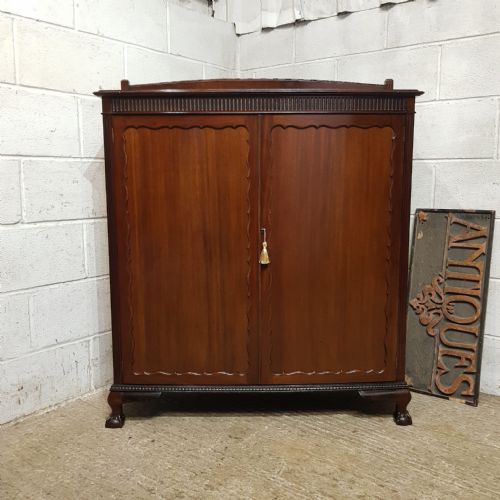
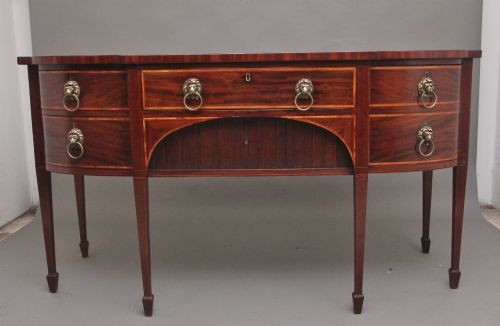
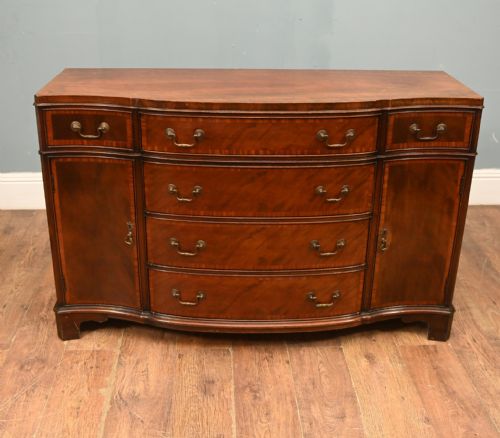

Dark Wood Bowfront Cabinet
When you want a dark wood bowfront cabinet, you are looking at curved storage furniture shaped in mahogany, oak, and walnut.
Dark Wood Bowfront Cabinet
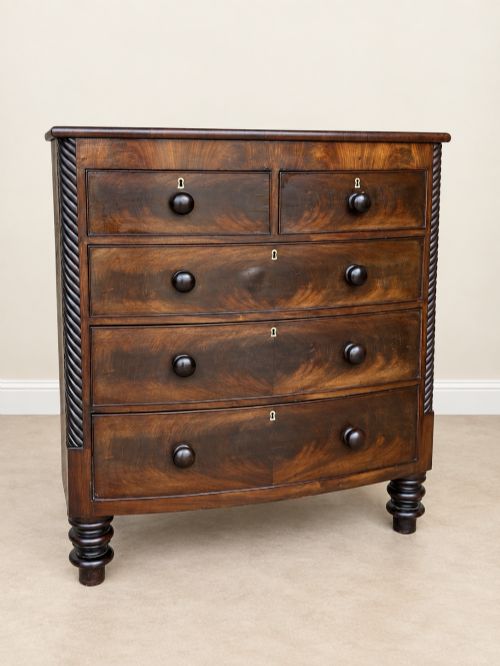
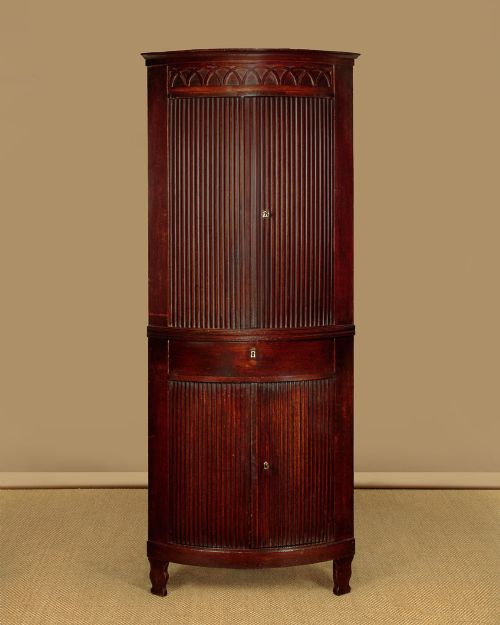
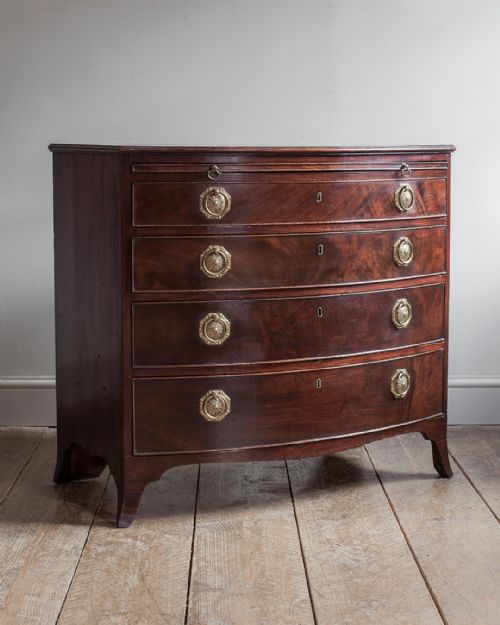
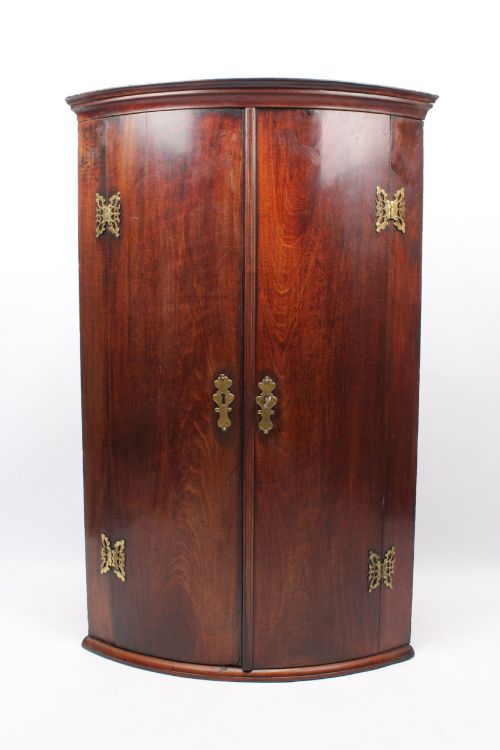
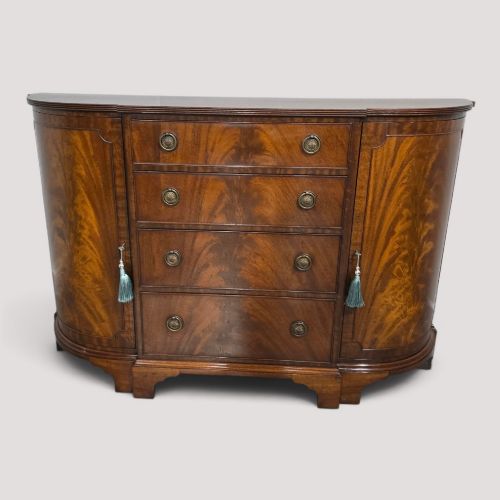
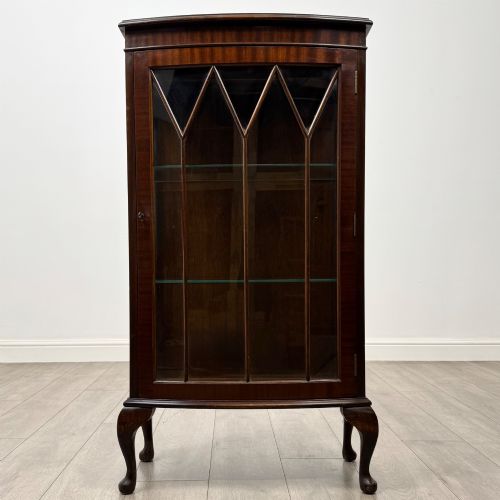
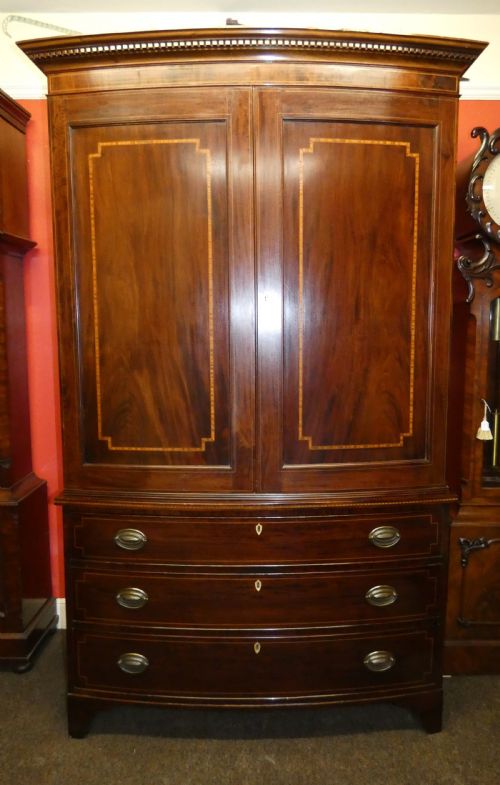
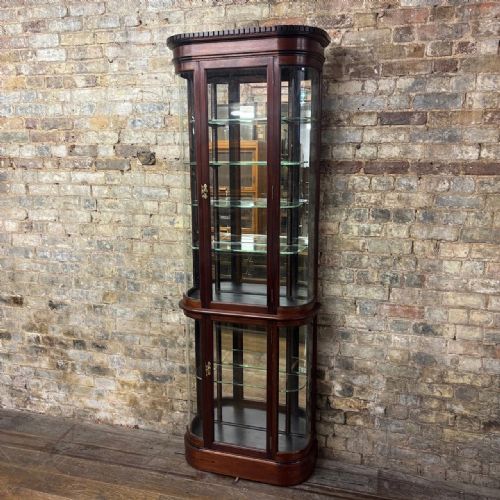
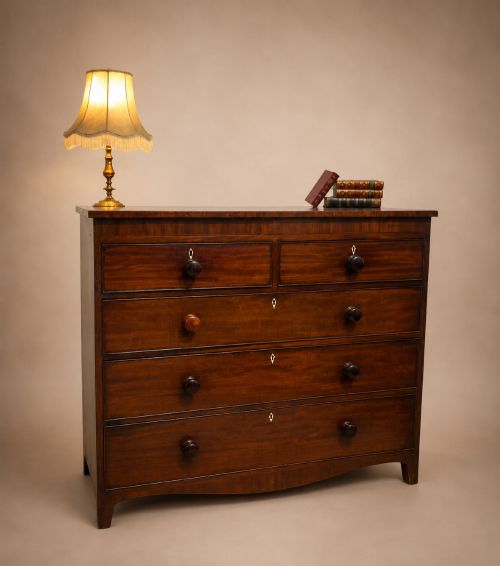
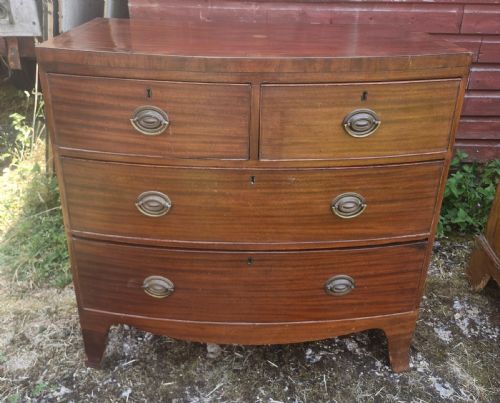
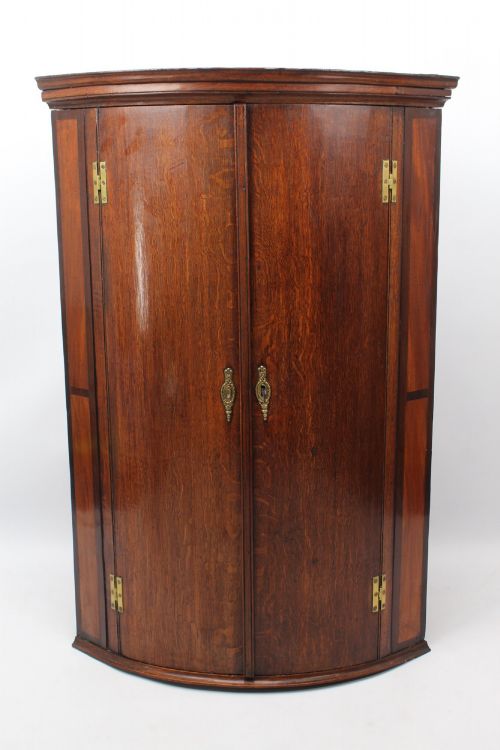
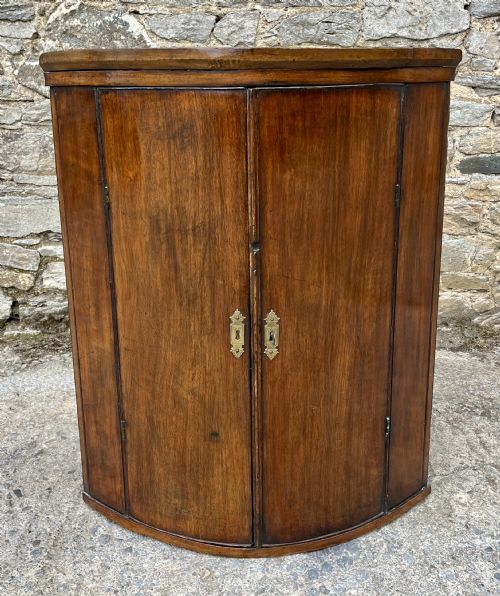
A dark wood bowfront cabinet encompasses a variety of storage furniture including corner cupboards, sideboards, chests of drawers, and display cabinets. These pieces span periods from the 18th century through the Georgian, Victorian, and Edwardian eras into the 20th century. Buyers searching this phrase most frequently encounter corner cupboards and chests of drawers fashioned with curved fronts.
The architectural forms range from tall double-height corner cupboards and hanging wall units to low bedside cupboards and substantial sideboards. Many examples utilise the rich tones of mahogany, alongside oak and flame mahogany, reflecting the stylistic shifts from George III designs to Edwardian revivals.
Materials and construction methods
Cabinet makers relied primarily on solid mahogany and flame mahogany veneers, often incorporating contrasting wood inlay, satinwood, and brass hardware. Oak also appears frequently, particularly in earlier Georgian and Victorian pieces.
Curving the front of a cabinet required precise timber bending or segment construction to achieve the characteristic bow shape. Glazed doors incorporate timber framework, while inlaid pieces display detailed marquetry and fine stringing.
Some Victorian oak cabinets surprise admirers with spirited green man carvings peering out from beneath the curve.
Distinctions in quality and execution
Quality reveals itself in the choice of timber figures, such as highly grained flame mahogany, and the crispness of inlaid details. Superior pieces display harmonious proportions and careful matching of veneers across the curved drawer fronts or doors.
The refinement of brass handles, the neatness of internal shelving, and the stability of the curved construction separate standard utility furniture from finer cabinet work.
The Dark Wood Bowfront Cabinet Glossary
- Bowfront
- A convex curved cabinet front. This curved profile softens the corners of a room or hallway.
- Flame mahogany
- A veneer cut from the fork of a mahogany tree showing a distinctive flame-like pattern. It provides striking visual movement across drawer fronts.
- Corner cupboard
- A triangular cabinet designed to fit into the corner of a room. These spacesaving units frequently feature bowfront doors.
- Inlay
- Contrasting woods or materials set into the surface of a piece to create decorative patterns. Satinwood is commonly used for this purpose.
- Linen press
- A tall cupboard originally built for storing folded linen. They often feature a chest of drawers base beneath upper cabinet doors.
Dark Wood Bowfront Cabinet: Frequently Asked Questions
Where should I place a bowfront corner cupboard?
A corner cupboard fits neatly into unused room angles, making it practical for dining rooms or hallways.
Its curved front projects slightly further into the room than a flat cupboard, creating a softer visual line.
How do I tell a Georgian bowfront from an Edwardian copy?
Georgian pieces generally show construction methods typical of the late 18th century, with hand-cut dovetails and native timber linings.
Edwardian revivals, dating around 1900, often display lighter internal woods and machine-finished elements.
What is the difference between a sideboard and a chest of drawers?
A sideboard is a long serving unit designed for dining rooms, combining cupboards and drawers for tableware.
A chest of drawers is stacked vertically for clothing storage, though both can feature a bowfront.
Are these cabinets difficult to maintain?
Standard maintenance involves dusting with a dry cloth and occasionally feeding the wood with appropriate wax.
Keep them away from direct heat sources to prevent the mahogany or veneer from drying out.