
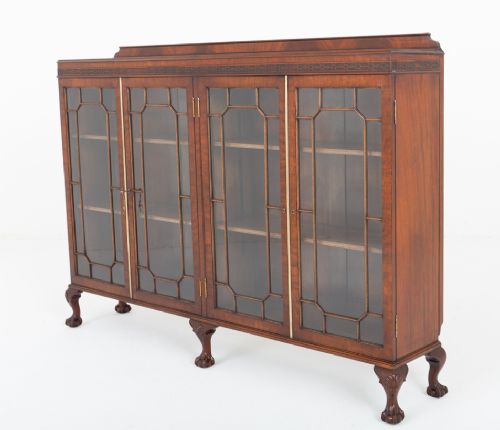
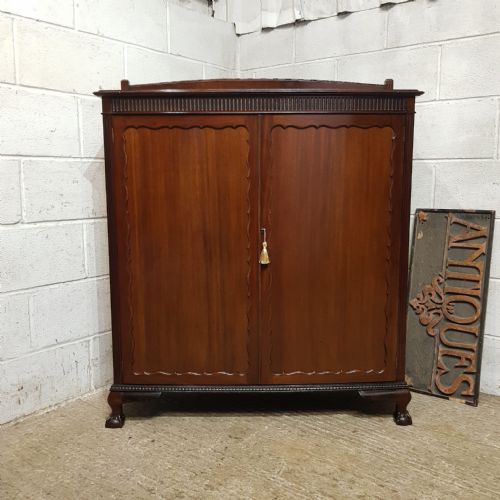
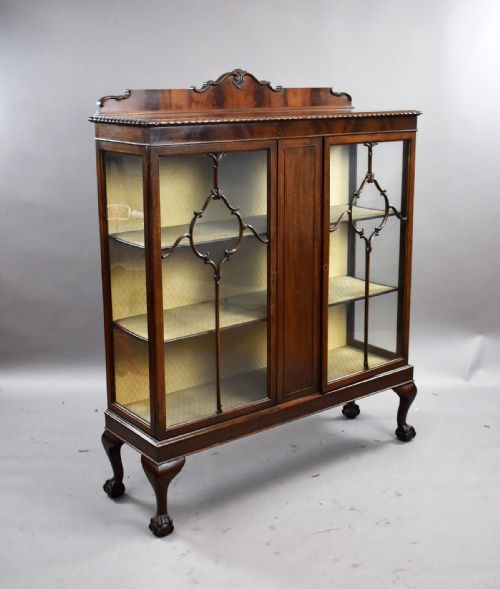


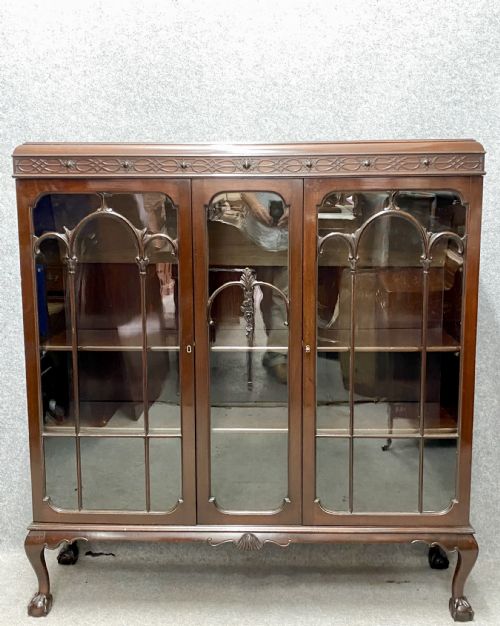


Edwardian Claw Foot Cabinet
These edwardian claw foot cabinet pieces are sturdy timber storage furniture offering traditional display space, drawing collectors seeking period character and practicality.
Edwardian Claw Foot Cabinet
An edwardian claw foot cabinet brings together period timber construction and decorative display or storage capabilities. These items appear across various styles including Chippendale Revival and Art Deco, reflecting the broad tastes of the era.
Buyers encounter multiple formats ranging from bedside cabinets and music cabinets to larger display cabinets, sideboards, and bookcases. The pieces span periods from the late Victorian era through to the nineteen-twenties.
Mahogany dominates the selection, accompanied by oak, birds eye maple, and flame mahogany veneer. Glass panels frequently feature in the upper sections for the display of books or collections.
How they were made
Makers utilised solid timbers alongside veneers, applying flame mahogany veneer and birds eye maple to create striking surface patterns. Glass panels are integrated into doors for display cases, supported by internal wooden shelving.
Brass hardware and fabric linings appear within select interiors, while carved detailing characterises revival styles such as Chippendale and Rococo. Metal components provide structural support and functional operation for doors and drawers.
Listings feature mahogany, oak, and birds eye maple, alongside glass, brass, fabric, and velvet components.
What varies in quality
The choice of timber and veneer defines the visual hierarchy, with figured woods like birds eye maple and flame mahogany sitting above plain secondary timbers. Carved ornamentation varies from crisp, deep relief work to simpler linear moulding.
Proportion and scale distinguish standard utility storage from ambitious architectural pieces, such as large glazed display cabinets and inverted break front sideboards. The integration of glass and brass hardware also indicates the standard of manufacture.
The Edwardian Claw Foot Cabinet Glossary
- Flame mahogany veneer
- A decorative sheet of wood applied to a carcass, showing a distinctive flame-like grain pattern. This technique enhances visual depth on cabinet doors and drawer fronts.
- Birds eye maple
- A figured timber exhibiting small, swirling eyes across the grain. It provides a pale, decorative contrast in cabinet construction.
- Chippendale Revival
- A style drawing inspiration from eighteenth-century designs. It often incorporates carved mahogany and classical proportions into later furniture.
- Break front
- A furniture facade where the central section projects forward from the flanking wings. This architectural arrangement adds shadow and depth to sideboards and large bookcases.
- Glazed
- Fitted with glass panes. This treatment protects displayed items while maintaining visibility.
Edwardian Claw Foot Cabinet: Frequently Asked Questions
What are edwardian claw foot cabinet pieces used for?
These items serve primarily for storage and display within domestic interiors. They accommodate books, decorative objects, and tableware behind protective doors.
Smaller formats function as bedside storage or music cabinets, while larger variations act as room anchors for dining spaces and libraries.
How do I date an edwardian claw foot cabinet?
Dating relies on stylistic markers, timber choice, and construction techniques evident in the piece. Pieces spanning from the late nineteenth century to the nineteen-twenties exhibit overlapping revival styles.
Design influences range from Victorian proportions to Art Deco geometry, alongside enduring Chippendale Revival motifs that recur across multiple decades.
How do I incorporate an edwardian claw foot cabinet into a modern room?
These wooden cabinets pair effectively with contemporary interiors by adding natural timber texture and historical contrast. Glass-fronted display versions work well in living areas for books and ceramics.
Sideboards and bedside formats provide functional surface space and enclosed storage while introducing traditional craftsmanship to neutral spaces.
What timber types appear in these cabinets?
Mahogany represents the primary timber choice across the selection, appearing in both solid form and as a veneer. Oak and birds eye maple also provide alternative surface appearances.
Secondary materials include glass for doors, brass for hardware, and fabric or velvet linings within cabinet interiors.