




Dark Wood Bedside Drawers
Dark wood bedside drawers bring compact timber storage to the bedroom, spanning Georgian elegance down to 1930s forms.
Dark Wood Bedside Drawers
Dark wood bedside drawers encompass a practical variety of small tables, cabinets, and chests designed for nightly storage beside a bed. When searching for dark wood bedside drawers, buyers encounter pieces derived from Georgian, Victorian, and Edwardian eras alongside 1920s and 1930s examples.
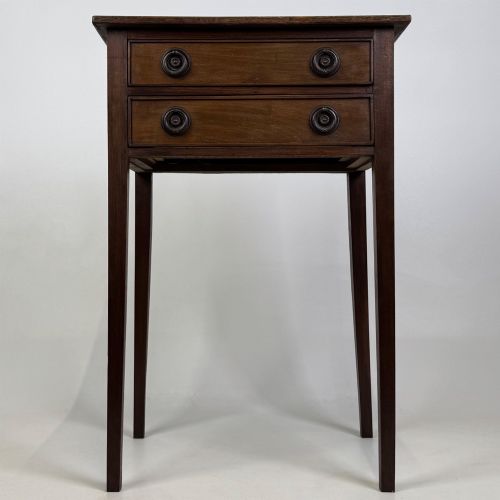
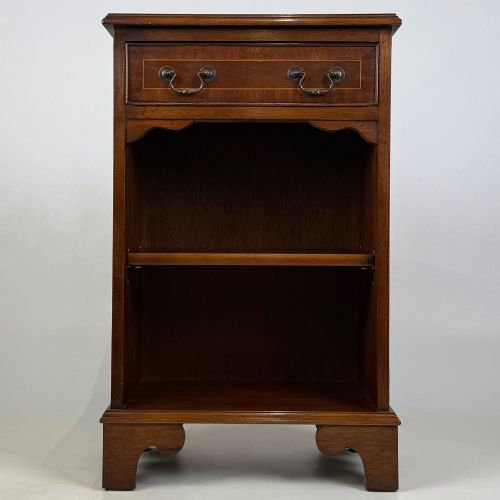
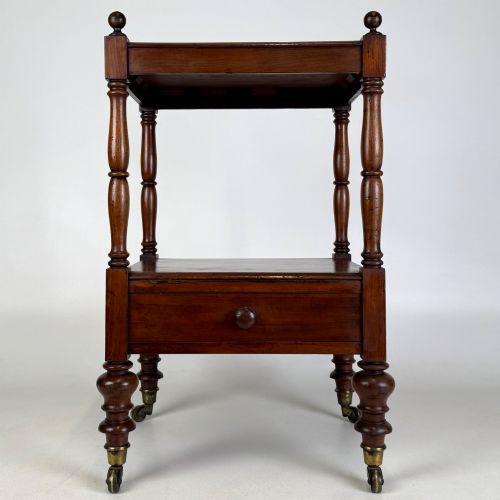
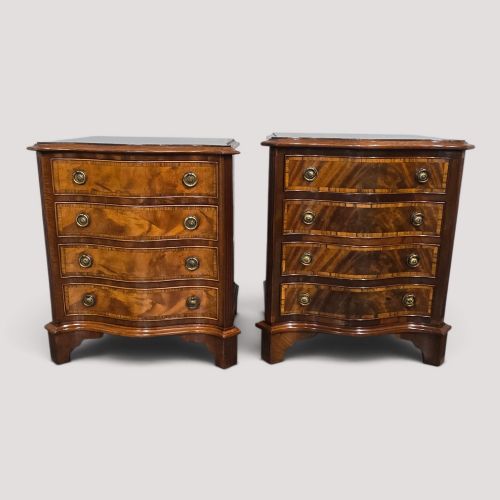
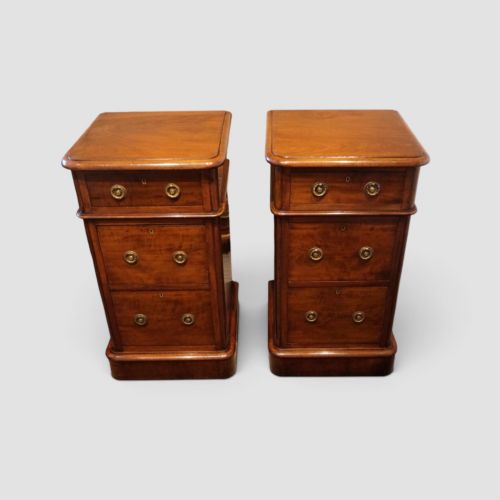
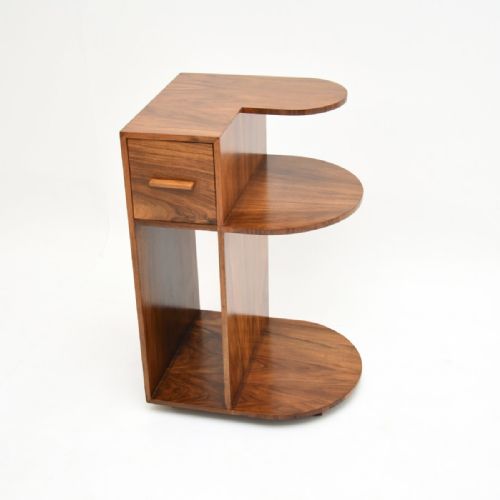
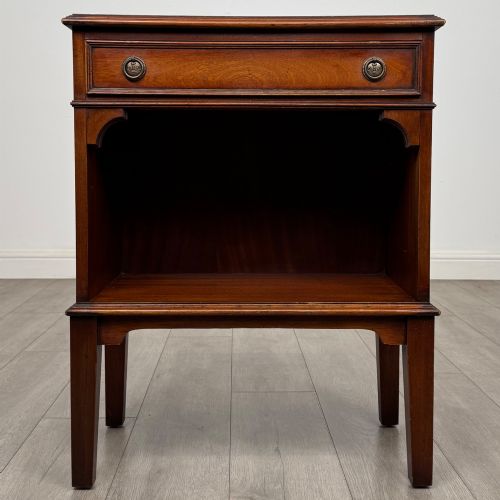
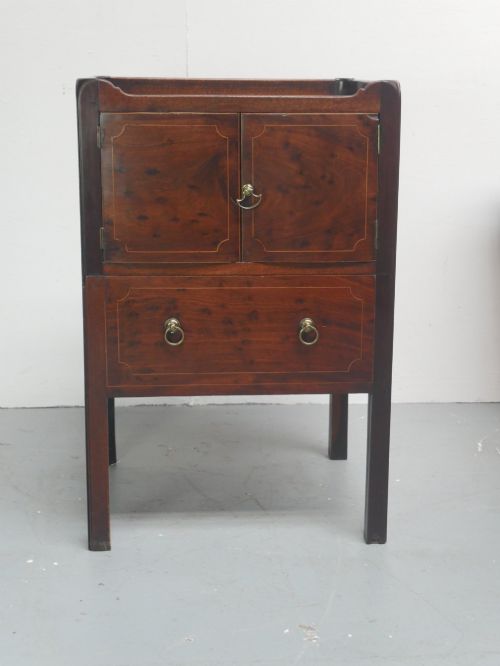
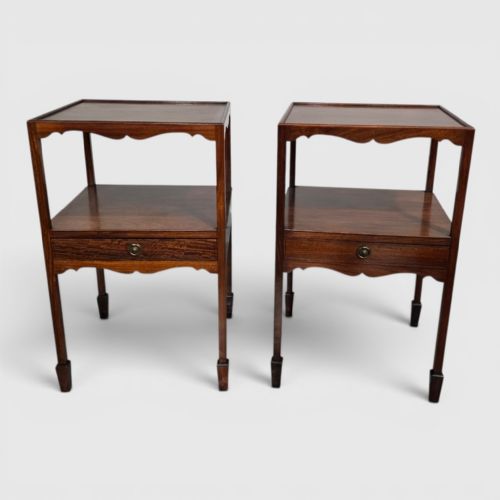
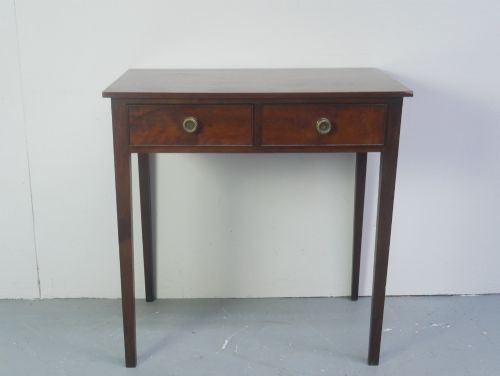
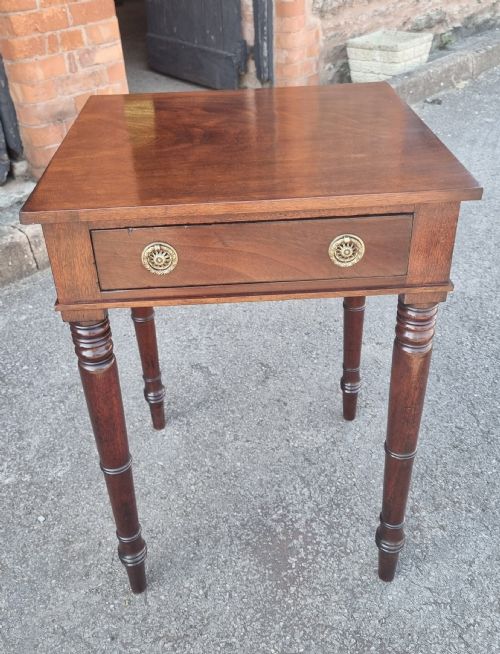
The selections on this page lean heavily towards mahogany and walnut constructions, appearing as bedside chests, cabinets, and compact side tables. These forms range from simple single-drawer tables to pedestal cabinets and serpentine chests with brass handles.
Originating across the eighteenth, nineteenth, and twentieth centuries, these items serve the dual purpose of surface placement for lamps and enclosed storage for personal items. Buyers will find both single pieces and matched pairs suited for domestic placement.
Materials and construction methods
Makers utilised solid timbers alongside wood veneer and parquetry veneer to achieve rich surface textures and deep colour tones. Mahogany, walnut, oak, and rosewood form the structural core of these items, selected for durability and grain pattern.
Metal components such as brass handles provide functional contrast to the dark wood bodies, while occasional marble tops appear on French nightstands. Joinery techniques from the Georgian and Victorian periods ensure stable construction across side tables and cabinets.
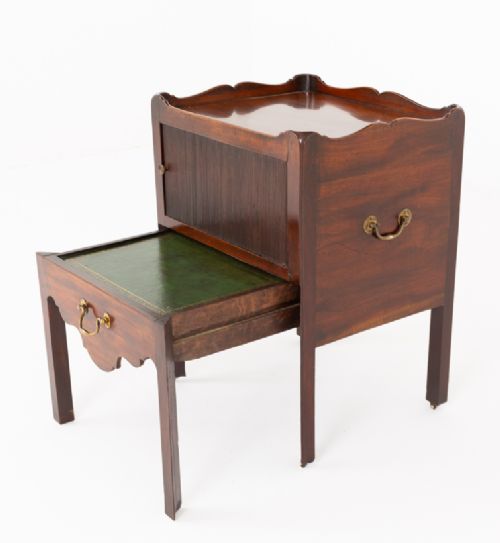
Among the bedside tables hide specialised wig stands, reminding us of a time when hairpieces required their own dedicated furniture.
Distinctions in quality and execution
Lesser pieces rely on simpler construction and plain timber boards without the refined moulding or decorative brass hardware seen on superior examples. The presence of matched pairs also elevates the desirability and functional utility for a bedroom setting.
The Dark Wood Bedside Drawers Glossary
- Serpentine
- A curved furniture front characterised by a convex centre flanked by concave sides. This shape demands high woodworking skill to execute properly.
- Bow-front
- A convex, outward-curving front profile commonly found on chests of drawers and cabinets. It softens the geometric lines of bedside furniture.
- Parquetry
- A geometric mosaic of wood pieces used for decorative veneer on tabletops and cabinet surfaces. It creates a patterned, contrasting visual effect.
- Pedestal cabinet
- A freestanding vertical storage unit supported by a central pillar or base. This form maximises storage capacity while maintaining a small footprint.
Dark Wood Bedside Drawers: Frequently Asked Questions
How do I choose between a bedside cabinet and a table?
Cabinets offer enclosed storage behind doors or multiple drawers, keeping items out of sight beside the bed. Tables provide an open surface for a lamp with minimal storage underneath.
Your choice depends on how much clutter you need to conceal within the bedroom space.
Are matched pairs common in older bedside furniture?
Many period bedside tables and chests were originally made as single items or wig stands rather than pairs. Finding true matching pairs from the eighteenth or nineteenth century is less common.
Many listings featuring pairs represent twentieth-century creations or later married sets designed for modern bedroom layouts.
What wood types should I expect to find?
The listings consist predominantly of mahogany and walnut, alongside oak and rosewood. Veneers and parquetry are also utilised for decorative surfaces.
These dark timbers dominate the periods represented on this page, offering deep brown and reddish tones.
How do I date a dark wood bedside piece?
Dating relies on identifying the prevailing style, such as Georgian bracket feet, Victorian proportions, or 1930s Art Deco curves. Construction methods and wood types also provide clear indicators of the era of manufacture.
Comparing the hardware and secondary woods helps narrow down the decade or century.