




Dark Walnut Library Table
A dark walnut library table brings rich timber tones and solid workspace to a room, offering the practical surface that writers and readers have valued for centuries.
Dark Walnut Library Table
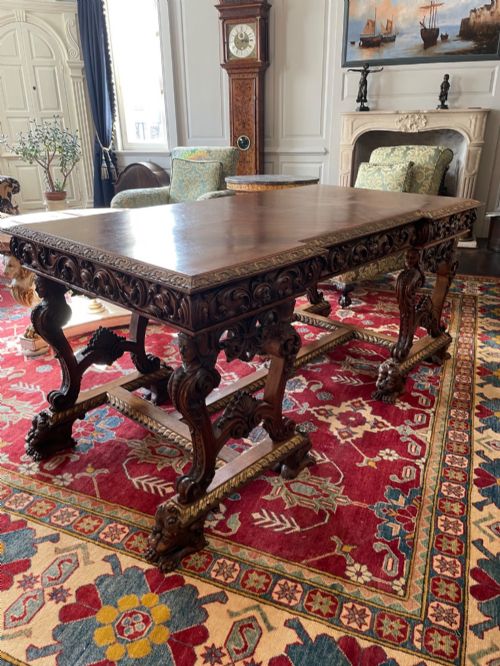
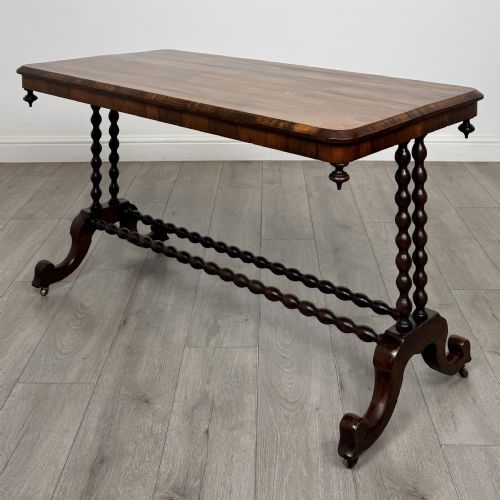
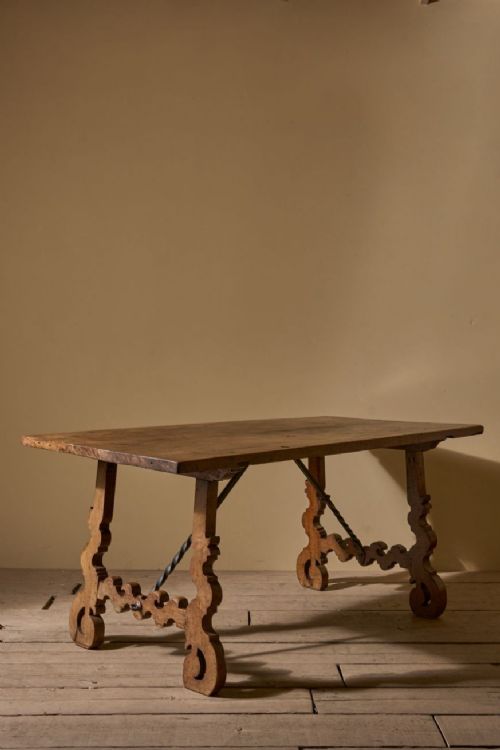
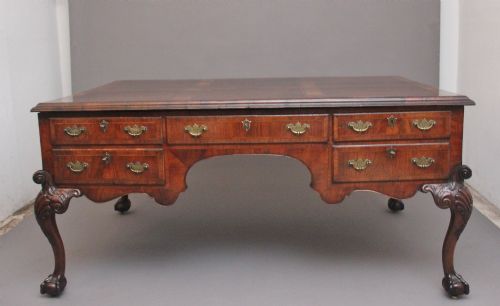
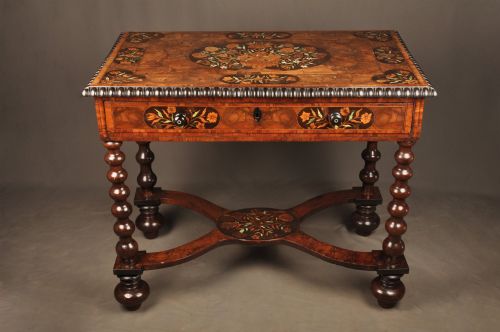
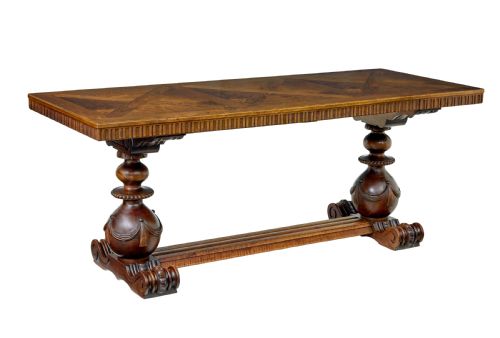
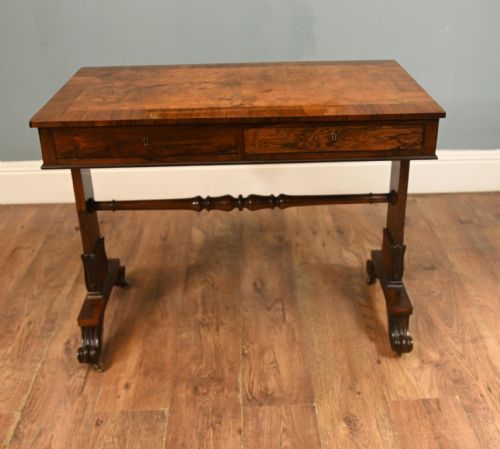
A dark walnut library table appears in several distinct forms across the inventory, ranging from substantial partners desks and twin pedestal desks to centre tables and side tables. Buyers seeking a dark walnut library table will frequently encounter 19th Century Victorian pieces alongside earlier 17th Century and 18th Century Spanish examples.
Makers and workshops constructed these tables for reading, writing and central room placement, leading to designs featuring turned spindle bases, stretcher supports, and occasionally inset leather tops. The selection spans straightforward utilitarian desks to elaborately carved Renaissance Revival and Reformed Gothic creations.
Indicators of quality
Quality rests upon the depth of the timber's original patina and the crispness of the carved details executed by the workshop. Superior examples maintain structural integrity in their pedestals and stretcher bases without relying on later timber replacements.
The sophistication of the secondary woods, the execution of marquetry or inlay, and the preservation of original leather inserts distinguish finer production pieces from standard utility items.
Dark Walnut Library Table Retail Price Guide 2026
Typical asking prices for dark walnut library table among the pieces listed under this phrase on Sellingantiques today, from the lower quarter to the upper quarter. They describe what is for sale here now, not the wider market.
Angiolo Barbetti Firenze
The Dark Walnut Library Table Glossary
- Partners desk
- A large double-sided desk designed for two people to work opposite each other, featuring drawers on both long sides.
- Burr walnut
- Timber taken from a tree growth or burr, yielding highly figured, swirling grain patterns prized for veneering cabinet fronts and tabletops.
- Patina
- The surface sheen and mellowing developed by wood over long periods through handling, polishing, and ageing.
- Reformed Gothic
- A 19th-century design style drawing on medieval architecture but reinterpreted with planar surfaces and geometric incised decoration.
- Stretcher table
- A table with horizontal wooden rails connecting the legs to provide structural rigidity and foot support.
Dark Walnut Library Table: Frequently Asked Questions
What is a dark walnut library table?
A dark walnut library table is a heavy wooden table or desk built primarily from walnut timber for reading, writing, and central room use. These pieces often feature drawers, turned legs, or leather-inset surfaces.
Such tables span multiple centuries and regional styles, from 17th-century Spanish forms to Victorian English pedestal designs.
How were these tables used originally?
These tables served as functional writing surfaces, central room display pieces, and double-sided workspaces for multiple readers or partners in grand libraries.
Their sturdy construction accommodated heavy volumes, paperwork, and writing equipment in studies and libraries.
How do I care for leather desk inserts?
Leather inserts require gentle cleaning with dry or slightly damp cloths, avoiding harsh chemical cleaners that strip the original dye and tooled details.
Applying appropriate leather balms periodically prevents the surface from drying and cracking under normal room conditions.
How can I tell a Victorian table from earlier periods?
Victorian tables often display mechanical consistency, heavier proportions, and specific revival ornament such as Reformed Gothic or Renaissance Revival motifs.
Earlier 17th and 18th-century tables typically show hand-tooling marks, simpler structural joins, and deep patination acquired over centuries.