





Dark Walnut Display Shelves
Dark walnut display shelves bring together rich timbers and open tiering, offering a practical way to showcase prized objects.
Dark Walnut Display Shelves
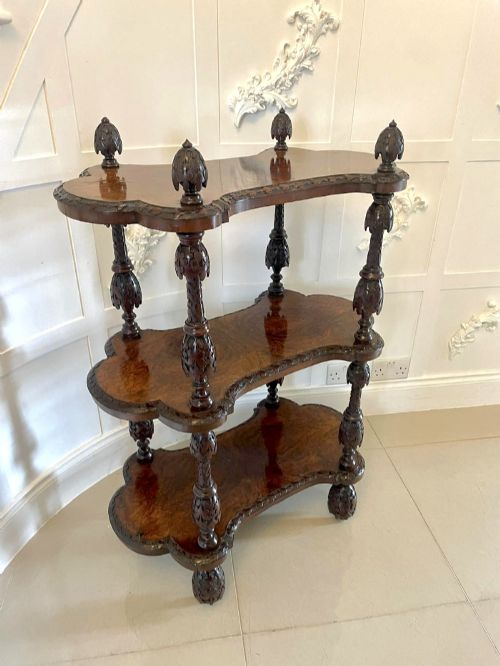
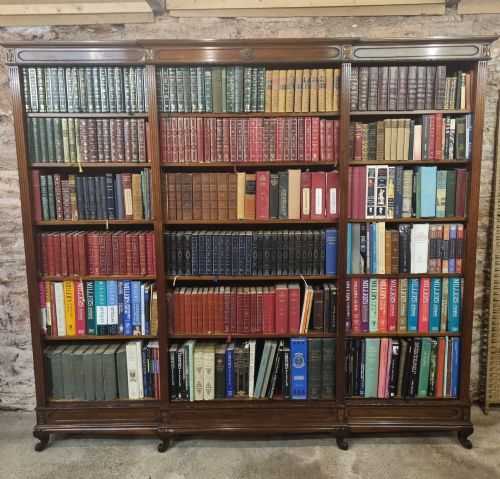
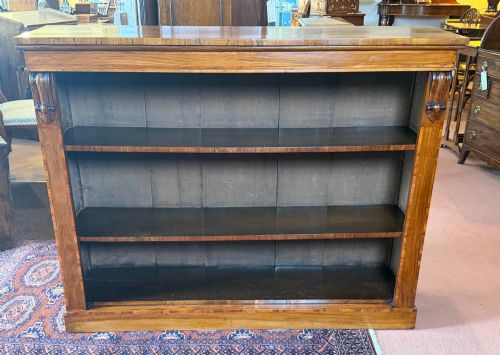
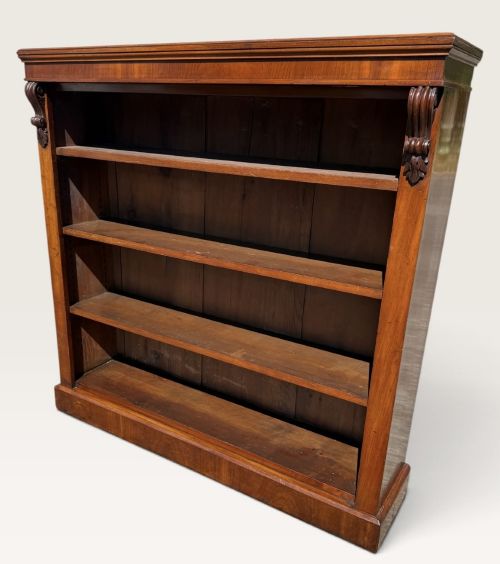
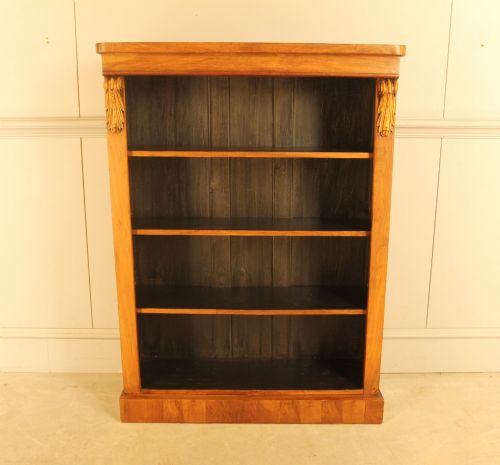
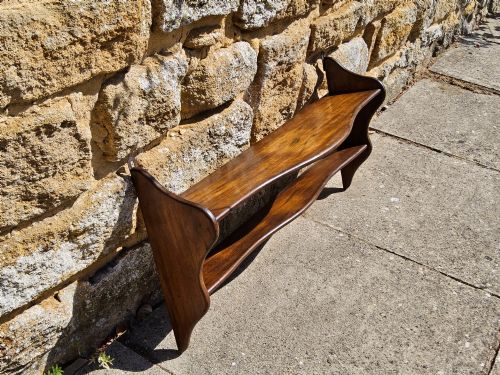
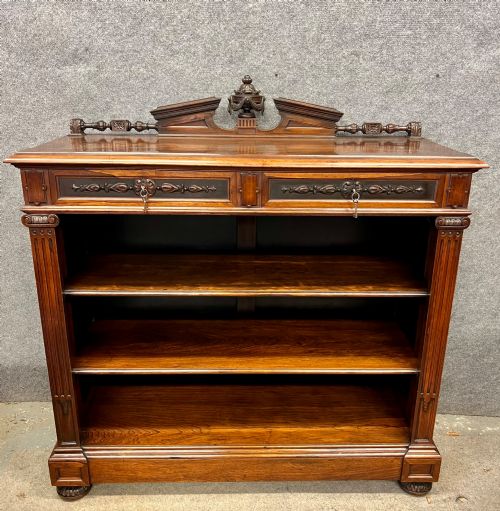
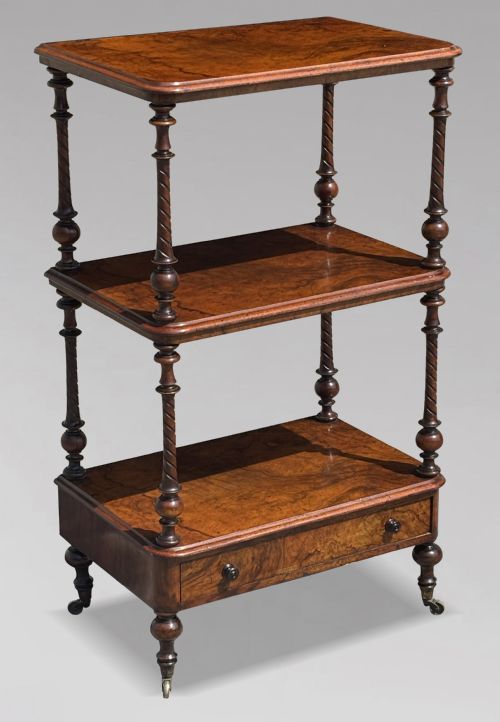
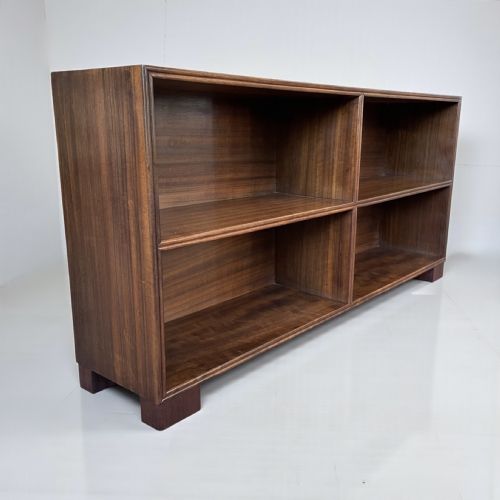
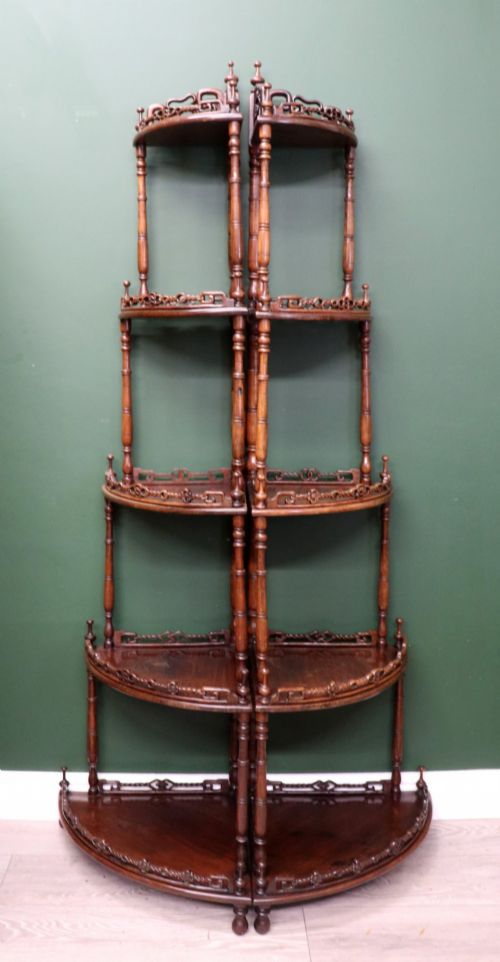
Dark walnut display shelves encompass an array of open bookcases, tiered etageres, corner cabinets, and wall brackets designed for the exhibition of small ornaments and books. These pieces span the nineteenth and twentieth centuries, taking forms such as the Victorian open bookcase, the multi-tiered whatnot, and the Art Deco stacking unit.
The version most commonly met on this page is the Victorian walnut open bookcase or freestanding whatnot, often featuring adjustable shelving or multiple stepped tiers. Alongside these English examples appear French wall shelves, Italian cabinets, and pieces influenced by the Arts and Crafts and Aesthetic movements.
The selection ranges from compact corner units suited to tight spaces to large freestanding bookcases and wall-hung cabinets. Materials extend beyond plain timber to include burr walnut, mahogany, and pine, frequently accented with brass, gilt bronze, glass, and mother-of-pearl inlay.
How they were made
Makers utilised solid walnut and decorative burr walnut veneers applied over secondary woods such as pine and mahogany to build these display units. Cabinetmakers selected timber with prominent grain patterns for visual impact on prominent surfaces like top panels and door fronts.
Construction techniques included hand carving, careful joinery for tiered whatnot columns, and the integration of adjustable shelf mechanisms. Workshops also applied marquetry and mother-of-pearl inlay, as seen in specific Syrian wall brackets and inlaid corner units.
Glazing was incorporated into cabinet doors using leaded or clear glass panes, while brass hardware furnished handles, hinges, and hanging brackets. Secondary structural framing relied on sturdy pine or hardwood carcasses to support weighted shelves of books and display items.
Dark Walnut Display Shelves Retail Price Guide 2026
Typical asking prices for dark walnut display shelves among the pieces listed under this phrase on Sellingantiques today, from the lower quarter to the upper quarter. They describe what is for sale here now, not the wider market.
One wall bracket travels all the way from Syria, proving that nineteenth-century walnut appreciation knew no borders.
What varies in quality
The selection of timber grain heavily influences the visual standing of a piece, with figured burr walnut commanding attention over plain sawn boards. Exhibition quality items display superior matching of veneers across multiple tiers and doors.
Execution of detail defines the upper tier of craftsmanship, evident in crisp hand carving, refined fretwork on etagere galleries, and precise inlay work. Structural ambition also separates standard production from exceptional pieces, such as multi-tiered revolving whatnuts and large stepped bookcases with integrated cabinetry.
Gabriel Viardot·Maurice Adams·Heal's
The Dark Walnut Display Shelves Glossary
- Whatnot
- A piece of furniture consisting of several open shelves for displaying small objects or books. These tiered stands emerged strongly during the Victorian era in corner and freestanding formats.
- Etagere
- A piece of furniture with a set of open shelves for displaying ornaments. They often share characteristics with whatnuts in multi-level display configurations.
- Burr walnut
- A prized veneer taken from the warted excrescences of walnut trees, showing intricate swirled grain patterns. Cabinetmakers utilised it on high-status Victorian and Edwardian furniture.
- Aesthetic Movement
- A late nineteenth-century design current that promoted art for art's sake, often reflected in furniture through simplified forms and decorative inlays. Pieces from this movement prioritize visual harmony over heavy historic revivalism.
- Open bookcase
- A bookcase lacking doors, allowing immediate access to stored volumes. Victorian examples frequently incorporate adjustable wooden shelves.
Dark Walnut Display Shelves: Frequently Asked Questions
What is an etagere?
An etagere is a tiered open shelf unit designed specifically for displaying small decorative objects, ceramics, and ornaments. These pieces rely on vertical space to present collections without closing them behind doors.
First appearing in various forms during the nineteenth century, etageres range from corner units to elaborate freestanding stands with multiple levels supported by turned or carved columns.
How do you style dark walnut shelves?
Dark walnut shelves provide a rich, dark backdrop that complements neutral walls, books with colourful bindings, and metallic or ceramic decorative objects. Mixing heights and textures among the displayed items creates visual balance across open tiers.
Placing smaller items on top tiers and heavier books or cabinets below helps ground the piece visually. Corner units and wall-hung brackets work well to utilise neglected room perimeters.
What is the difference between a whatnot and a bookcase?
A whatnot is primarily designed for exhibiting ornaments and varied decorative items across several open, stepped tiers. They are lighter in construction and often feature delicate spindle galleries or mirror elements.
An open bookcase focuses on housing collections of reading material with deeper, sturdier shelves. While some bookcases incorporate display top sections, their primary structural purpose remains the storage of books.
How do I identify Victorian walnut furniture?
Victorian walnut furniture from the nineteenth century typically displays warm brown tones with visible grain, sometimes enhanced by burr walnut veneers. Common design motifs draw on earlier historic styles, Arts and Crafts movements, or Aesthetic influences.
Construction indicators include hand-cut joinery, solid secondary woods like pine behind veneer, and period hardware such as brass shelf supports or hinges. Many pieces also feature adjustable shelving slots cut directly into the interior carcass walls.