




Dark Timber Wall Mirror
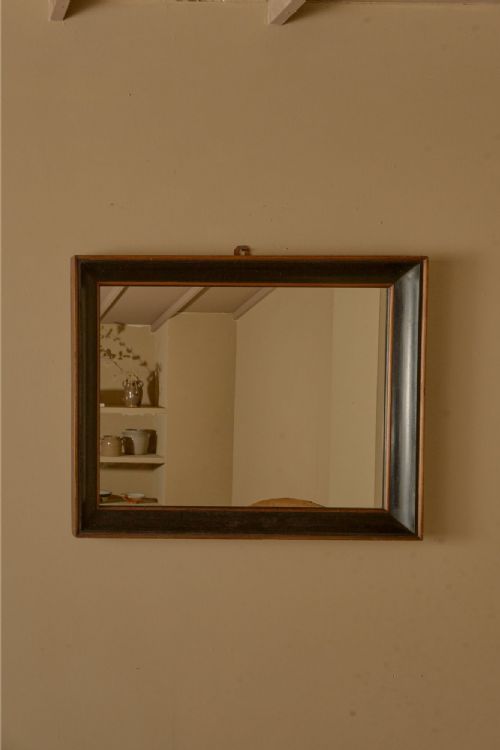
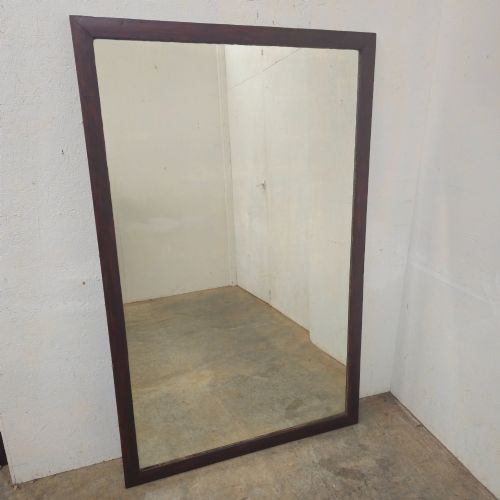
A dark timber wall mirror brings depth and warmth to an interior, anchored in rich grains from walnut to oak.
Dark Timber Wall Mirror
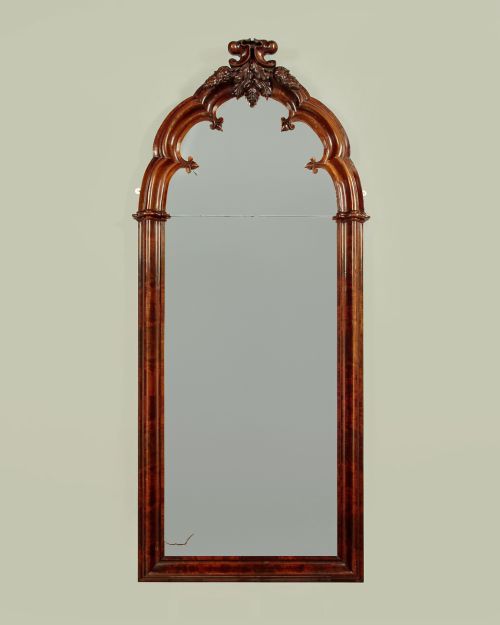
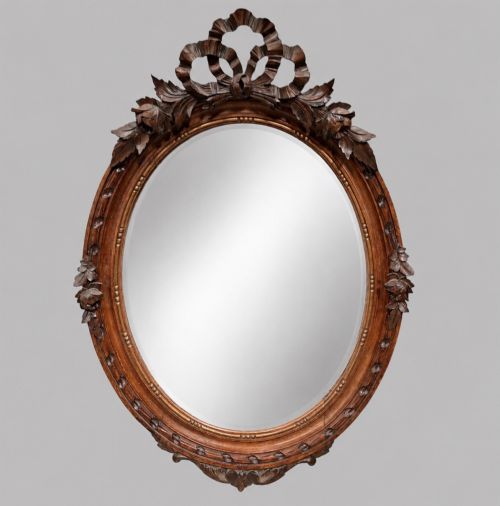
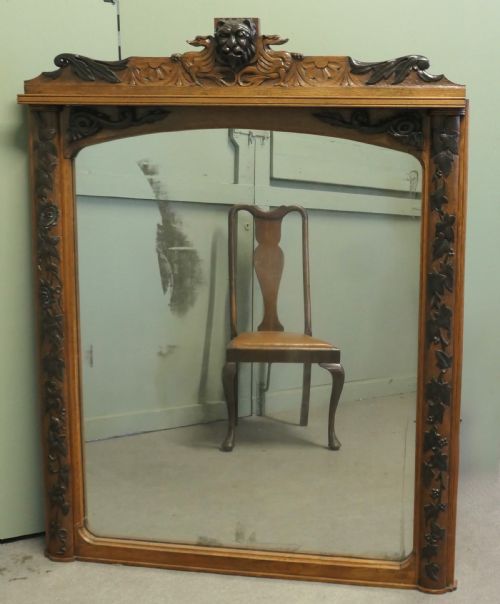
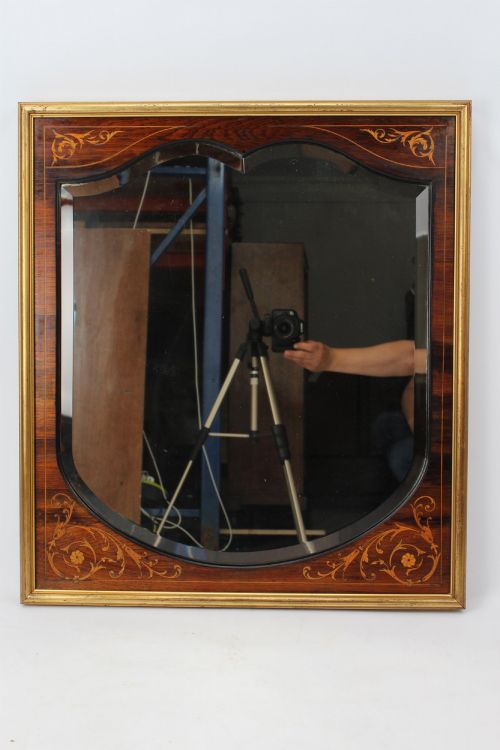
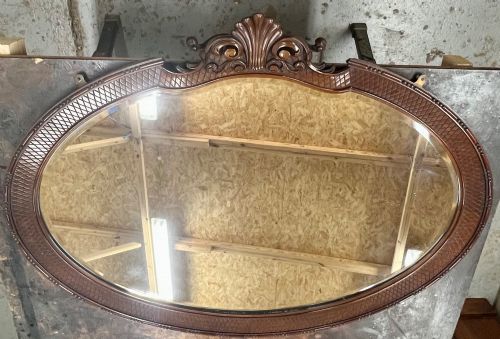
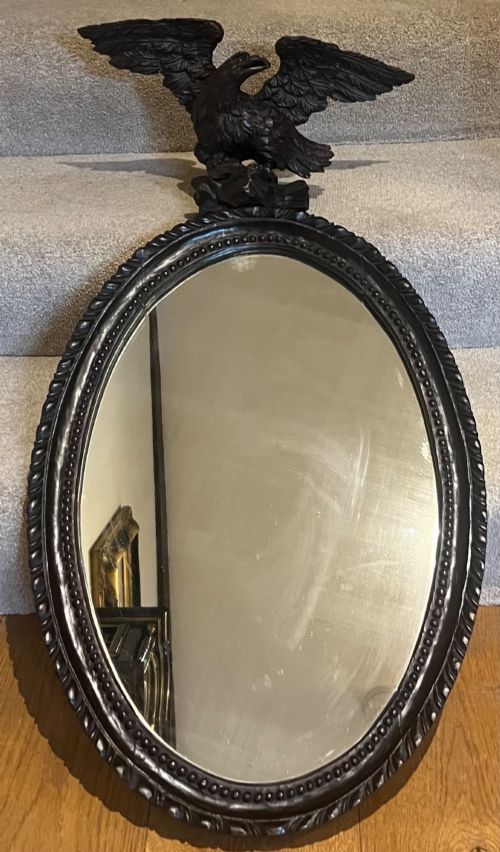
A dark timber wall mirror spans several centuries of design, with nineteenth-century examples forming the core of what appears here. These pieces range from simple oak frames to heavily carved Black Forest bird of prey designs and architectural overmantel mirrors. Formats include rectangular, oval, and octagonal shapes intended for wall hanging.
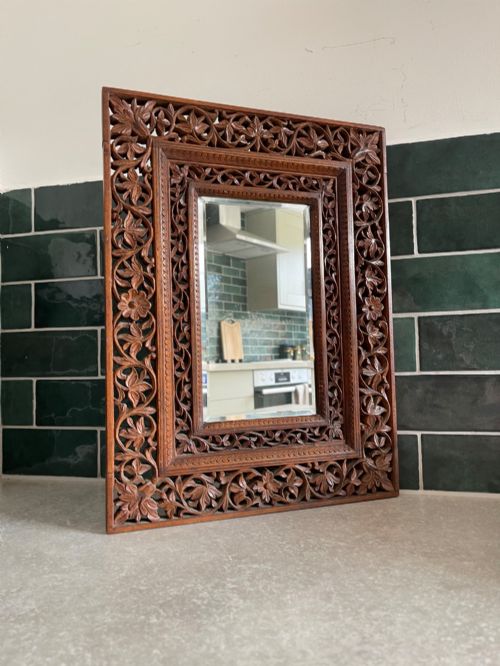
The styles recorded in the inventory stretch from Georgian and Regency forms through Victorian, Edwardian, and Art Nouveau periods. Regional variations also emerge, including North Indian mirrors, French faux bamboo, and Italian ebonised pieces. Buyers encounter both domestic English country house items and continental European workshops.
Wall sconces and pier mirrors supplement the primary selection of wall mirrors, utilising the same dense wood frames. Cushion frames and carved eagles demonstrate the sculptural ambition of makers working in timber. Each piece relies on the contrast between reflective glass and dark wood.
Materials and technique
Carpenters and carvers built these frames using dense hardwoods such as oak, mahogany, walnut, rosewood, and padauk. Some pieces incorporate ebonised finishes, faux tortoiseshell, or intricate oyster veneers laid onto a timber base. Metal mounts in brass or specialised glass plates complete the construction.
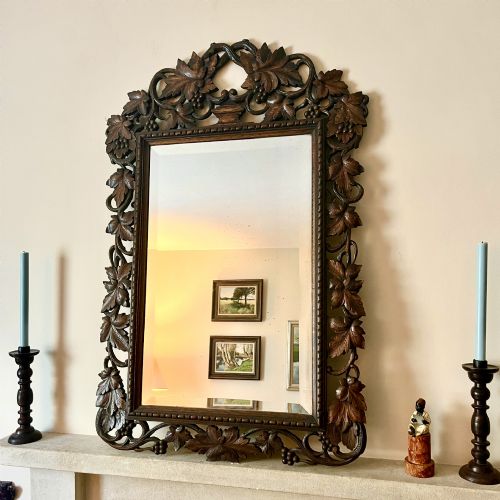
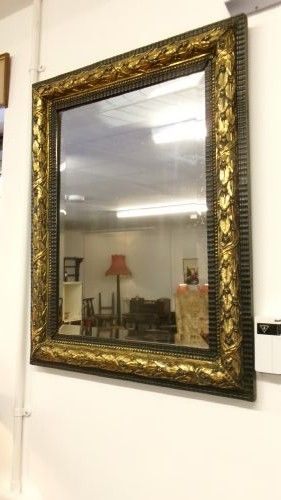
Carving represents the dominant decorative technique, seen in floral motifs, birds of prey, and Renaissance-style reliefs. Frames often utilise pegged joints or cushion mouldings to secure the heavy timber around the glass. Artisans shaped the wood by hand before applying final polishes and gilding accents.
Dark Timber Wall Mirror Retail Price Guide 2026
Typical asking prices for dark timber wall mirror among the pieces listed under this phrase on Sellingantiques today, from the lower quarter to the upper quarter. They describe what is for sale here now, not the wider market.
Materials span traditional British oak and mahogany alongside exotic padauk and walnut.
What varies in quality
Depth and precision of the hand carving distinguish standard frames from exceptional ones. Deeply undercut foliage or naturalistic animal figures require advanced skill compared to simpler bevelled mouldings.
Selection of the timber itself dictates overall character. Highly figured walnut, rich rosewood, or exotic padauk elevate a piece beyond standard oak or generic dark wood.
Gabriel Viardot
The Dark Timber Wall Mirror Glossary
- Overmantel mirror
- A large horizontal mirror designed specifically to hang above a fireplace mantelpiece. These often feature architectural mouldings or extensive carved decoration.
- Pier mirror
- A tall, narrow mirror traditionally hung on the section of wall between two windows. They make efficient use of light in domestic interiors.
- Cushion frame
- A frame profile that curves outward like a padded cushion towards the outer edge. This style creates a volumetric, tactile border around the glass.
- Oyster veneer
- Thin slices cut transversely from small branches or roots to reveal circular growth rings. This technique creates a distinctive mottled pattern across the wooden surface.
- Black Forest carving
- Intricate wood carving originating from the mountain region of Central Europe. It typically depicts animals, leaves, and deep naturalistic textures.
Dark Timber Wall Mirror: Frequently Asked Questions
How do I hang a heavy timber mirror safely?
Heavy timber mirrors require fixings suited to the weight of the wood and glass. Secure screws directly into wall studs or use heavy-duty wall anchors rated for the specific load.
Distribute the weight evenly across two brackets rather than a single central wire where possible. This prevents the frame from tilting and protects the wall structure.
What periods do these mirrors cover?
The selection spans from the seventeenth century through the Georgian and Victorian eras into the early twentieth century. Nineteenth-century examples form the largest group available.
Styles shift from early walnut veneer work to heavy Victorian carving and later Art Nouveau or Edwardian designs. Each era utilised distinct woodworking techniques and decorative motifs.
How should I clean a dark timber frame?
Dust the carved wooden frame regularly with a dry, soft cloth to prevent buildup in the recesses. Avoid harsh chemical cleaners that can strip the historic polish or wax from the timber.
Apply a suitable furniture wax sparingly if the wood appears dry, buffing gently after application. Keep glass cleaner away from the wooden edges to prevent staining.
Where were these mirrors typically placed?
Mirrors were historically positioned above fireplaces as overmantels to reflect light and fill large wall spaces. Narrow pier mirrors were placed between windows to brighten darker rooms.
Hallways and principal reception rooms also featured these pieces to create a sense of expanded space. Smaller examples served as functional wall or hand mirrors in private chambers.