



Dark Painted Cupboard
A dark painted cupboard brings architectural depth and honest storage to a room, ranging from simple pine housekeeping pieces to grand glazed display cabinets.
Dark Painted Cupboard
When you search for a dark painted cupboard, you encounter a wide variety of storage furniture originating from the eighteenth, nineteenth, and early twentieth centuries. These pieces span English and Irish country furniture, French provincial styles, Dutch vitrines, and educational or industrial cabinets.
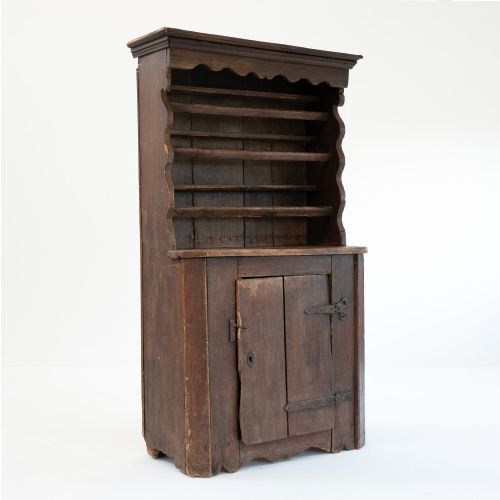
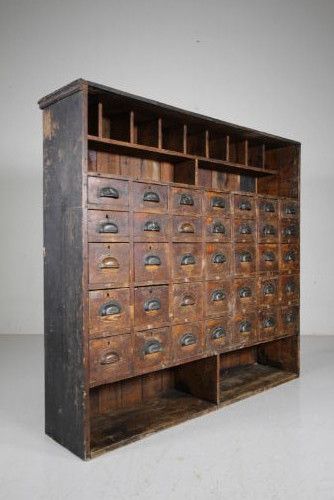
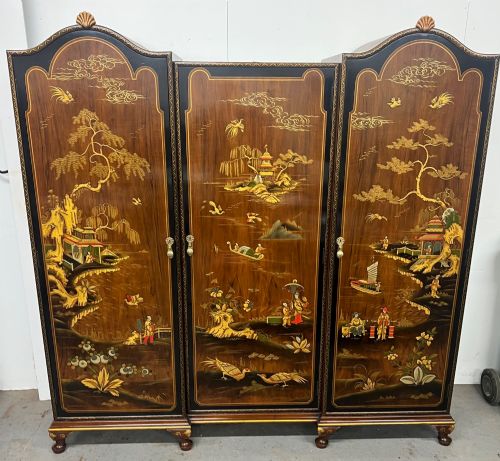
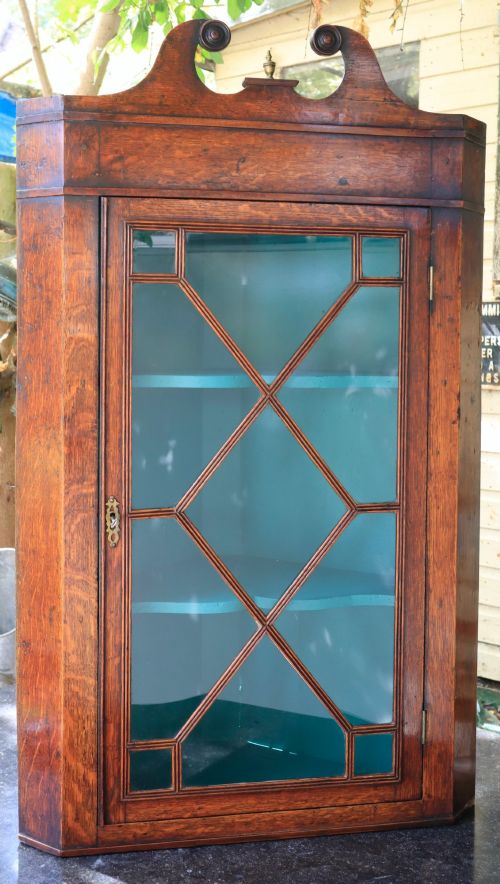
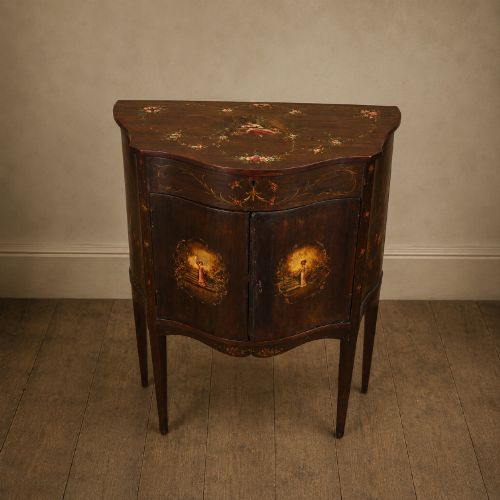
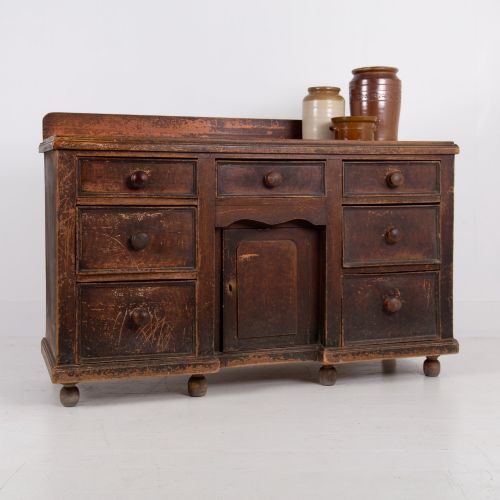
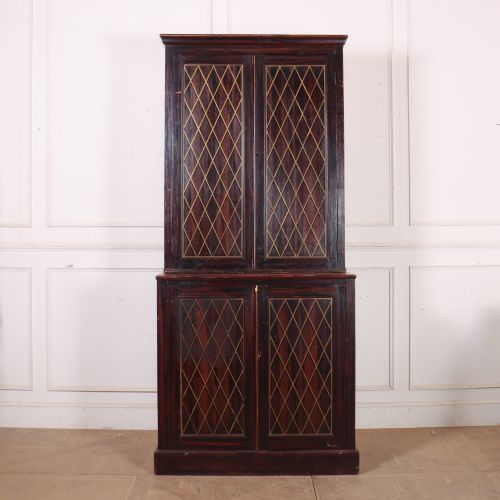
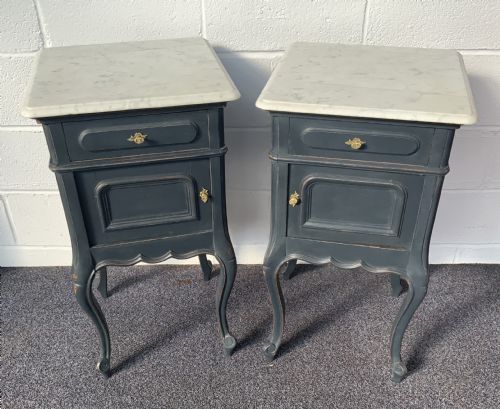
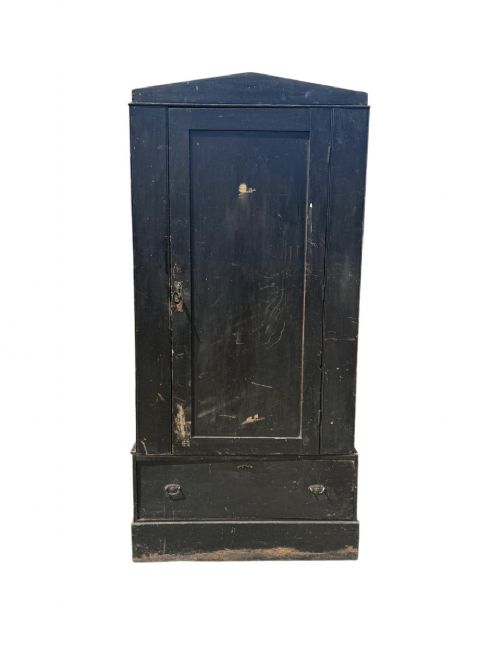
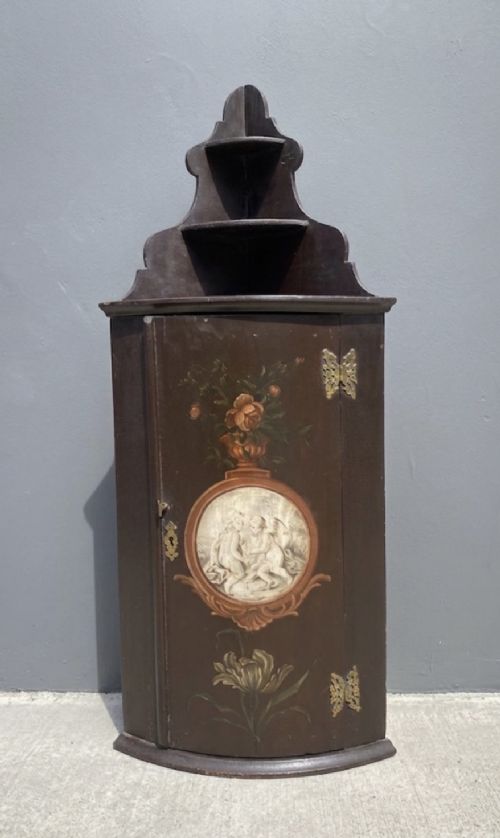
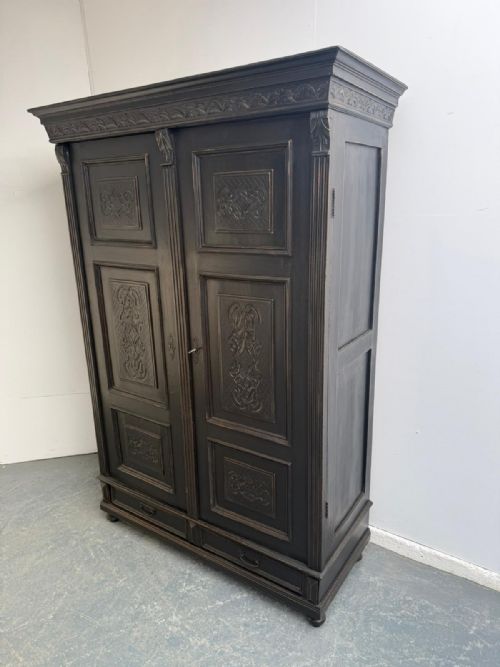
The versions most commonly met on this page are constructed from timber such as pine and oak, finished in historic, original, or later coats of dark paint. Forms range from compact bedside cabinets and corner cupboards to tall wardrobes, bookcases, and large kitchen dressers.
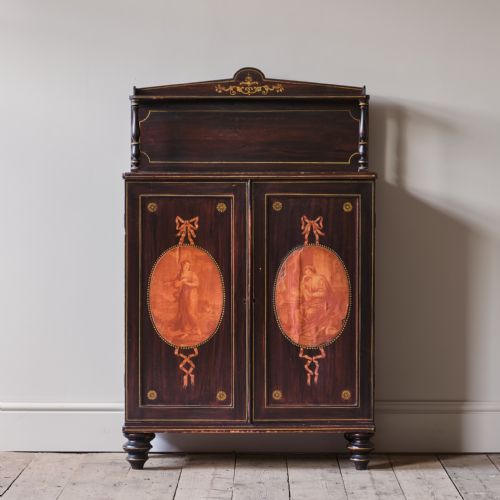
Origins stretch across Britain and continental Europe, including Hungary, France, and the Netherlands. Each piece reflects the utilitarian needs or decorative tastes of its period, from simple bread and cheese cupboards to formal Regency chiffoniers.
How they were made
Construction relies primarily on sturdy domestic timbers, predominantly pine and oak, sometimes accented with walnut or rosewood. Carpenters joined these woods using traditional joinery methods suited to utilitarian storage and display.
Surfaces received layers of pigment and binders, creating historic finishes that range from flat dark paint and simulated rosewood graining to hand-painted decorative schemes. Iron and brass hardware such as hinges, handles, and locks complete the construction of these cabinets.
Regional styles span English and Irish country workshops, French provincial houses, and Hungarian farmhouses.
What varies in quality
The distinction between tiers of quality rests heavily on the integrity of the surface finish and the retention of original paintwork. Pieces retaining untouched, historic pigment layers hold greater character than those stripped and repainted in later eras.
Proportion, timber selection, and the finesse of structural joinery also divide simple utility items from finer cabinet work. Maker attribution, regional details, and integrated decorative elements such as carved panels or original glazing further elevate a piece.
Maples and Co·Jewell of Holborn
The Dark Painted Cupboard Glossary
- Chiffonier
- A low sideboard or cabinet featuring shelves or drawers, popular during the Regency period. These often stood in dining rooms for serving or storing silver.
- Vitrine
- A glass-fronted cabinet designed for displaying porcelain, books, or curiosities. They protect delicate objects while offering maximum visibility.
- Housekeeper cupboard
- A large storage piece traditionally used in large country houses for linen and dry goods. They provide substantial internal capacity with deep shelving or hanging space.
- Pot board
- An open lower shelf built into the base of a traditional kitchen dresser. It was historically used to store pots and heavy earthenware.
- Simulated rosewood
- A painted graining technique imitating expensive tropical hardwood. Craftsmen applied this finish to humbler timbers like pine during the Regency period.
Dark Painted Cupboard: Frequently Asked Questions
Are these cupboards suitable for modern kitchens?
Many buyers utilise these pieces for kitchen storage, using dressers and larders for crockery and dry goods. Their deep shelves and cupboards offer practical storage capacity.
Ensure the timber is kept away from extreme heat sources and direct moisture to preserve the painted finish.
How can I tell original paint from later coats?
Original paint typically exhibits natural wear patterns, craquelure, and subtle fading consistent with age. Examination under magnification can reveal underlying layers and oxidation.
Later repainting often feels more uniform and lacks the integrated patina developed over centuries of use.
Where should I place a corner cabinet?
Corner cabinets fit efficiently into unused room angles, making them ideal for smaller spaces. They draw the eye upward and utilise vertical wall areas effectively.
Pair them with other country or period furniture to maintain a balanced interior aesthetic.