
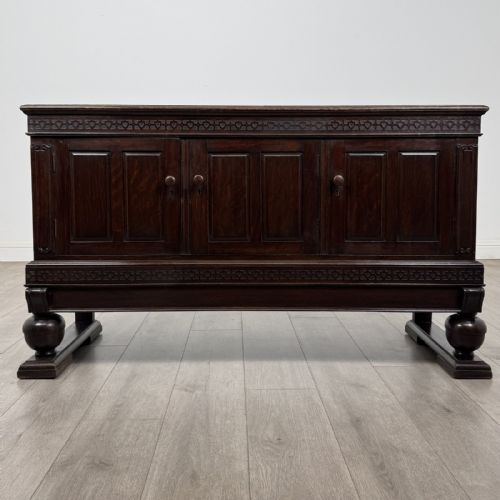
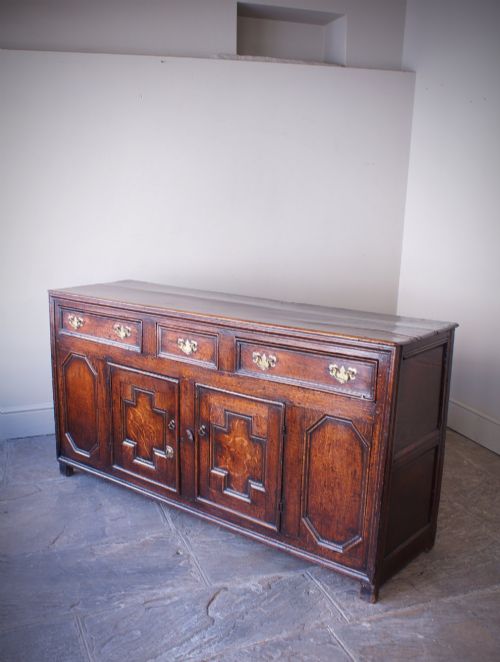
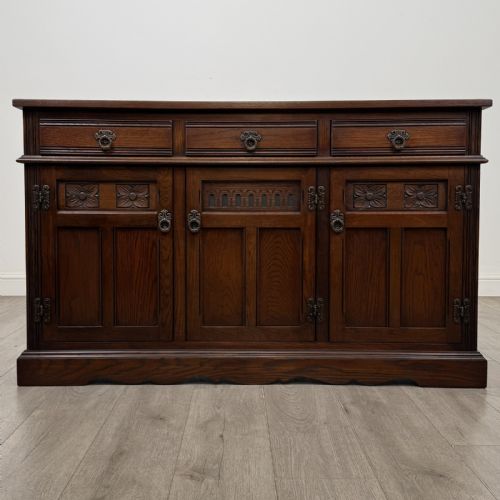
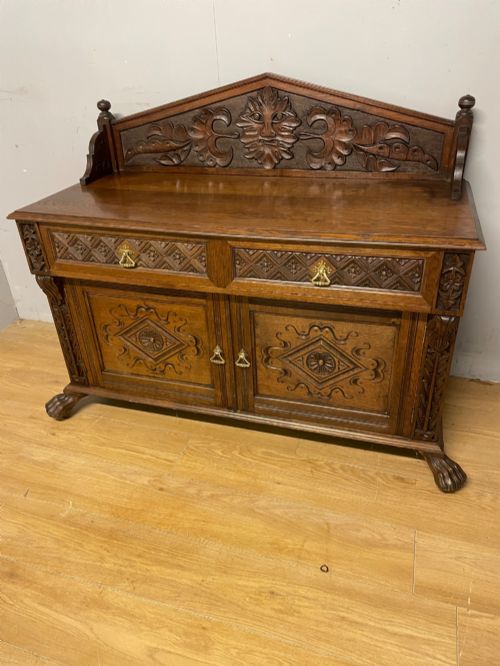
Dark Oak Sideboard Cupboard
These dark oak sideboard cupboard pieces offer generous storage and solid timber construction, making them a practical choice for any dining room or hallway.
Dark Oak Sideboard Cupboard
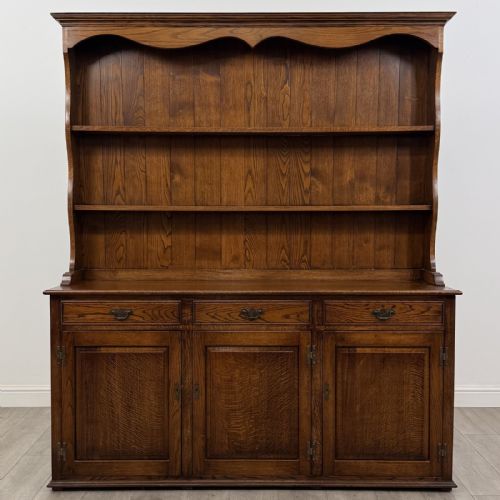
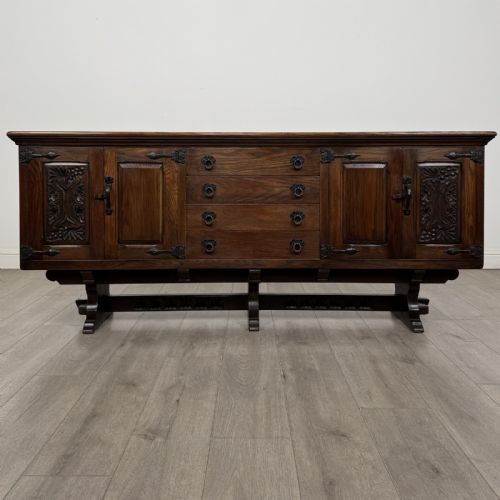
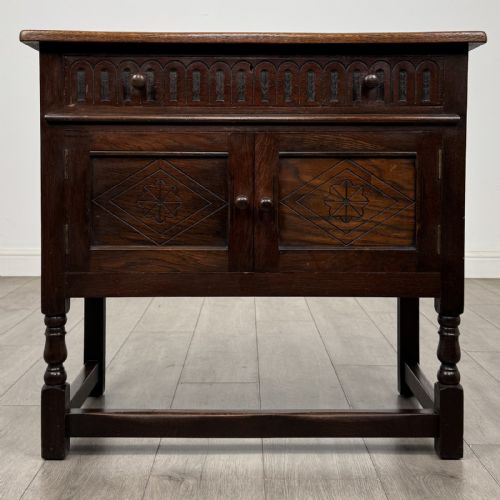
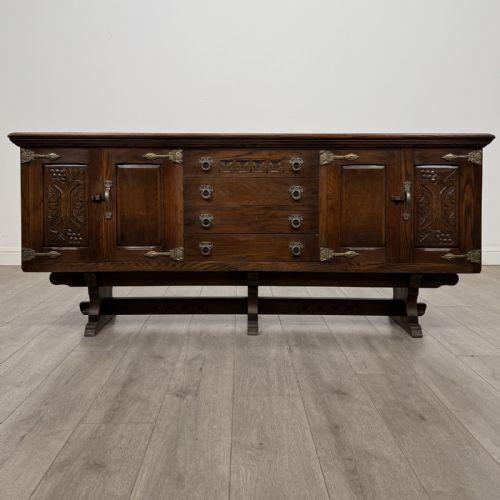
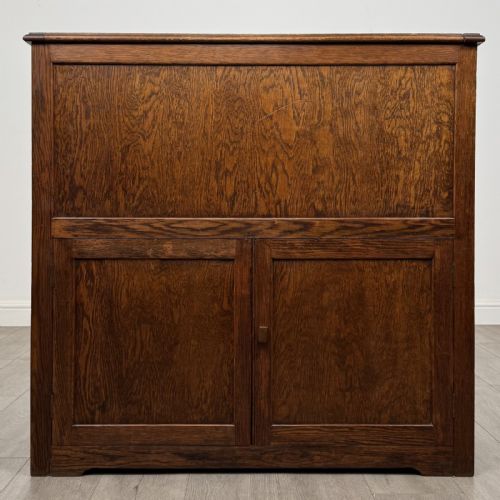
When you search for a dark oak sideboard cupboard, you are looking at heavy timber storage furniture designed for dining rooms and hallways. These practical items combine counter space with enclosed shelving or drawers to organise household items.
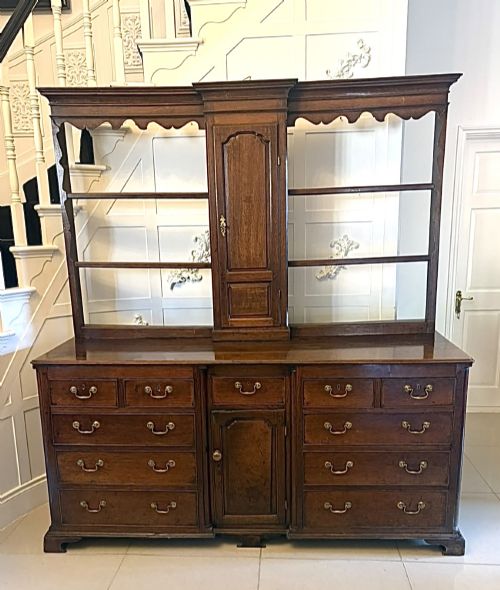
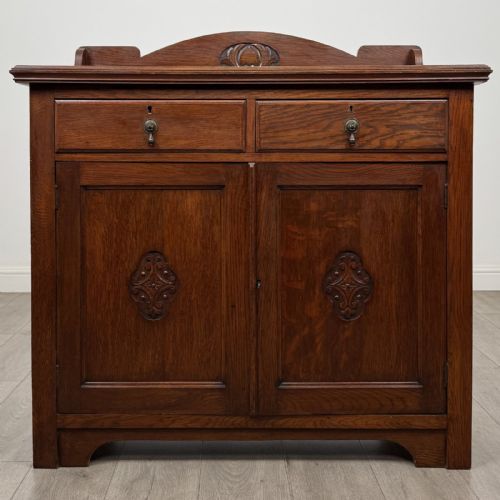
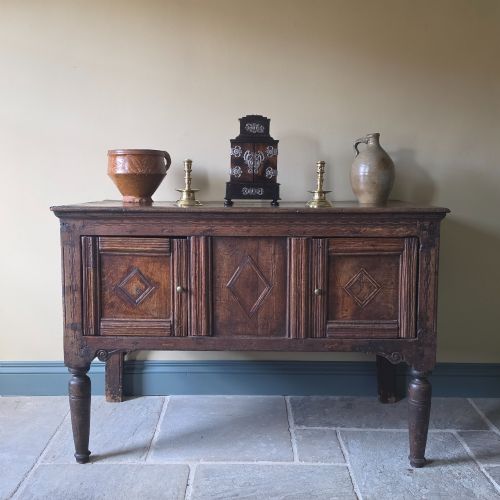
The pieces on this page span several centuries, running from early seventeenth-century joined cupboards up through Georgian, Victorian and Edwardian revivals. You will frequently meet Edwardian interpretations alongside robust eighteenth-century vernacular dressers and dresser bases.
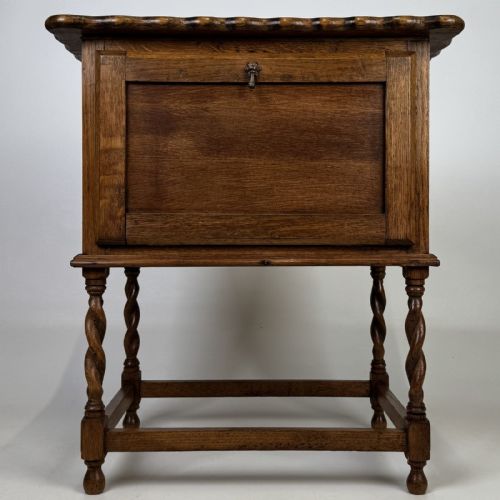
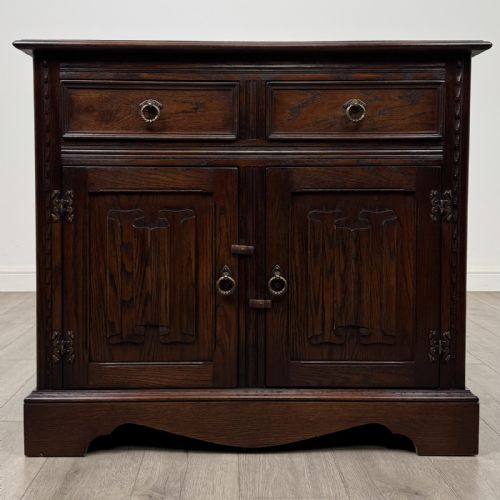
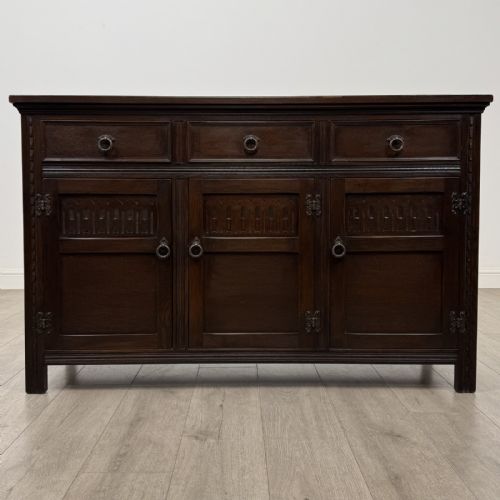
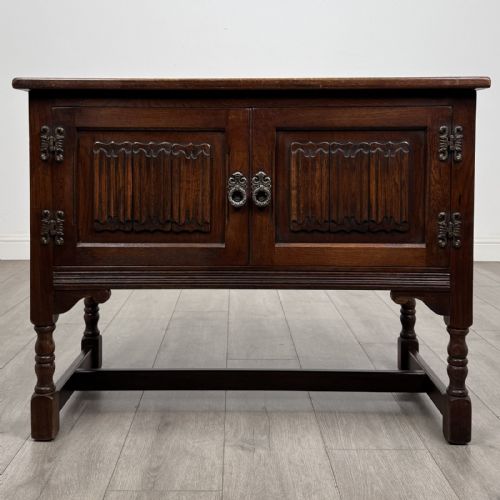
Forms vary from low linen press cupboards and court cupboards to large buffets and server sideboards. Many incorporate carved panels, linenfold motifs or barley twist supports reflecting revival styles like Jacobean and Gothic.
What varies in quality
The standard of carving and the crispness of the timber detailing separate standard production from superior examples. Pieces retaining original patination and untouched surfaces command greater respect among collectors than heavily restored items.
Proportion and structural integrity also dictate worth, as well-balanced sideboard cupboards with substantial timber thickness demonstrate superior workshop practice.
Some provincial Welsh dressers were specifically built with deep compartments known as bread and cheese cupboards to keep dairy safe.
The Dark Oak Sideboard Cupboard Glossary
- Court cupboard
- A heavy oak storage piece featuring an enclosed upper section supported by pillars above a lower cabinet. These items date primarily from the seventeenth century and served to display plate.
- Linenfold
- A carved wooden panel motif resembling folded cloth that gained popularity in Tudor and later revival joinery. It adds texture to cupboard doors.
- Dresser base
- A long low table with drawers and often a pot board underneath, historically used in kitchens for food preparation and storage. They frequently function as sideboards in modern settings.
- Barley twist
- A decorative turning technique resembling a twisted rope, commonly found on the legs and supports of Edwardian and Victorian oak furniture. It provides a distinct spiral profile.
- Patina
- The deep surface sheen and mellow colour developed by aged timber through decades of handling and polishing. It serves as an indicator of age and careful maintenance.
Dark Oak Sideboard Cupboard: Frequently Asked Questions
How do I date an oak sideboard cupboard?
Dating relies on observing construction methods, timber thickness and decorative styles such as linenfold or barley twist turnings. Earlier seventeenth-century pieces use joined frame-and-panel construction with pegged joints.
Later Victorian and Edwardian revivals incorporate machine-sawn timber and softer carving styles. Comparing the hardware and the overall patina helps confirm the period of manufacture.
Were these cupboards used in kitchens?
Many early dresser bases and court cupboards originated in large country kitchens and pantries for storing tableware and provisions. They provided sturdy work surfaces alongside enclosed shelving.
Over time, similar forms moved into dining rooms as formal sideboards for serving food and displaying silver. Today they function equally well in hallways and living spaces.
How should I care for dark oak furniture?
Maintain the timber by applying traditional beeswax periodically to nourish the wood and preserve the surface finish. Avoid placing solid oak pieces near direct heat sources or in strong sunlight.
Regular dusting with a soft dry cloth prevents dirt build-up in carved recesses. Proper humidity control keeps the joints stable and prevents timber movement.
What is the difference between a dresser and a sideboard?
Traditional dressers often include open plate racks mounted above the lower base section for displaying ceramics. Sideboards focus purely on a low surface top combined with cupboards and drawers below.
Both forms utilise oak construction and share similar origins in domestic storage. The choice depends on whether you require display shelving or clear surface area.