

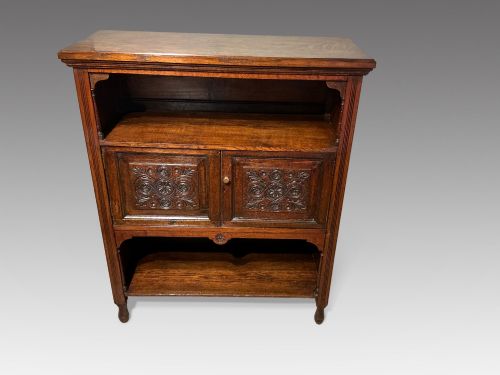
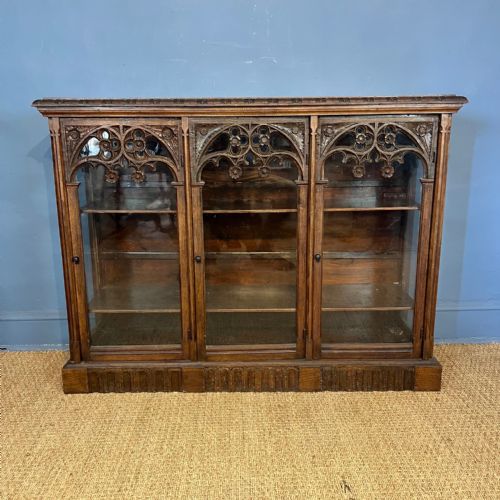
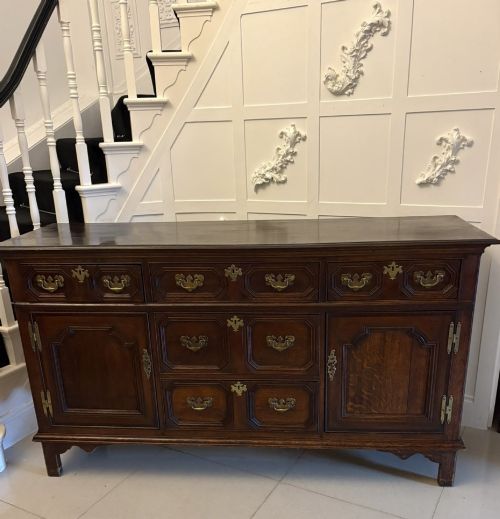
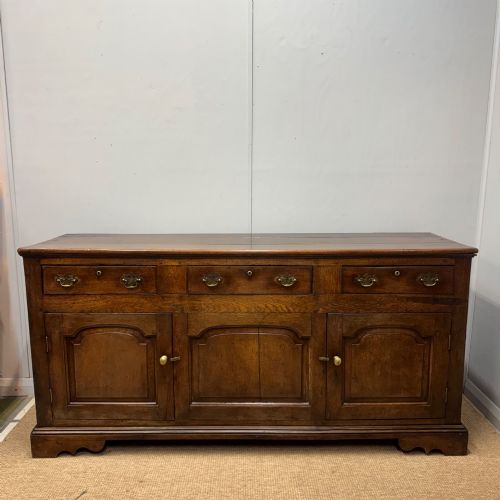
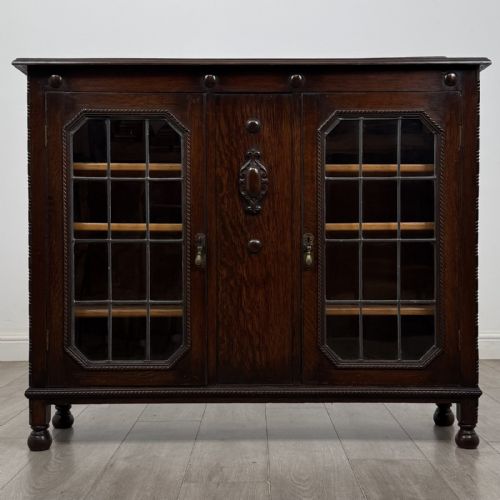
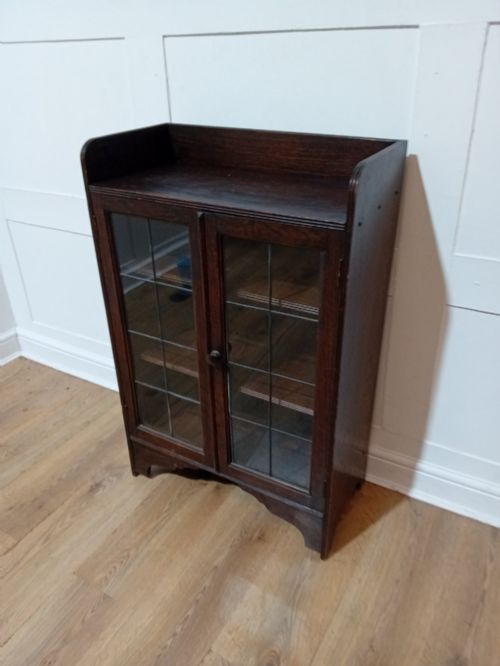
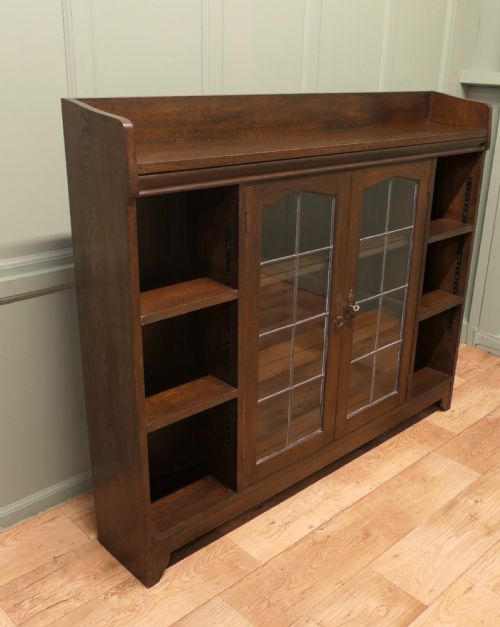
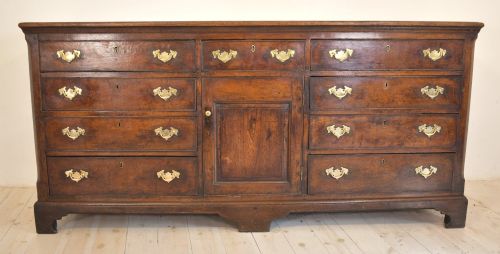



Dark Oak Low Cupboard
A dark oak low cupboard is a substantial storage piece built to sit low in a room, offering both surface display and concealed practicality.
Dark Oak Low Cupboard
When you search for a dark oak low cupboard, you encounter a variety of low-slung storage furniture primarily formed from sturdy timber. The selection spans centuries of regional cabinet-making, featuring functional forms designed for domestic utility.
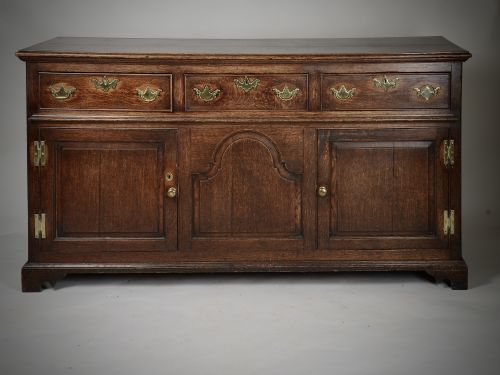
You are most likely to meet eighteenth-century dresser bases and regional press cupboards on this page. These pieces offer low profiles alongside deep interior compartments, reflecting traditional English, Welsh, and French rural workshops.
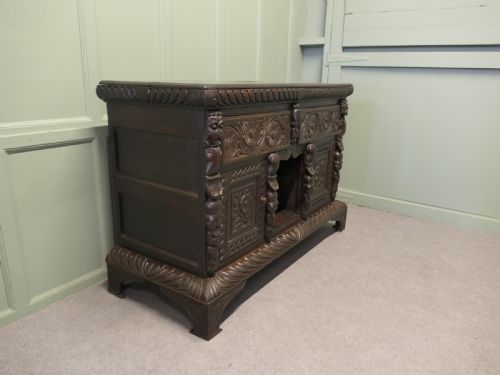
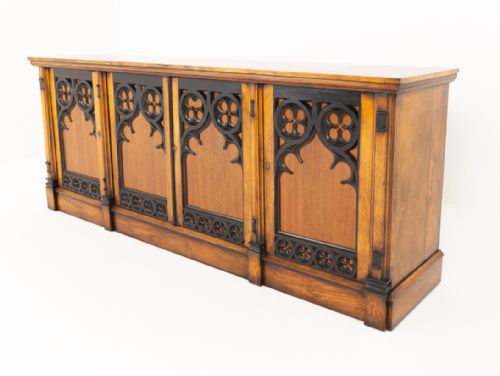
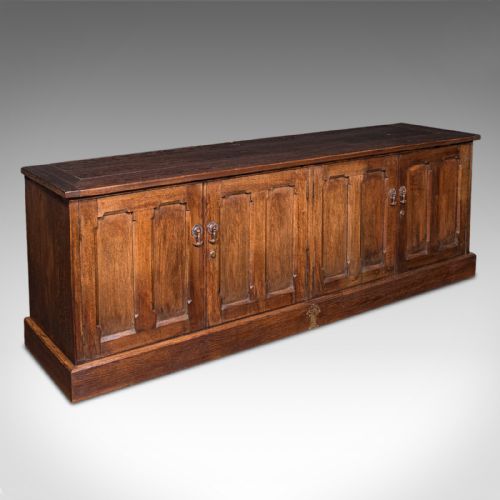
The category also encompasses low bookcases, side cabinets, and dwarf cabinets from later revivals. Each specimen displays the natural grain and deep patination characteristic of seasoned timber exposed to decades of domestic life.
What varies in quality
The standard of a dark oak low cupboard rests on the selection of the timber and the integrity of the original construction. Dense, quartersawn boards with strong medullary rays indicate superior material selection by the maker.
Refinement in carving, crispness of mouldings, and the survival of original brass or iron hardware elevate certain examples. Pieces that retain their unclipped heights, original backs, and undisturbed surface patination stand apart in craftsmanship.
Dark Oak Low Cupboard Retail Price Guide 2026
Typical asking prices for dark oak low cupboard among the pieces listed under this phrase on Sellingantiques today, from the lower quarter to the upper quarter. They describe what is for sale here now, not the wider market.
Listings feature oak, brass, iron, and ebonised wood across periods spanning the seventeenth century through to the Edwardian era and Arts and Crafts movement.
The Dark Oak Low Cupboard Glossary
- Dresser base
- A low utilitarian table or cabinet featuring drawers and cupboards beneath a main surface. These pieces formed the backbone of rural kitchens and halls.
- Press cupboard
- A dual-level storage unit with enclosed shelving, often utilised for linens and garments. Lower variants sit closer to the floor.
- Breakfront
- A cabinet design where the central section projects forward from the flanking wings. This configuration adds depth and visual rhythm to low case furniture.
- Linenfold
- A style of carved wooden panelling that resembles folded cloth. This motif appears frequently on Tudor and Elizabethan revival pieces.
- Ebonised wood
- Timber treated with a chemical stain or pigment to imitate ebony. Cabinet-makers utilised this finish to create dark contrast on mouldings and details.
Dark Oak Low Cupboard: Frequently Asked Questions
How were low cupboards used historically?
These low cupboards served as practical storage for household provisions, textiles, and dining implements in domestic spaces. Their surface provided a convenient platform for serving food or displaying pewter and ceramic wares.
Over generations, their role shifted as domestic interiors evolved, transitioning from utilitarian kitchen pieces into decorative furniture for living rooms and hallways.
Where were most oak cupboards made?
Regional workshops across England, Wales, and France produced the majority of these pieces using locally available timber. Welsh and English vernacular pieces often display distinct construction methods tied to rural traditions.
French provincial makers contributed armoires and low cabinets featuring carved details unique to their respective departments and stylistic influences.
How do I identify an eighteenth-century piece?
Eighteenth-century examples typically display hand-planed surfaces, pegged mortise and tenon joints, and timber showing deep natural patination. Drawer construction often incorporates handmade dovetails and side-hung runners.
Secondary woods used in internal linings, such as deal or ash, help confirm the period alongside vernacular tool marks left by regional cabinet-makers.
How do I care for antique oak?
Maintain antique oak by keeping it away from direct heat sources and rapid humidity changes that cause timber to split. Regular applications of quality beeswax nourish the grain and preserve the historic finish.
Avoid synthetic polishes and silicones, which build up on the surface and dull the deep patination developed over centuries of handling.