
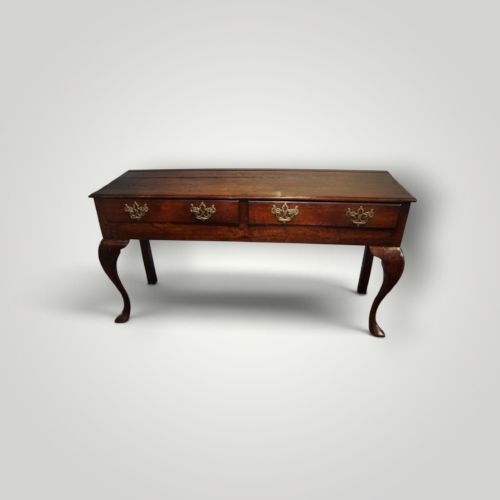
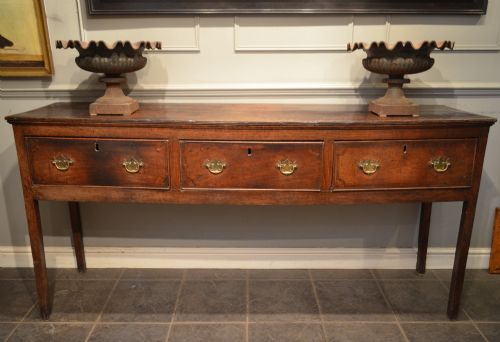
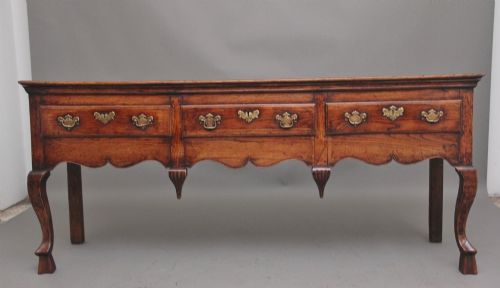
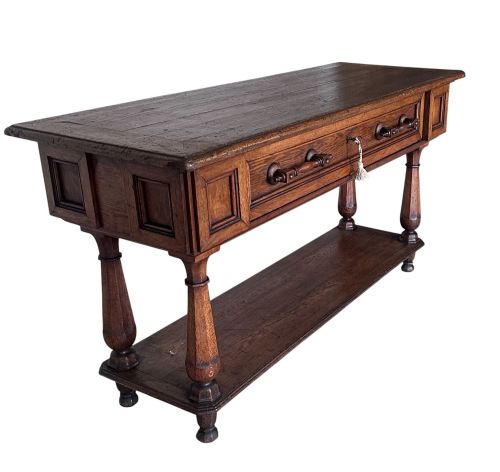
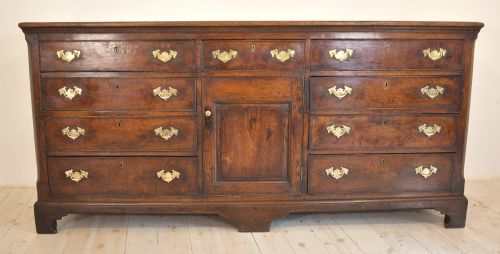
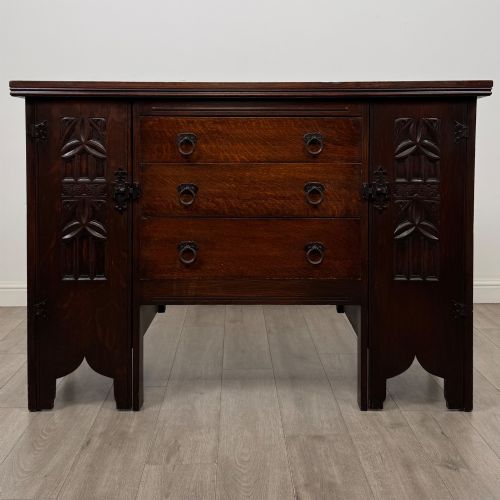
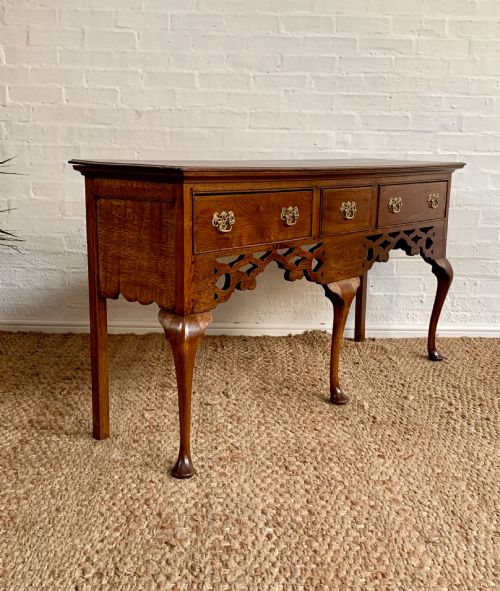
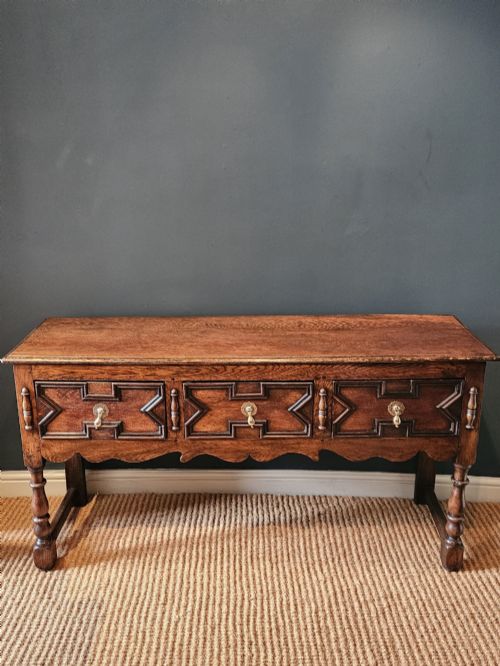
Dark Oak Dresser Table
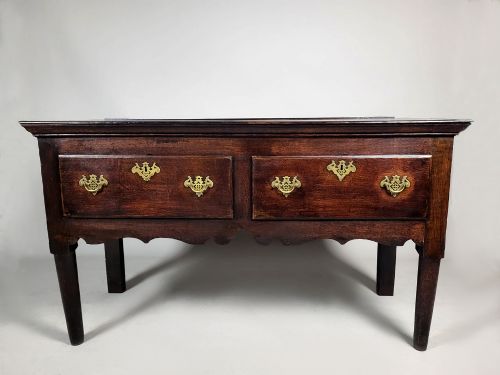
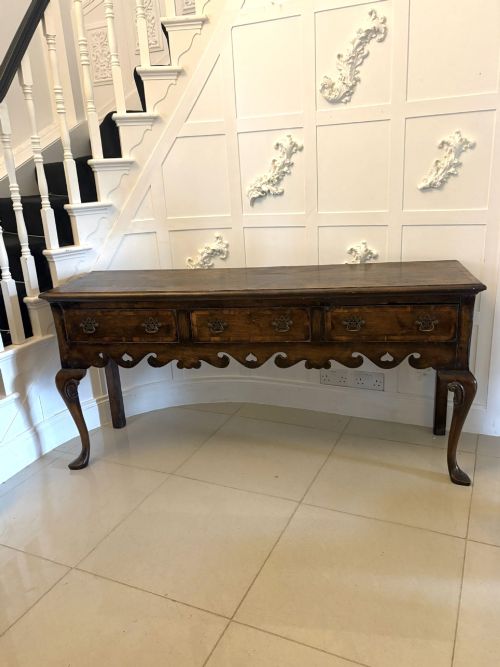
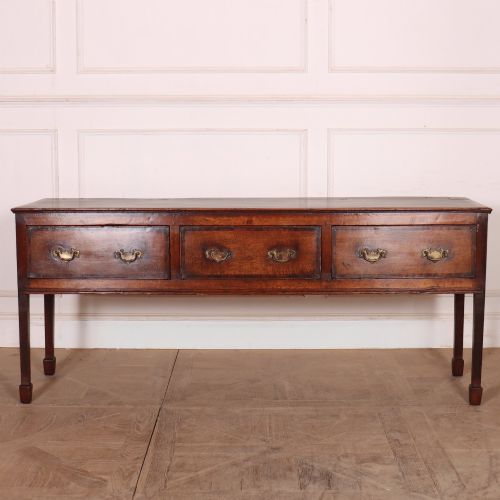
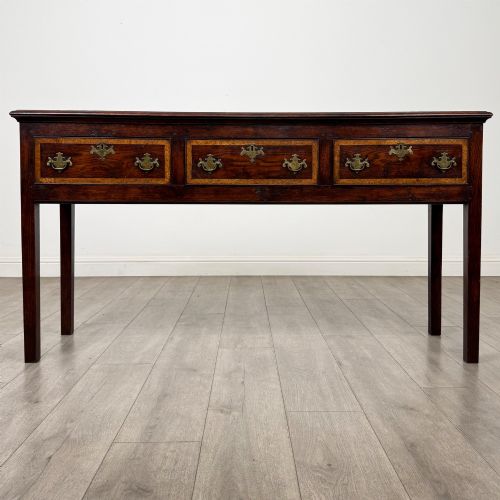
These dark oak dresser table examples provide solid timber construction and practical drawers for traditional interiors.
Dark Oak Dresser Table
A dark oak dresser table combines surface display space with lower storage drawers or potboards for everyday utility. These items appear across centuries from the seventeenth onwards, reflecting various regional tastes and historical periods.
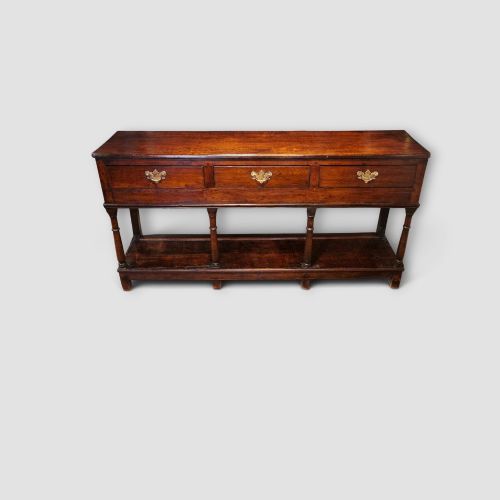
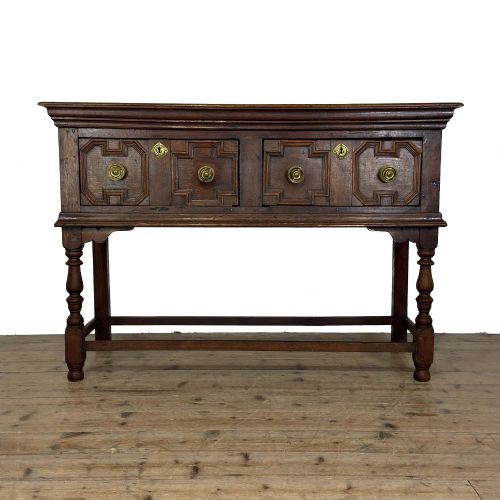
The version most commonly met on this page is the dresser base or low sideboard originating from the eighteenth century or influenced by Georgian and Jacobean styles. These pieces range from narrow proportions to wider formats featuring cabriole legs, geometric moulding, or potboard lower shelves.
How they were made
Construction relies primarily on solid oak, occasionally supplemented by elm, pine, and inlay timber for decorative details. Cabinetmakers utilised traditional joinery methods to build robust frames capable of supporting heavy household use over generations.
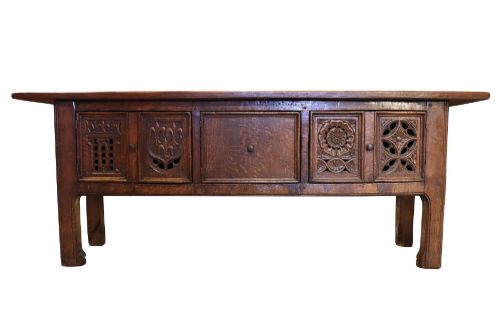
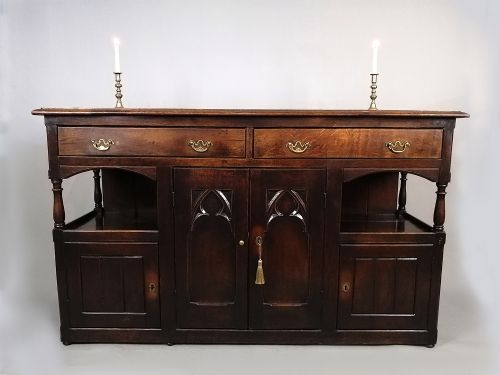
Metal hardware such as brass handles and iron fittings secure drawers and doors, whilst timber inlay provides subtle surface ornamentation. Carved elements and geometric mouldings appear on specific revival and period examples to enhance the visual depth.
Listings feature oak alongside elm and pine, spanning the seventeenth century through to Edwardian revival pieces.
What varies in quality
The standard of timber selection and the integrity of the original construction dictate the overall grade of each piece. Superior examples display careful grain matching, minimal replacement timber, and original brass hardware that has aged naturally with the wood.
Proportion and execution of decorative carving separate standard items from finer workshop output. Well-balanced dimensions and crisp mouldings indicate a higher level of craftsmanship during the initial manufacture.
The Dark Oak Dresser Table Glossary
- Potboard
- An open lower shelf fitted beneath a dresser base for storing plates and cookware. This platform sits just above the floor on sturdy legs.
- Lowboy
- A small table with drawers resembling a low dresser base or serving table. These compact items function well as console or hall tables.
- Geometric moulding
- Raised wooden profiling applied in repeating patterns to drawer fronts and door panels. This decorative technique adds texture and depth to seventeenth and eighteenth-century furniture.
- Cabriole leg
- A furniture leg that curves outward at the knee and tapers inward toward the foot. This classical shape appears on certain Georgian period pieces.
Dark Oak Dresser Table: Frequently Asked Questions
What is a dresser base?
A dresser base is a low wooden sideboard equipped with drawers and sometimes a lower shelf, designed originally for domestic storage and serving.
Unlike tall kitchen dressers, these items lack upper plate racks and function effectively as console or side tables in modern living spaces.
How do I date an oak dresser?
Dating relies upon examining construction techniques, timber patination, hardware, and stylistic details such as geometric moulding or cabriole legs.
Period pieces often display hand-cut joinery and signs of long-term wear that distinguish them from later nineteenth and twentieth-century revival interpretations.
Where can I place a dresser table?
These tables suit dining rooms, hallways, and living areas where surface space and drawer storage are both required.
Their narrow proportions and sturdy wooden construction allow them to fit against walls without overwhelming smaller rooms.